

Besides nylons commonly used in general engineering (such as PA6, PA66, PA1010, PA12, etc.), the nylon family also includes many special types. These possess unique properties (such as high-temperature resistance, bio-based, high transparency, and large-size molding) through adjustments to monomer structure, polymerization processes, or modification techniques, and are widely used in high-end or special applications. Below are some typical "non-general-purpose" nylon varieties:
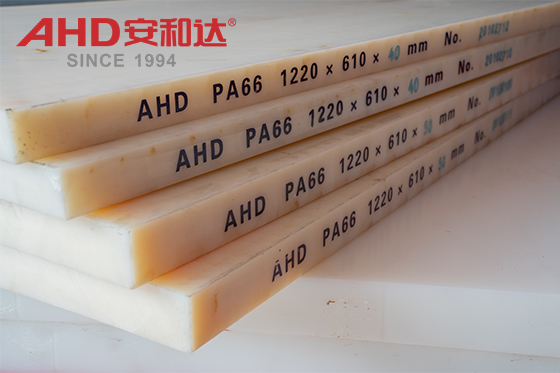
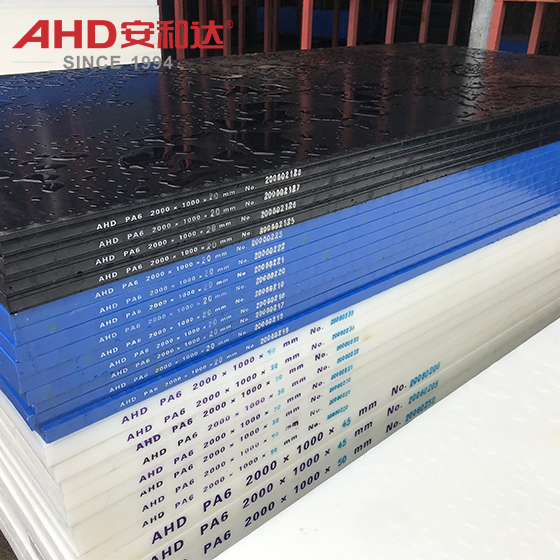
These are all common types of nylon used in general engineering: AHD PA6 Sheet and Nylon66 Sheet
I. High-Performance Nylon
This type of nylon improves heat resistance and rigidity by increasing the number of methylene groups (-CH₂-) in the molecular chain or introducing aromatic rings. It is mainly used for high-load components in high-temperature environments.
1. Nylon 46 (PA46)
Structure: Formed by the condensation polymerization of butanediamine (4 carbons) and adipic acid (6 carbons) (-NH-(CH₂)₄-NH-CO-(CH₂)₄-CO-), the molecular chain contains 4+6 carbon atoms.
Characteristics: Extremely high melting point (approximately 295℃), long-term operating temperature reaches 180-200℃ (far exceeding PA66's 100℃); fast crystallization rate (crystallinity > 50%), good dimensional stability; oil and chemical corrosion resistant (e.g., resistant to engine lubricating oil);
Disadvantages: High hygroscopicity (equilibrium water absorption rate approximately 2.8%), high cost.
Applications: High-temperature components around automotive engines, high-temperature bearings in industry, aerospace electronic connectors, etc.
2. Semi-aromatic Nylon (PPA, Polyphthalamide)
Structure: The main chain contains aromatic rings (such as terephthalic acid) and aliphatic segments (such as hexamethylenediamine). Typical grades are PA6T (hexamethylenediamine + terephthalic acid) and PA9T (nonanediamine + terephthalic acid).
Properties: High melting point (PA6T approximately 370℃, PA9T approximately 305℃), long-term operating temperature 170-220℃; Low hygroscopicity (PA6T equilibrium water absorption <1%), high dimensional accuracy; Excellent chemical resistance (such as resistance to strong acids and alkalis) and solderability (can withstand surface mount processes).
Applications: Automotive engine sensors, LED brackets, high-density electronic connectors, precision mechanical gears, etc.
II. Long-Chain Nylon
These nylons contain more methylene groups (typically >10 carbons) and fewer side groups, resulting in superior toughness, low-temperature resistance, and chemical resistance. Some varieties are biodegradable or derived from renewable resources.
1. Nylon 11 (PA11)
Structure: Formed by the self-condensation of ω-aminoundecanoic acid (11 carbons) (-NH-(CH₂)₁₀-CO- repeating unit), belonging to bio-based nylons (raw material derived from castor oil).
Properties: Extremely low hygroscopicity (equilibrium water absorption <0.3%), excellent dimensional stability; Excellent toughness (elongation at break >200%), low-temperature resistance (not embrittled at -70℃); Outstanding chemical resistance (resistant to gasoline, grease, and alcohol); Biodegradable (partially degradable), environmentally friendly.
Applications: Automotive fuel lines, pneumatic pipe fittings, 3D printed flexible consumables, precision instrument housings, etc.
2. Nylon 13 (PA13)
Structure: Self-condensed from ω-aminotridecanoic acid (13 carbons), with a longer methylene chain.
Properties: Lower moisture absorption than PA11 (<0.2%), higher dimensional accuracy; Excellent weather resistance (resistant to UV aging), low temperature resistance (-80℃); Extremely flexible, can be made into extremely thin products (such as films).
Applications: High-end outdoor cable sheaths, polar equipment seals, medical catheters, etc.
III. Special Process/Functional Nylons
These nylons are endowed with unique properties through polymerization processes or modification techniques to meet specific application requirements.
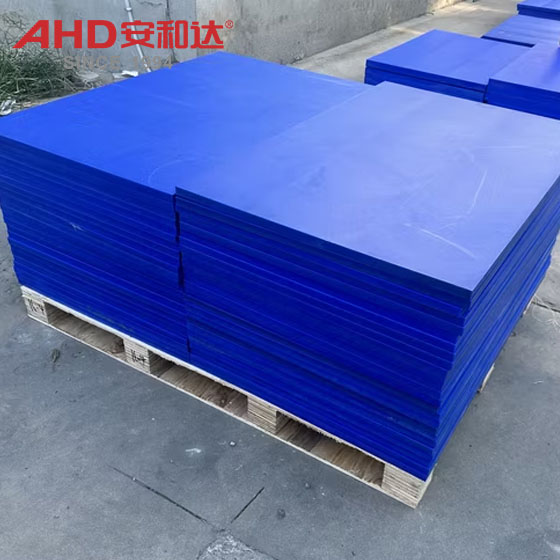
1. MC Nylon (Monomer Casting Nylon)
Process: Caprolactam monomer, catalyst, and activator are mixed and directly cast into a mold, forming the nylon through anionic polymerization (unlike the melt extrusion polymerization of general-purpose nylon).
Characteristics: Can be molded into ultra-large parts; High molecular weight (2-3 times that of general-purpose PA6), resulting in superior strength, toughness, and wear resistance; No internal weld lines, excellent dimensional uniformity.
Applications: Large wear-resistant mechanical parts (e.g., gears in mining machinery, pulleys for port cranes), large molds (e.g., prototype car bumpers), turbine blades, etc.
2. Transparent Nylon
Principle: Through amorphous structure design (reducing crystallinity) or the addition of nucleating agents to inhibit crystallization, nylon is transformed from a semi-crystalline to an amorphous form, thus achieving high light transmittance.
Typical varieties: PA6I (isophthalic acid + hexamethylenediamine), PA12I (isophthalic acid + lauryl diamine), or copolymer nylons (such as PA6/66/12 copolymer).
Characteristics: Light transmittance close to PC, low haze; retains the chemical resistance and fatigue resistance of nylon; easy to dye, can be made into colored transparent parts.
Applications: Optical lenses, transparent housings for electronic devices, medical devices, transparent components for food packaging, etc.
IV. Other Specialty Nylons
1. Weather-Resistant Nylon
Modification Method: Improved UV resistance by adding carbon black, UV absorbers, or blending with polyolefins.
Applications: Outdoor nylon ropes, automotive exterior parts, solar panel brackets, etc.
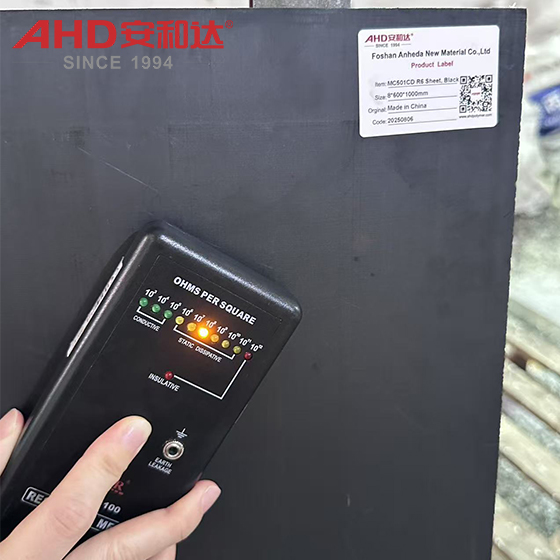
2. Conductive Nylon
Modification Method: Imparted conductivity by adding carbon black, metal fibers, or graphene.
Applications: Antistatic packaging for electronic components, explosion-proof equipment housings, conductive components for coal mines, etc.
In summary, besides general-purpose engineering nylons, the nylon family also includes high-temperature nylons (PA46, PPA), long-chain nylons (PA11, PA13), and special-process nylons (MC nylon, transparent nylon), designed for specific needs such as high temperature, low temperature, ultra-large size, transparency, and conductivity. Through monomer structure adjustment, polymerization process optimization, or modification technologies, these nylons play an irreplaceable role in high-end manufacturing (such as aerospace, medical, and electronics), environmental protection (bio-based), and extreme environments (high temperature, polar regions).