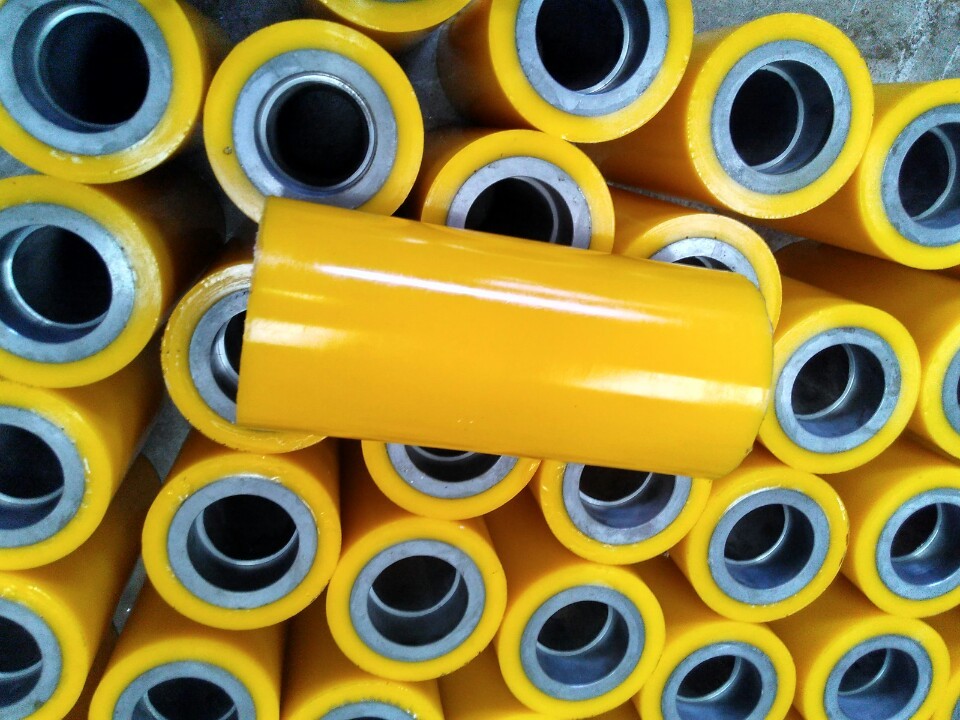
The core of PU roller manufacturing lies in transforming liquid raw materials into solid rollers with specific structures and properties through a polyurethane (PU) molding process. The manufacturing process must consider both material properties (such as two-component reaction curing) and the roller's functional requirements (such as load-bearing capacity, wear resistance, and quiet operation), typically involving five major stages: raw material preparation, mold design, molding process, post-processing, and quality inspection. The following is a detailed explanation of the specific manufacturing process:
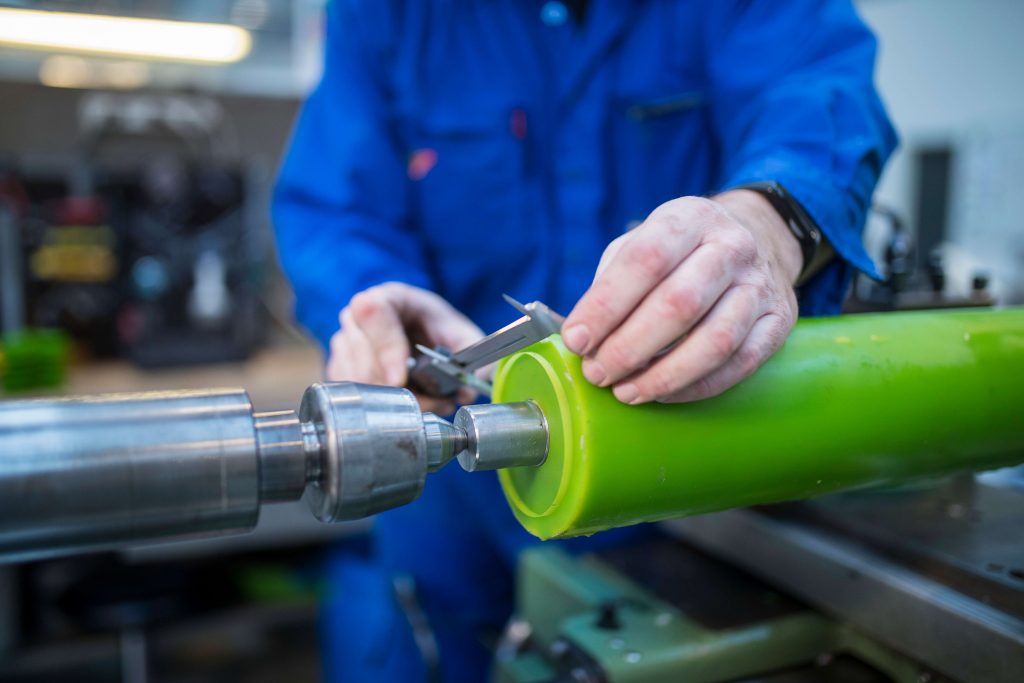
I. Raw Material Preparation: Two-Component PU System
The raw material for PU rollers is two-component polyurethane (A/B components), which must be strictly mixed and cured in a specific ratio:
Component A (Isocyanate): Such as MDI (diphenylmethane diisocyanate) or TDI (toluene diisocyanate), providing the -NCO groups required for the crosslinking reaction;
Component B (Polyol + Additives): Composed of polyether/polyester polyols, chain extenders (such as 1,4-butanediol), catalysts (such as organotin compounds), foaming agents (physical or chemical foaming), colorants, etc., determining the elasticity, density, and functions of the PU (such as wear resistance and oil resistance).
Key control: The accuracy of the A/B ratio (usually NCO/OH molar ratio of 1.05-1.1:1) directly affects the degree of reaction and the final performance.
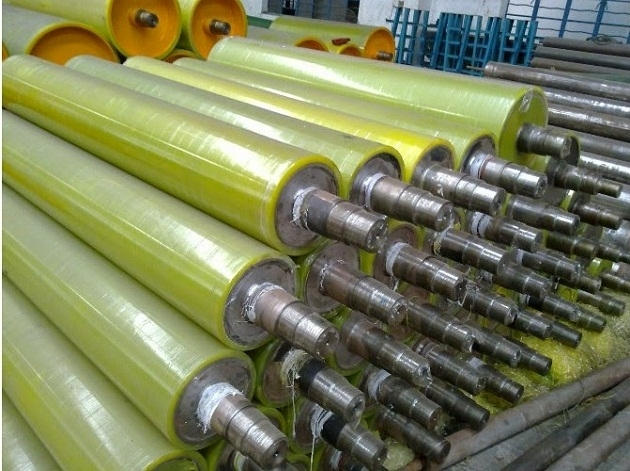
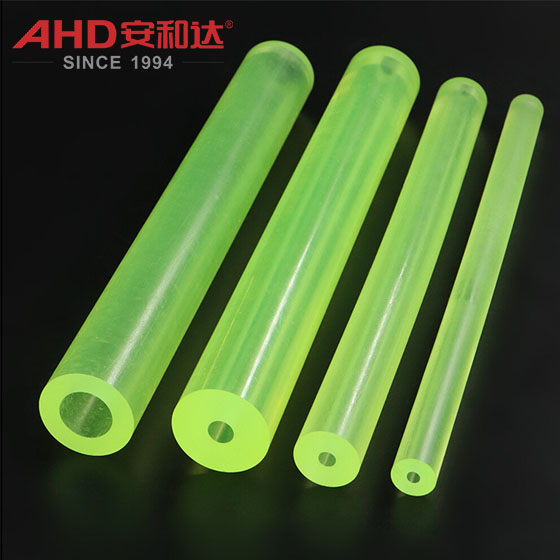
PU Plastic Rod Roller
II. Mold Design and Pre-treatment
The mold is the core tool determining the roller structure (such as diameter, width, grooves, and bearing positions) and must be customized according to the roller design:
Mold Material: Commonly used are aluminum alloy (good thermal conductivity, easy demolding) or steel (high temperature resistance, long service life);
Structural Design: Gates (such as center gates or side gates) and venting holes (to avoid air bubbles) must be provided, and a draft angle (usually 1°-3°) must be designed for easy demolding;
Metal Core Pre-treatment (if applicable): Most PU rollers have a composite structure of "metal core + PU outer layer" (the metal core provides strength, and PU provides wear resistance/quiet operation).
The metal core needs to undergo surface treatment to enhance adhesion to PU: sandblasting (increasing surface area); chemical treatment (such as acid etching or applying a primer, such as a silane coupling agent); preheating (80-120℃, to improve interfacial bonding strength).
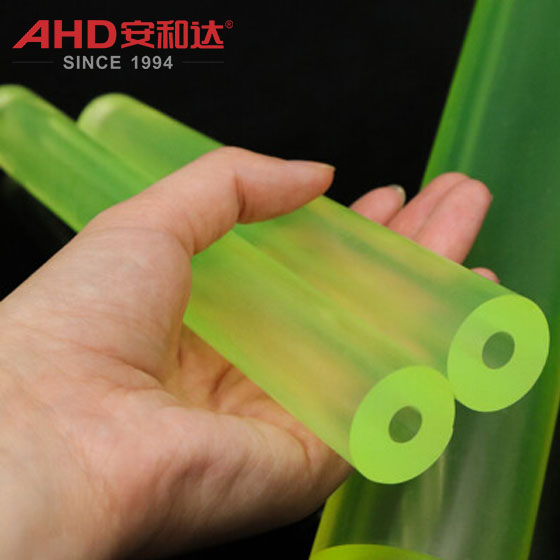
III. Molding Process
The mainstream method is casting molding, with some using injection molding/compression molding.
Based on roller size, structure, and production capacity requirements, the following processes are selected:
1. Casting Molding (Most Common)
Suitable for medium to large rollers (diameter 100mm-1000mm) or rollers with complex structures (such as those with bearing seats or spokes). The process is as follows:
Mixing: Pump materials A and B into a static mixer in the correct proportions and mix thoroughly (mixing time 5-10 seconds, avoiding air bubbles);
Pouring: Inject the mixture into a preheated mold through the gate (mold temperature 40-80℃, promoting reaction);
Curing: Curing at room temperature or with heating (50-120℃, time 0.5-4 hours), the reaction generates a three-dimensional network structure, forming a PU elastomer;
Demolding: After curing, open the mold and remove the PU roller with the metal core (if it is an integral type without a metal core, demold directly).
Advantages: Low equipment cost, suitable for small batches and multiple varieties; capable of molding large-size, complex-structure rollers.
2. Injection Molding
Suitable for small, standardized rollers (such as office chair wheels, trolley wheels), high efficiency (cycle time as short as 30 seconds to 2 minutes): Injection molding machine injection: PU melt (plasticized by a screw) is injected into the mold under high pressure (temperature 60-100℃); Holding pressure and cooling: Holding pressure for 5-20 seconds, cooling to the demolding temperature (30-50℃) before opening the mold.
Advantages: High degree of automation, suitable for mass production; high dimensional accuracy (tolerance ±0.1-0.3mm).
3. Compression Molding
Used for thick-walled or high-load rollers (such as industrial casters), promoting curing through pressure: The mixed PU material is placed into a preheated mold (100-150℃), and pressure is applied after mold closing (5-20MPa); Rapid curing under high temperature and pressure (5-15 minutes), while simultaneously venting gas and reducing internal defects.
IV. Post-processing: Enhancing Performance and Appearance
The molded rollers require the following processing:
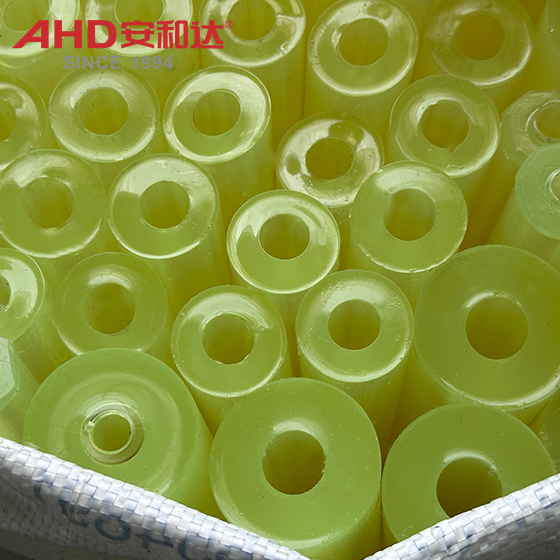
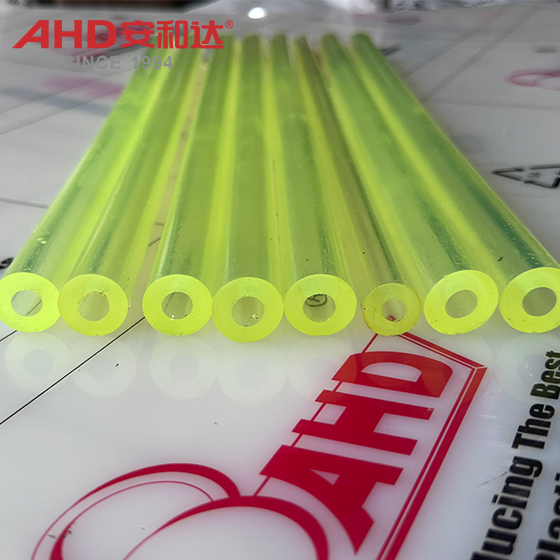
Edge trimming: Removing burrs (gate residue), commonly done manually or via cryogenic trimming (liquid nitrogen freezing followed by impact to remove burrs, highly efficient and resulting in a smooth surface);
Surface treatment: Polishing (enhancing gloss); Spraying (e.g., anti-slip coating, weather-resistant coating); Installing accessories (e.g., installing bearings, seals);
Curing: Some PU requires placement at 50-70℃ for 24-48 hours to further complete the cross-linking reaction and improve mechanical properties (e.g., tensile strength, aging resistance).
The manufacturing of PU rollers revolves around the reaction curing of two-component PU. Through mold design, molding processes (casting/injection molding/compression molding), and post-processing, roller products with high wear resistance, adjustable elasticity, and strong load-bearing capacity are ultimately obtained. Process selection must be combined with roller size, structure, and production capacity, while quality control focuses on bond strength, dynamic performance, and environmental adaptability to ensure long-term reliable operation in logistics, industrial, and medical scenarios.