

I. What is PA46?
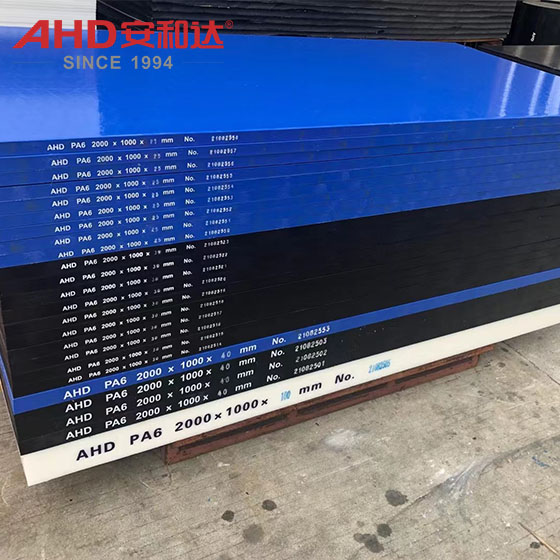
PA46, short for poly(butylene adipamide), is a high-performance engineering plastic belonging to the aliphatic polyamide (nylon) family. Its name originates from the repeating unit of its molecular structure: a 4-carbon backbone + 6-carbon side chain (i.e., a condensation polymer of adipic acid and butanediamine). This unique carbon chain ratio gives it superior properties compared to traditional nylons (such as PA6 Sheet and PA Nylon66 Sheet).
Structurally, PA46 has a higher density of amide groups (-CONH-) (4 amide bonds per 6 carbon atoms) and a highly symmetrical molecular chain, resulting in a crystallinity of 70%–75% (higher than PA66's 50%–60% and PA6's 40%–50%).
High crystallinity directly brings three core advantages: high temperature resistance (melting point 295℃, long-term temperature resistance 163℃, short-term temperature resistance up to 180℃), high mechanical strength (tensile strength 190~210MPa, retaining 80% strength at 150℃, while PA66 only retains 60%), and low hygroscopicity (equilibrium water absorption rate 3.5%, slightly higher than PA66's 2.5%, but far lower than PA6's 8%~9%). Furthermore, PA46's coefficient of friction (0.15~0.2) and wear (30% lower than PA66) are significantly better than ordinary nylon, and it has strong chemical corrosion resistance (resistant to pH 2~12 media, resistant to fuel and lubricating oil corrosion).
As a representative variety of high-temperature nylon (HTN), PA46 overcomes the defect of traditional nylons (such as PA66) in rapid performance degradation at high temperatures, becoming a key material for harsh scenarios such as automotive engine compartments, electronic SMT components, and heavy-duty industrial gears, and is hailed as the "performance benchmark among nylons".

Core Characteristics of P46 Nylon Plastic Sheet
P46 has a highly symmetrical molecular structure (4 amide groups per 6 carbon atoms) and high crystallinity, thus possessing the following outstanding properties:
High Temperature Resistance: Melting point approximately 295℃ (higher than PA66), long-term operating temperature up to 163℃, and short-term operating temperature even up to 180℃.
High Mechanical Strength: Tensile strength and flexural strength are both higher than PA66, and it retains 80% of its tensile strength even at high temperatures (150℃).
Excellent Wear Resistance and Low Coefficient of Friction: Dynamic coefficient of friction approximately 0.15-0.2 (lower than PA66), with superior wear resistance, making it suitable for high-load, high-speed operating components.
Chemical Corrosion Resistance: Resistant to chemical media with pH 2-12 (wider range than PA66), and exhibits good resistance to fuels, lubricating oils, and coolants.
Processing Performance: Fast crystallization rate and short molding cycle, but strict control of processing temperature is required to avoid decomposition.
Main Applications of P46 Nylon Plate
P46's high performance makes it an ideal material for high-end fields such as automotive, electronics, and aerospace. Typical applications include:
Automotive: High-temperature components such as turbocharger intake manifolds, engine covers, timing chain guides, and bearing cages (replacing metals to reduce weight).
Electronics: Relays, contactor housings, SMT connectors, LED packages, etc. (utilizing its high heat resistance, low moisture absorption, and electrical insulation).
Industrial: Heavy-duty gears, bearings, hydraulic system components, etc.
II. Plastic Materials Similar to P46
P46 belongs to the High Temperature Nylon (HTN) family. Its similar materials are mainly concentrated in the fields of high temperature nylon and high-performance engineering plastics, such as:
1. PA66 (Polyhexamethylene adipamide)
Similarities: Both are aliphatic polyamides with similar structures (only the carbon chain length differs), possessing good mechanical strength, chemical resistance, and processing performance.
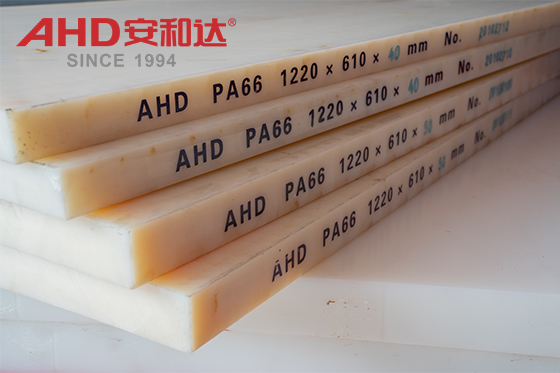
Differences: PA66 has lower crystallinity than P46, therefore its heat resistance and high-temperature mechanical strength are inferior to P46; however, PA66 has lower hygroscopicity than P46, resulting in better dimensional stability in humid environments, and lower cost.
Application Overlap: Both are used in automotive and electronic components, but P46 is more suitable for high-temperature, heavy-duty applications, while PA66 is more suitable for conventional applications.
2. PA6T (Polyhexamethylene terephthalamide)
Similarities: Both are semi-aromatic high-temperature nylons with a melting point as high as 310℃ (close to P46), possessing excellent high-temperature resistance, high strength, and chemical corrosion resistance.
Differences: PA6T has a slower crystallization rate, making it slightly more difficult to process than P46; however, PA6T has a lower water absorption rate than P46 and better dimensional stability in high-temperature environments.
Applications overlap: Both are used in electronic connectors and high-temperature automotive components. PA6T can replace P46 in some applications (such as SMT connectors), but P46 has better abrasion resistance.
3. PA9T (Polynonyl terephthalamide)
Similarities: Both are long-chain high-temperature nylons with extremely low water absorption (1/10 that of P46), excellent dimensional stability, and high rigidity and heat resistance (long-term operating temperature 160℃).
Differences: PA9T is more brittle, has limited production capacity, and is more expensive.
Application overlap: Both are used in the electronics and automotive fields. PA9T is more suitable for scenarios with extremely high requirements for dimensional stability (such as high-precision connectors), while P46 is more suitable for high-load and high-wear-resistance scenarios (such as gears).
4. PPS (Polyphenylene Sulfide)
Similarities: Both are high-performance engineering plastics with excellent high-temperature resistance (long-term operating temperature 200℃), chemical corrosion resistance, and dimensional stability.
Differences: PPS has lower toughness than P46 and is more difficult to process (requiring melt temperatures above 300℃).
Applications overlap: Both are used in electronic and electrical appliances and high-temperature automotive components. PPS is more suitable for applications requiring extremely high high-temperature resistance (such as engine ignition coils), while P46 is more suitable for applications requiring high toughness and wear resistance (such as gears).
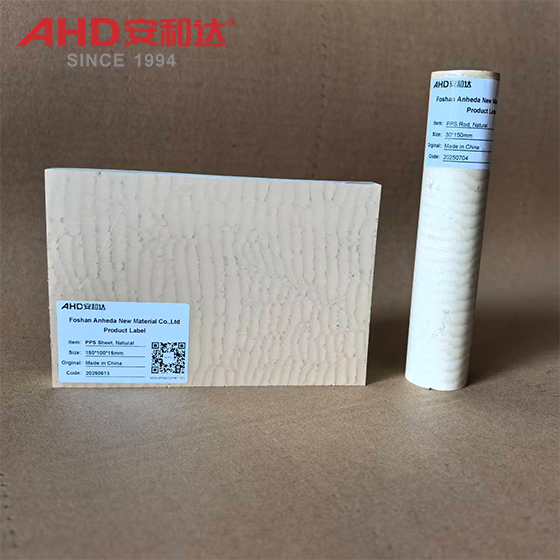
AHD PPS Sheet and Rod (Polyphenylene Sulfide Sheet and Rod)
P46 (Nylon 46) is a highly crystalline, high-temperature resistant, and high-mechanical-strength aliphatic polyamide engineering plastic. Its core advantages lie in its high performance retention at high temperatures and its wear resistance. Similar plastic materials to P46 are mainly concentrated in the high-temperature nylon family (such as PA66, PA6T, PA9T, etc.) and high-performance engineering plastics (such as PPS). These materials overlap with P46 to varying degrees in terms of high-temperature resistance, mechanical strength, and chemical corrosion resistance, but differ in characteristics such as crystallinity, hygroscopicity, processing difficulty, and cost, thus making them suitable for different applications.
When selecting alternative materials, a comprehensive evaluation based on specific operating conditions (such as temperature, load, humidity, and cost) is necessary:
For high-temperature, heavy-load applications (such as turbocharger pipes), P46 is the preferred choice;
For low-cost, conventional applications (such as automotive fuel tanks), PA66 is the preferred choice;
For high dimensional stability (such as high-precision connectors), PA9T is the preferred choice;
For extreme high-temperature resistance (such as engine ignition coils), PPS is the preferred choice.