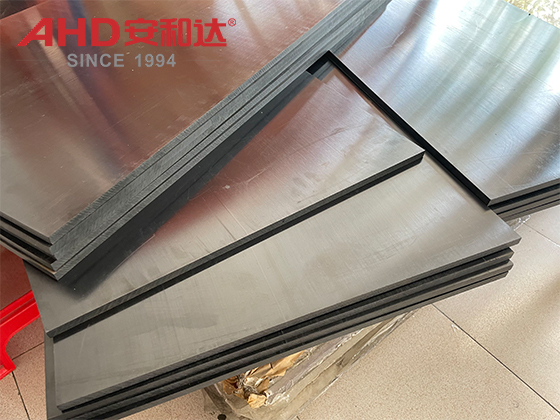
In high-end manufacturing, material properties often determine equipment lifespan and reliability. When facing harsh conditions such as high temperature, high pressure, and strong corrosion, Fiberglass Polyphenylene Sulfide Sheet (PPS GF sheet) and Fiberglass Polyetheretherketone Sheet (PEEK GF sheet), as two star engineering plastics, have become key choices for engineers. The former excels in intrinsic flame retardancy, low cost, and lightweight, while the latter stands out with its extreme heat resistance and superior mechanical properties. Which material can deliver the greatest value in specific scenarios? Let's learn more with AHD.
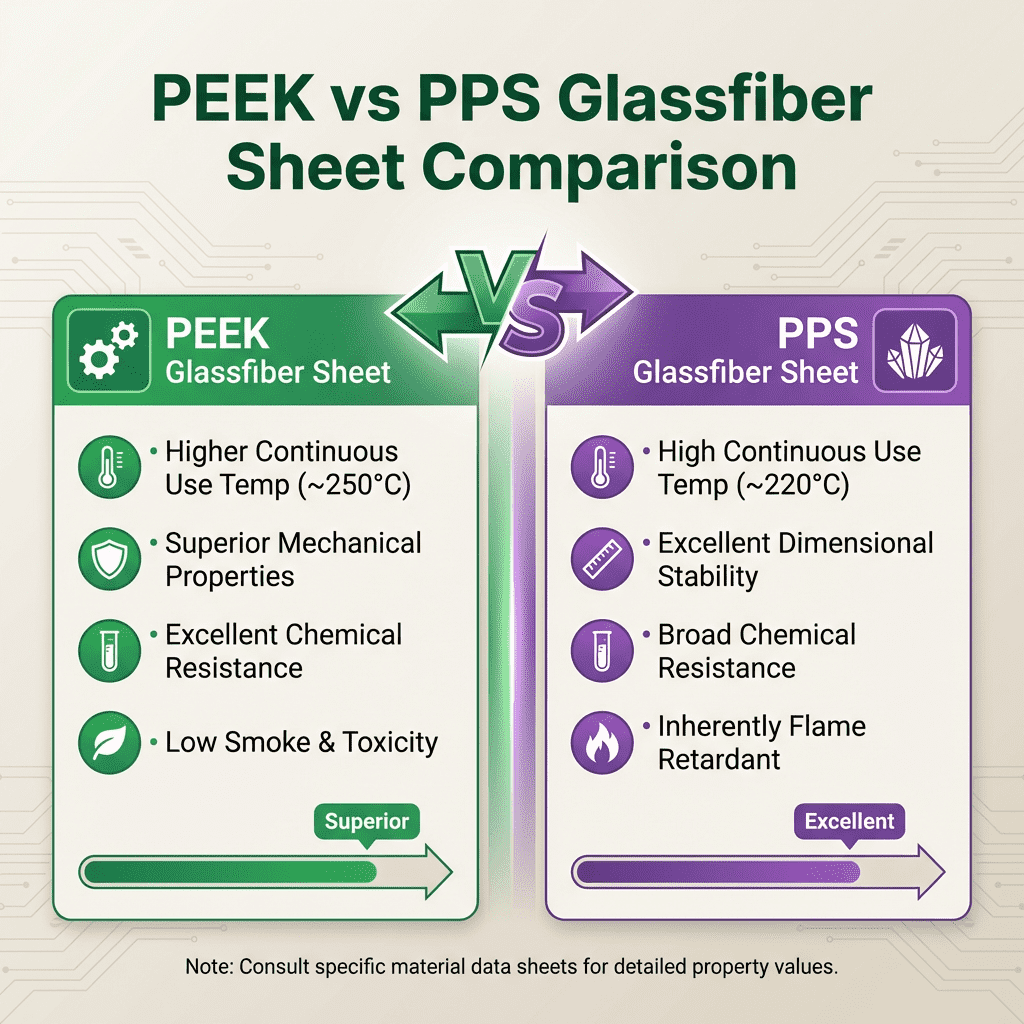
PEEK fiberglass sheet (PEEK GF sheet) is a high-performance composite material made of polyetheretherketone (PEEK) as the base material, reinforced with glass fibers (typically around 30%, labeled GF30). PEEK is a semi-crystalline aromatic thermoplastic engineering plastic whose molecular chain consists of alternating benzene rings, ether bonds, and ketone groups, exhibiting both rigidity and toughness.
PPS fiberglass sheet (PPS GF sheet) is a composite material made of polyphenylene sulfide (PPS) as the base material, reinforced with glass fibers. PPS is a crystalline (55%-65% crystallinity) thermoplastic engineering plastic whose molecular chain consists of alternating benzene rings and sulfur atoms, possessing intrinsic flame retardancy and high flowability.
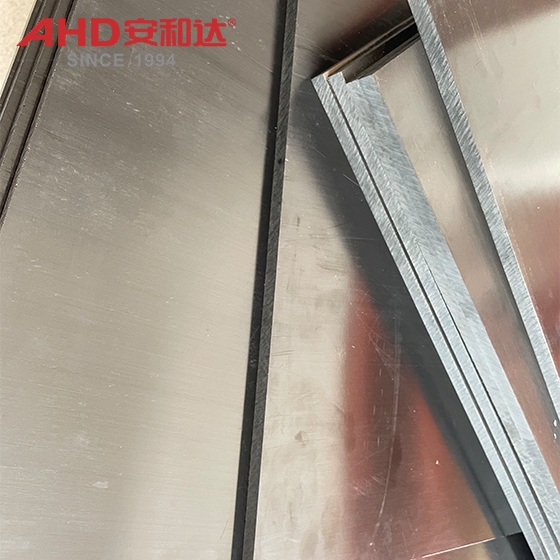
Characteristics and Advantages of PEEK Fiberglass Sheets
The core characteristics of PEEK fiberglass sheets stem from the inherent properties of the PEEK substrate and the reinforcing effect of the glass fibers, primarily manifested as follows:
Extreme Heat Resistance: Continuous operating temperature up to 250℃, short-term withstand of 300℃ (some grades even higher), while maintaining high mechanical strength at high temperatures.
Excellent Mechanical Properties: After glass fiber reinforcement, tensile strength, flexural strength, and rigidity are significantly higher than PPS GF sheets, and creep resistance is outstanding (dimensional stability under long-term stress).
Chemical Corrosion Resistance: Except for strong oxidizing acids such as concentrated sulfuric acid, it resists corrosion from most chemical media (such as organic solvents, acids, and alkalis), with corrosion resistance approaching that of nickel steel.
Low Water Absorption: Extremely low water absorption rate (<0.1%), excellent dimensional stability under high temperature and humidity environments, and electrical properties are almost unaffected.
Flame Retardancy and Radiation Resistance: Meets the UL 94 V-0 self-extinguishing standard and maintains stable performance even under high-dose ionizing radiation.
Self-lubricating properties: Low coefficient of friction (~0.1), suitable for manufacturing sliding parts (such as gears and sealing rings) without the need for additional lubricant.
Advantages Summary: PEEK GF sheet is the material of choice for high-temperature, high-load, and high-precision applications, covering the extreme environmental requirements from aerospace to medical devices, but it is more expensive (more expensive than PPS GF sheet).
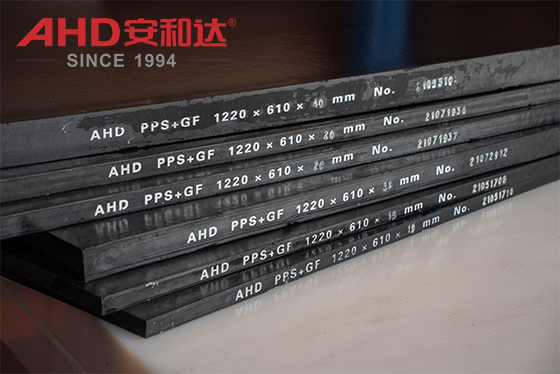
Characteristics and Advantages of PPS Fiberglass Sheets
The characteristics of PPS fiberglass sheets are primarily determined by the intrinsic properties of the PPS substrate. Combined with glass fiber reinforcement, they exhibit the following:
High Heat Resistance: Long-term operating temperature 220℃ (short-term up to 230℃), heat distortion temperature approximately 237℃, meeting the requirements of most high-temperature industrial applications.
Intrinsic Flame Retardancy: Achieves UL 94 V-0 rating without the addition of flame retardants, with low smoke and toxic gas emissions during combustion.
Low Water Absorption: Water absorption rate is only 0.03%, resulting in excellent dimensional stability, suitable for manufacturing precision electronic components.
High Flowability: Low melt viscosity, easy to mold (e.g., injection molding, extrusion), allowing for the addition of high proportions of glass fiber while maintaining good processability (no shrinkage cavities, minimal warpage).
Chemical Corrosion Resistance: Resistant to most acids, alkalis, salts, and organic solvents, except for strong oxidizing acids (e.g., concentrated sulfuric acid, concentrated nitric acid), making it suitable for chemical equipment applications.
Lightweight: With a lower density, it is suitable for weight-sensitive applications (such as automotive and electronics).
Advantages Summary: The cost advantage of PPS GF sheet (approximately 1/2 to 1/3 of PEEK) and ease of processing make it more widely used in industrial fields, especially suitable for medium-to-high temperature, high-corrosion, and lightweight applications.
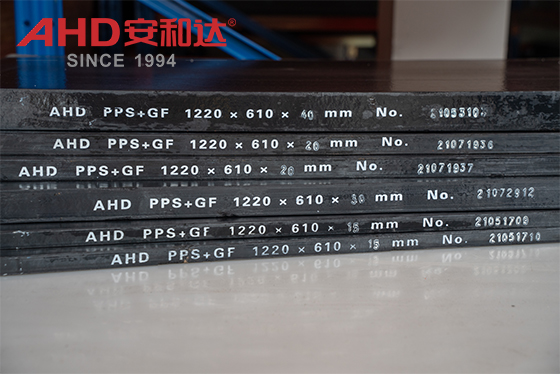
V. How to Choose Between PEEK GF Sheet and PPS GF Sheet?
1. Temperature Requirements
For operating environments consistently exceeding 200℃ (e.g., aerospace engines, semiconductor diffusion furnaces), PEEK GF sheet is the preferred choice (its long-term temperature resistance of 260℃ is far superior to PPS's 200℃).
For temperatures below 200℃ (e.g., automotive engine compartments, electronic appliance housings), PPS GF sheet is sufficient and less expensive.
2. Mechanical Load
For applications requiring high tensile/bending stress (e.g., gears, bearings, sealing rings), choose PEEK GF sheet.
For medium loads (e.g., structural supports, pump bodies), choose PPS GF sheet (it has sufficient rigidity and lower density).
3. Corrosive Environments
For applications exposed to highly corrosive media (e.g., concentrated sulfuric acid, concentrated nitric acid), both are suitable (both can resist corrosion), but PEEK's corrosion resistance is closer to that of nickel steel, making it suitable for more extreme conditions.
4. Cost Budget: For applications involving common acids, alkalis, or organic solvents (such as chemical wastewater and cleaning solutions), choose PPS GF sheet (lower cost).
Cost Budget:
Currently available: For applications with a sufficient budget (such as aerospace or high-end medical applications), choose PEEK GF sheet (no performance weaknesses).
Currently available: For applications with a limited budget (such as automotive or home appliances), choose PPS GF sheet (significant cost advantage, and can meet most needs).
Processing Requirements:
Currently available: For complex shapes or high-precision machining (such as semiconductor fixtures or medical devices), choose PEEK GF sheet (while its machining performance is slightly inferior to PPS, high precision can still be achieved with specialized equipment).
Current available: For rapid prototyping or mass production (such as automotive parts or electronic casings), choose PPS GF sheet (its high flowability makes it more efficient).
Both Glassfiber PEEK Plastic Sheet and Glassfiber PPS Plastic Sheet are high-performance engineering plastics, but PEEK is more suitable for extreme environments (high temperature, high load, high precision), while PPS is more suitable for normal industrial scenarios (medium to high temperature, high corrosion, lightweight). When choosing between them, a comprehensive evaluation should be conducted considering temperature, mechanical load, corrosive environment, cost, and processing requirements to avoid either "overkill" or "wasteful costs."