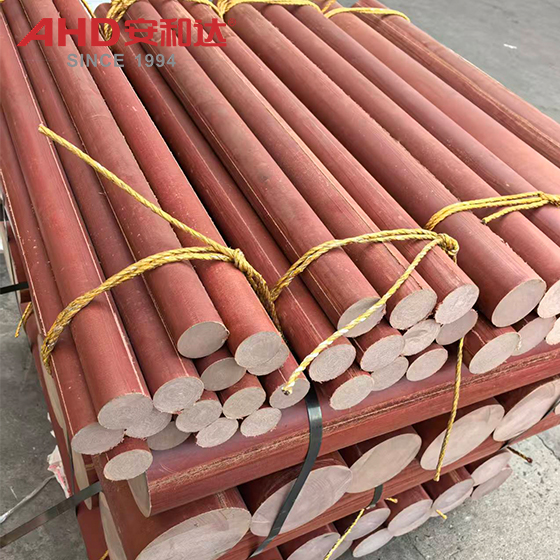
In power plants and substations, phenolic laminated cotton sheets and rods may not be the most dazzling "stars," but they are the most reliable "unsung heroes." From the insulating partitions of distribution cabinets to the motor slot wedges, from the support columns of enclosed busbars to the oil-immersed components of transformers, these laminated materials, with cotton cloth as the base and phenolic resin as the backbone, have long been deeply integrated into every critical structure of power equipment. They are unassuming, yet they isolate high-voltage risks with excellent insulation, resist vibration and impact with high mechanical strength, and uphold the banner of industrial-grade durability at an affordable cost. When current surges through equipment, when equipment operates in complex environments, the phenolic cotton sheets and rods, with their silent perseverance, become the "industrial backbone" that ensures power safety and extends equipment lifespan. What ingenious designs are hidden within these seemingly ordinary materials, adapting them to various power scenarios? And how can they be transformed into countless components through secondary processing? Let's unveil their secrets together.
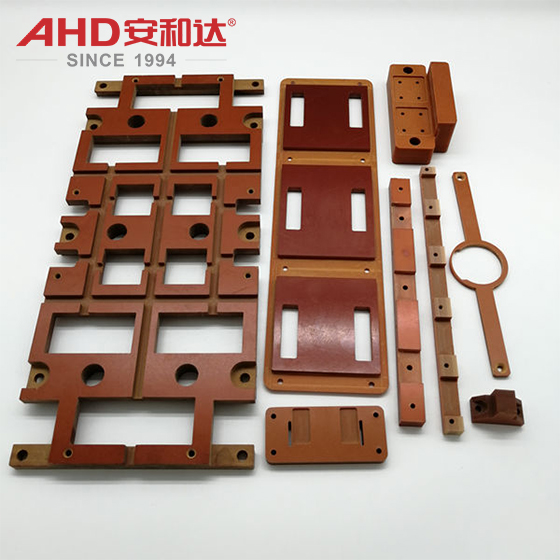
I. Main Applications in Power Plants and Power Stations
Cotton Phenolic Laminate Sheet (hereinafter referred to as "phenolic sheets") and phenolic laminated cotton rods (hereinafter referred to as "phenolic rods") are core materials for insulation structures and mechanical supports in power plants and power stations. Their applications cover multiple key equipment and scenarios, specifically as follows:
1. Main Applications of Phenolic Sheets
Distribution Cabinets: Used as partitions, liners, terminal blocks, phase-to-phase insulation components, and contact supports to isolate live parts, prevent phase-to-phase short circuits, and ensure the safe operation of the power distribution system.
Motors: Used to manufacture motor armature components, slot wedges, stator pads, carbon brush holders, etc., to withstand mechanical vibrations and electromagnetic forces during motor operation while maintaining insulation performance.
Circuit Breakers: Used as safety baffles, spacer pads, and phase spacers to prevent the spread of electric arcs inside the circuit breaker, ensuring operator safety.
Transformers and Instrument Transformers: Used as insulating partitions and winding supports to isolate the high and low voltage windings of the transformer, preventing electric field interference and insulation breakdown.
2. Main Applications of Phenolic Rods
Enclosed Busbar Insulation Support: In generator enclosed busbars, Phenolic rods act as insulating supports, supporting the main structure and isolating the outer casing, withstanding thermal expansion and contraction and electromagnetic forces during busbar operation.
Motor and Electrical Equipment Insulation Components: Used to manufacture insulating shafts and terminals for motors, or insulating connecting rods for electrical equipment, transmitting mechanical motion while maintaining electrical insulation.
High-Voltage Equipment Insulation Components: In high-voltage equipment such as transformers and reactors, phenolic rods act as insulating rods and support columns, bearing high voltage and mechanical stress.
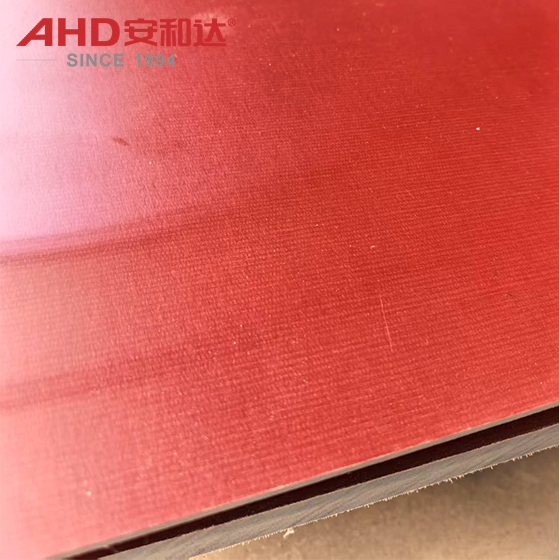
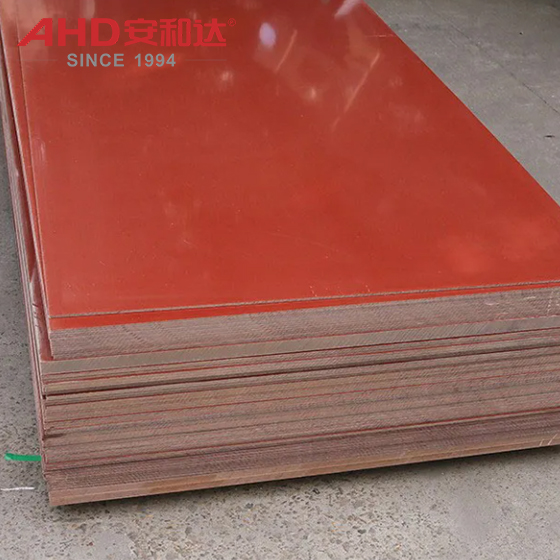
II. Advantages and Characteristics: Why are they suitable for power plants/power stations?
The properties of Cotton Phenolic Resin Sheet and rods are perfectly matched to the high-voltage, high-temperature, and high-mechanical-stress environments of power plants and power stations. Their core advantages are as follows:
1. Excellent Insulation Performance
Both the sheets and rods are laminated insulating materials, formed by hot-pressing cotton cloth impregnated with phenolic resin. They possess good dielectric strength, effectively isolating live parts and preventing short circuits and leakage.
They maintain stable insulation performance even in transformer oil or humid environments, making them suitable for oil-immersed equipment and humid conditions commonly found in power plants.
2. High Mechanical Strength and Wear Resistance
The high adhesiveness of phenolic resin and the reinforcing effect of cotton cloth give the sheets and rods high bending and impact strength, enabling them to withstand vibration, impact, and friction during motor operation.
The wear resistance of the sheets is particularly outstanding, making them suitable for manufacturing sliding parts in transformers (such as carbon brush holders), extending equipment lifespan.
3. Excellent Machining Performance
The phenolic sheets and rods can be processed into various shapes and sizes of components (such as insulating gaskets, supports, and connectors) using conventional machining methods such as sawing, drilling, turning, milling, and planing, meeting the customized needs of different equipment.
After processing, cracks or chipping are not easily observed, and the dimensional stability is good, making it suitable for high-precision machining requirements.
4. Cost-Effectiveness and Reliability
Both phenolic resin and cotton cloth are low-cost raw materials with mature production processes. The product price is lower than that of high-grade insulating materials such as epoxy glass cloth, making it suitable for large-scale applications.
The materials have stable properties, are resistant to aging and chemical corrosion (such as organic solvents and organic acids), and can be used for a long time in the harsh environment of power plants, reducing operation and maintenance costs.
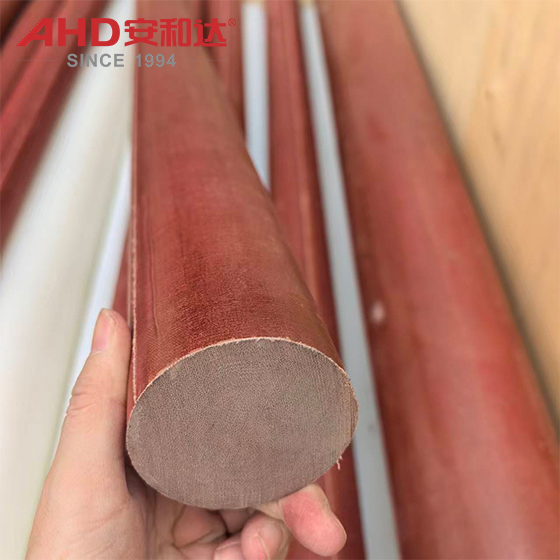
III. Machining Performance and Secondary Processing Applications
Cotton Phenolic Sheets and rods possess excellent machinability and can be manufactured into various accessories through multiple machining methods, as detailed below:
1. Machining Performance Characteristics
Machinability: The phenolic sheets and rods have low thermal conductivity, requiring small feed rates and high cutting speeds during machining to avoid overheating and deformation.
Dimensional Stability: Minimal dimensional changes after machining, suitable for manufacturing high-precision insulating components (such as motor slot wedges and circuit breaker spacer gaskets).
Surface Quality: Smooth surfaces after machining; surface roughness can be improved through grinding and polishing to meet insulation requirements.
2. Common Secondary Processing Accessories
Insulating Gaskets: Machined into round or square gaskets by stamping or sawing, used for insulation isolation in transformers and circuit breakers.
Support Components: Machined into columnar or frame structures by turning or milling, used for insulating support of enclosed busbars.
Connectors: Machined into threaded connectors by drilling and tapping, used for insulating connections between motors and electrical appliances.
Slot wedges and liners: Slot wedges that are processed by sawing and grinding to conform to the slot shape of the motor, or liners inside the equipment.
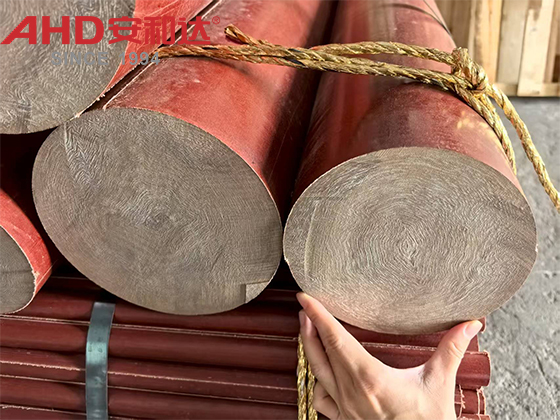
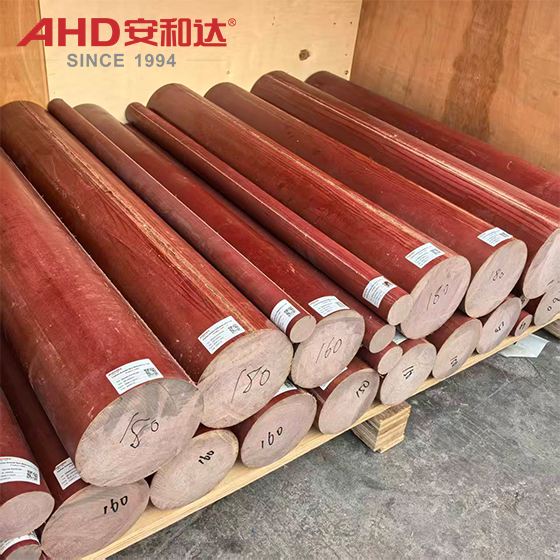
Phenolic laminate sheets and rods, with their excellent insulation properties, high mechanical strength, and good processing performance, have become indispensable materials in power plants and substations. Their applications cover multiple key equipment such as distribution cabinets, motors, circuit breakers, and transformers, ensuring the safe operation of power equipment. At the same time, their cost-effectiveness and reliability make them widely applicable in the industrial field.
Choosing AHD means choosing peace of mind. As a long-established enterprise deeply rooted in the research and development and production of plastic sheets and rods, every batch of our consistently delivered products instills a sense of reliability and security in our customers. From insulation supports for power plants to various electrical accessories, over 30 years of production experience has resulted in precise control over material properties, and 30 years of export reputation has accumulated global market recognition for quality—our phenolic sheet and rod maintain the industry's high standard of breakdown voltage, and our rods remain stable and reliable even in humid, hot, and high-load environments.
Whether you are looking for a tried-and-tested partner or a new friend exploring new insulation solutions, AHD Laminated Cotton Phenolic Sheets and rods are your reliable choice.