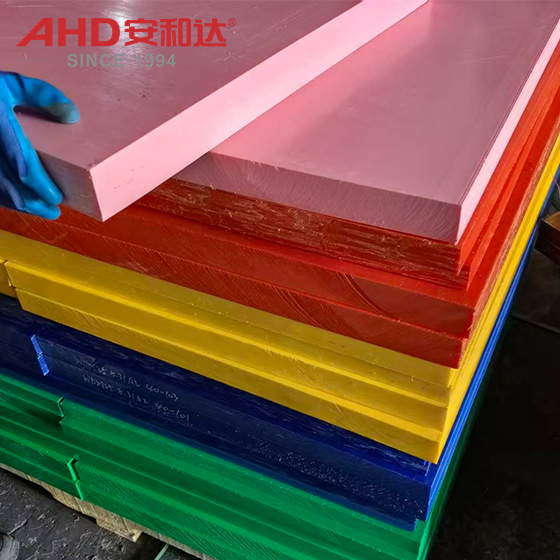
For procurement professionals, factory engineers, and supply chain managers in the manufacturing sector, selecting the right POM sheet remains a challenge. In today’s environment of tightening budgets and routine cost control, everyone is asking the same key question: Does the difference in performance between Chinese POM and imported POM justify the significant price gap? Is the quality of Chinese POM reliable? Can domestic sheets reliably replace imported materials to achieve cost savings through the use of Chinese POM substitutes?
Many procurement professionals find themselves caught in a dilemma: imported polyoxymethylene sheets offer stable quality but come with high prices and long lead times; yet they also worry that while ordinary domestic polyacetal sheets are inexpensive, they may suffer from impure materials, dimensional deviations, and insufficient wear resistance, leading to equipment failures and after-sales losses down the line. Today, we’ll focus on real procurement needs to objectively analyze the differences between domestic and imported POM, clarify the industry landscape, performance gaps, and cost logic, and share AHD’s procurement solutions tailored to various budgets—helping you rationally determine whether domestic or imported POM offers better value.
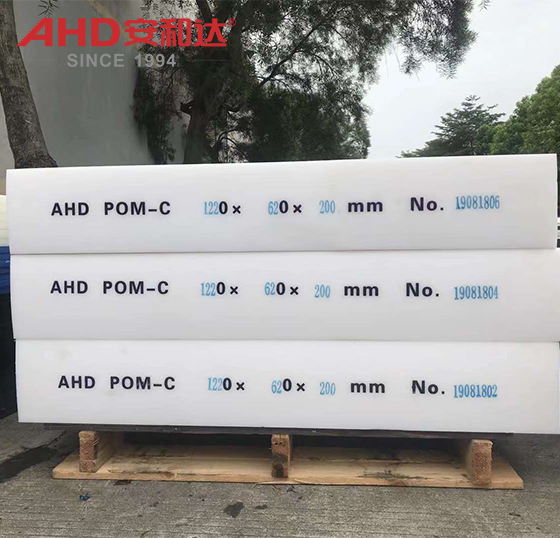
POM Sheet, someone called it Delrin Sheet
I. Industry Overview: Comprehensive Upgrade of Domestic POM Materials and the Gradual Breakdown of the Import Monopoly
Over the past decade, the global POM material market landscape has undergone a complete transformation. In earlier years, international brands such as DuPont, Polyplastics, and BASF firmly dominated the high-end POM sheet market, and industries such as precision machinery, automotive parts, and electronic transmission components were almost entirely reliant on imported sheets. The core driver of this situation was that major international brands leveraged long-standing technical patent barriers and brand premiums, combined with additional costs such as cross-border logistics, tariffs, and multiple layers of distribution, to collectively raise the pricing threshold for imported sheets.
With the upgrading of domestic chemical production capacity and process iterations in China, domestic POM materials have made the leap from low-end replication to high-end equivalence. Leading domestic manufacturers have introduced automated extrusion equipment, optimized polymerization and molding processes, and implemented standardized quality control procedures, significantly enhancing the overall performance of high-end domestic POM sheets. Coupled with the maturity of domestic raw material production, imports of POM sheets have continued to decline over the past two years, accelerating the trend toward domestic substitution. Consequently, Chinese-produced POM sheets are gradually gaining recognition, attention, and adoption both domestically and internationally.
However, a clear tiering persists within the industry: small, low-end manufacturers mix recycled and secondary materials, resulting in poor product stability; whereas reputable large manufacturers adhere to production using virgin materials and strictly comply with international testing standards. This has led to a misconception among many buyers, who mistakenly believe that all domestic sheets are of inconsistent quality and cannot compete with imports. To properly compare the cost-performance of Chinese POM versus imported POM, one must first distinguish between low-end, unbranded domestic materials and high-end, legitimate domestic materials—this is a critical prerequisite for selection.
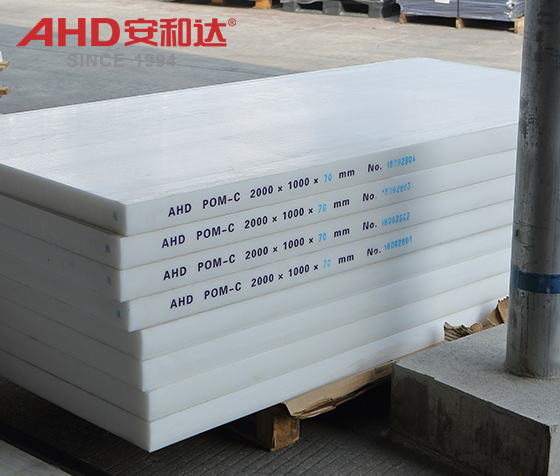
II. In-Depth Comparison: The True Gap Between Chinese-Made POM Sheets and International Brands
1. Quality and Performance: No Significant Gap Under Standard Conditions; Minor Differences Under Extreme Conditions
The comparison of Chinese POM versus imported POM quality is the primary concern for procurement professionals. When examining core parameters for general industrial applications, high-quality domestically produced POM sheets show minimal differences compared to leading international brands. For key metrics such as tensile strength, surface hardness, low coefficient of friction, and creep resistance, high-end domestic sheets have already met international standards and are fully suitable for conventional machining applications such as gears, guide rails, jigs, and automation components.
The subtle performance differences between the two are primarily concentrated in extreme, specialized operating conditions. In environments involving prolonged high temperatures, high-frequency and high-intensity continuous operation, food and medical-grade compliance, or ultra-high precision tolerance requirements, imported modified polyoxymethylene sheet—backed by years of formulation expertise—offer slightly superior stability. However, such scenarios account for less than 10% of industrial applications. For the vast majority of small and medium-sized manufacturing enterprises and standard machining scenarios, there is absolutely no need to pay a premium for performance that exceeds actual requirements.
Many buyers worry that domestic sheets are prone to cracking, warping, and noticeable color variations. However, these issues mostly occur in low-end products made from recycled materials. Reputable brands use brand-new, pure raw materials in production, eliminating impurities at the source. As a result, the flatness, density uniformity, and machinability of these sheets are on par with imported ones, directly addressing the question of whether Chinese POM is worth buying.
2. Cost and Pricing: Domestic Products Offer Significant Price Advantages, Leading to Substantial Long-Term Cost Savings
The price advantage of Chinese POM is a core benefit that today’s manufacturing sector cannot ignore. Based on current market conditions, international brands price polyacetal sheet of the same specifications and thickness significantly higher than high-end domestically produced alternatives. Over the long term, with bulk purchasing, the gap in raw material costs, transportation costs, and overall production costs will continue to widen.
To put it simply, when comparing the costs of Chinese POM versus imported POM, companies that switch to high-quality domestic alternatives for their annual POM sheet procurement can directly reduce raw material expenses and optimize overall profit margins. The high price of imported sheets is not entirely due to performance advantages but rather the accumulation of additional costs such as brand premiums, shipping fees, tariffs, and agent distribution fees. When considering only the production cost of the material itself, high-quality domestically produced POM sheets offer exceptional value for money.
3. Delivery and Service
Supply chain stability has become a critical factor in procurement decisions in the post-pandemic era. Major brands of POM sheets generally suffer from long lead times; orders often face extended waiting periods, and small orders are easily overlooked or must be routed through agents. If the agent lacks expertise, issues such as procurement pricing and inventory shortages cannot be resolved quickly or reasonably.
In contrast, high-quality Chinese-made sheets leverage local, large-scale production to maintain a stock of standard specifications. Standard products can be shipped within a short lead time, while customized dimensions, color modifications, and special processing requirements can also be addressed quickly. This flexible supply model effectively reduces the risk of supply disruptions and offers greater adaptability for small and medium-sized factories and companies with fluctuating order volumes.
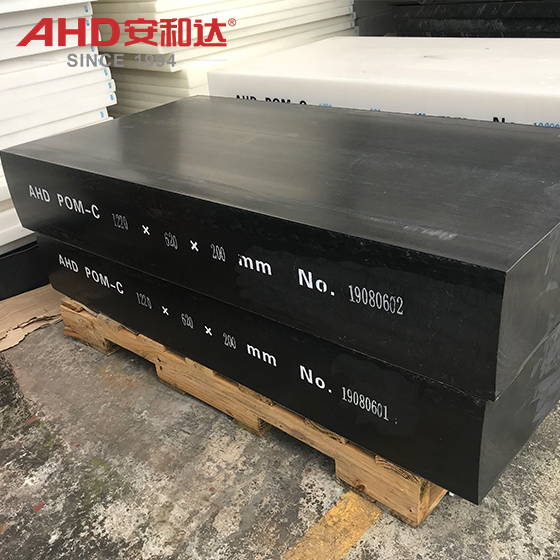
III. AHD Polymer’s Dual-Track Strategy: In-House Production of Competitive-Grade Sheets + Distribution of Imported Premium Brands, Covering All Budget Requirements
With 32 years of deep expertise in the engineering plastics manufacturing industry, AHD Polymer fully understands the challenges of procurement: it is not about blindly pursuing the lowest price or blindly trusting big brands, but rather about achieving the right quality, reasonable pricing, and stable supply. To address this, we have established a dual-track operational strategy that balances the cost-performance of Chinese POM as an import substitute with high-end customization needs, meeting the procurement requirements of clients across different industries and budget levels.
1. AHD Polymer In-House POM Sheets: Manufactured with Imported Pure Raw Materials, Matching Imported Quality
Our POM sheets are produced entirely from brand-new imported raw materials, with a strict policy against the use of recycled or scrap materials. Leveraging modern extrusion lines and precise temperature control processes, we rigorously manage sheet density, thickness tolerances, and surface finish. Their wear resistance, aging resistance, and deformation resistance fully match those of international brands.
During the final inspection phase, every batch of sheets undergoes multiple quality checks, including hardness testing, mechanical testing, and dimensional calibration, thereby addressing customer concerns about the reliability of Chinese POM quality at the source. This in-house produced sheet offers exceptional value for money and is perfectly suited for mainstream applications such as general machinery, electronics, hardware components, and automated fixtures. It serves as the core choice for enterprises seeking low-cost import substitution, effortlessly achieving the goal of reducing costs with a Chinese POM substitute.
2. Authorized Distribution of Original Brand Products: Legitimate, Authorized Sources to Meet High-End, Stringent Requirements
For special applications such as ultra-high-precision equipment, high-temperature and high-strength operating conditions, standards of foreign-invested enterprises, and medical/food-grade requirements, AHD Polymer simultaneously offers distribution services for original imported POM sheets. Partner brands include globally renowned chemical companies; sources are legitimate and traceable, with complete certification reports and test certificates, fully preserving the high-performance advantages and consistent performance of imported sheets.
The core value of this dual-track model lies in its flexibility to adapt to procurement needs: for projects with limited budgets seeking overall cost-effectiveness, our in-house benchmark-grade sheets are the preferred choice; for projects with stringent requirements, specified imported materials, or the need for high-end certifications, genuine imported sheets are directly selected. There is no need to force a compromise between quality and budget—a single supply chain can handle the procurement of the full range of POM sheets.
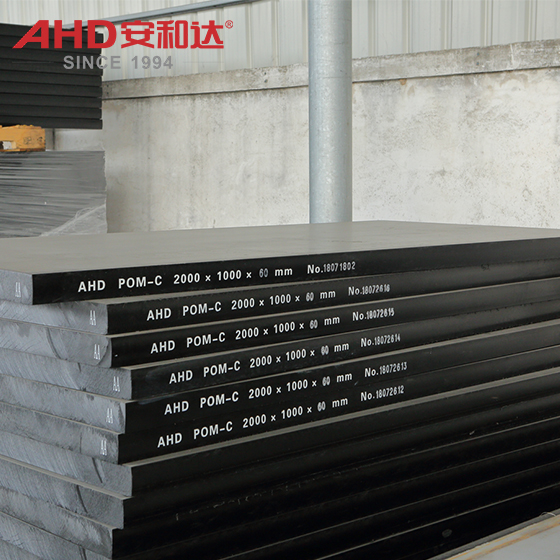
Objectively speaking, the comparison between domestic and imported POM is no longer simply a matter of quality, but rather a question of suitability for specific applications. Imported polyoxymethylene (POM) sheets still hold an advantage in high-end, extreme applications, but their high prices, long lead times, and numerous distributors no longer align with the cost-saving needs of most companies. Meanwhile, high-quality domestically produced POM sheets, such as those from AHD Polymer, have completely shattered the stereotype that “domestic = low quality” by utilizing imported raw materials, benchmarking production processes, and offering affordable pricing.
When evaluating material value, one must always consider their own production conditions. By rationally assessing the differences between domestic and imported POM and making choices based on budget, processing requirements, and usage environments, you can find the optimal solution. AHD Polymer’s dual-track strategy—combining in-house production with imports—is designed to ensure that every buyer can easily access cost-effective POM sheet procurement solutions without compromising on quality or sacrificing profit margins, thereby laying a solid foundation for the enterprise’s long-term supply chain development.