

Plastic modification means the addition of one or more other substances to the plastic resins for the purpose of changing their original properties and of improving one or more aspects of their performance and thus extending their field of application. “Modified plastic materials” are collectively called as modified plastics.

Plastic modification methods can be broadly categorized as:
1. Strengthening: The addition of fibrous or sheet-like fillers such as glass fibres, carbon fibres and mica powder increases the rigidity and strength of materials, for example, in glass fibre reinforced nylon sheets and rods for power tools.
2. Toughening Improving the toughness/impact strength of plastics by the addition of other materials such as rubber and thermoplastic elastomers, as in toughened polypropylene, which is widely used in automotive, home appliance and industrial applications.
3. Blending: A method of uniformly mixing two or more incompatible polymer materials into a macroscopically compatible but microscopically phase-separated mixture to meet certain requirements for physical and mechanical properties, optical properties, processing properties, etc. For example, PTFE+POM Rod.
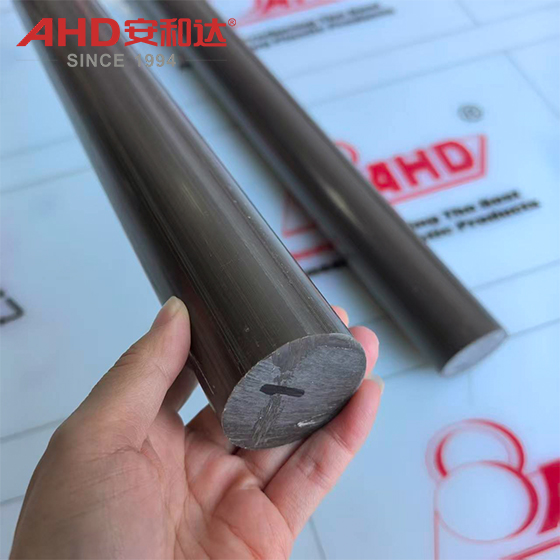
AHD PTFE+POM Rod
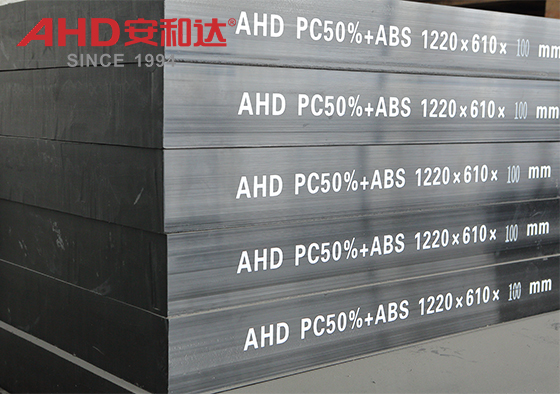
4. Alloying: Similar to blending but with a higher compatibility of the components, can form a homogeneous system easily and can achieve properties that cannot be achieved with a single component, e.g. PC/ABS alloys or PS-modified PPO.
5. Filling: Addition of fillers to plastics to improve physical or mechanical properties, or to reduce costs.
6. Other modifications: Use of conductive fillers to reduce the resistivity of plastics; Additives such as antioxidants/light stabilizers to improve the weather resistance of materials; Additives such as pigments/dyes to change the colour of materials; Additives such as internal and external lubricants to improve the processing performance of materials; Use of nucleating agents to modify semi-junctions.
Besides the physical modification techniques discussed above, there are methods that utilize chemical reactions to alter plastics and obtain particular characteristics. Examples are the grafting of maleic anhydride onto polyolefins, the crosslinking of polyethylene and the use of peroxides in the textile industry for the degradation of resins and the improvement of flowability/fiber forming properties.
In industry, several modification methods are often used in combination. For example, in the modification of plastic reinforcement, toughening agents like rubber are added simultaneously to minimize the loss of impact strength; or in the manufacture of thermoplastic vulcanizates (TPVs), the physical mixing and the chemical crosslinking are performed simultaneously.
Actually, when any plastic raw material is being manufactured, it contains at least some proportion of stabilizers, so that it does not degrade during storage, transportation and processing. Thus, there are no “unmodified” plastics in the strict sense. In industry, however, the base resin that comes from the chemical plants is often referred to as “unmodified plastic” or “pure resin.”
AHD ESD POM Sheet
