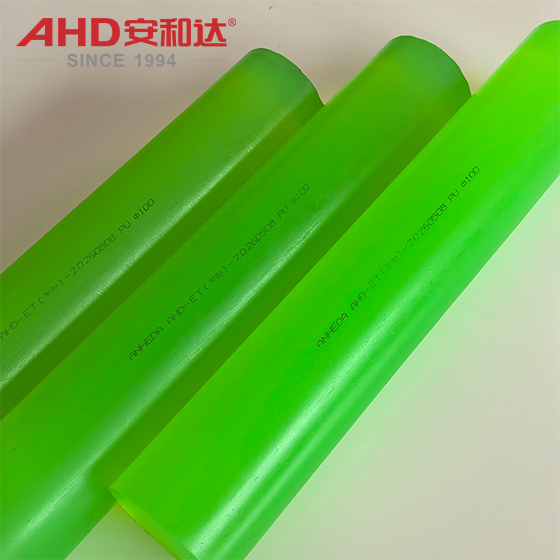
Manufacturers continue to face challenges when sourcing engineering plastic rod for CNC machining. Nylon Rod is prone to moisture absorption which causes tolerance drift and post-machining deformation. It softens at high temperature, which causes build-up edges, excessive burrs and high vibration noise in processing. Nylon does not do well in oil/chemical environments and ages quickly reducing service life. At the same time, the choice of PU Rod (Polyurethane Rod) is fraught with confusion because many buyers do not know how to match hardness or formulations with specific machining tasks. The pressure is on to balance cost and performance: you want to save money but not compromise durability. AHD, a leading manufacturer of PU Plastic Rod and other engineering plastics, tackles these pain points through data-backed comparisons. This guide will help you decide between PU Rod and Nylon Rod for your CNC projects.
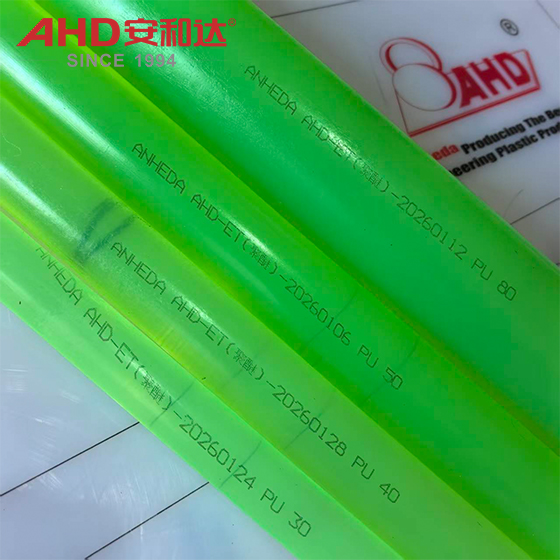
1. CNC Machining Comparison of Machinability: PU Rod vs Nylon Rod
Machinability is the ease of machining a material into accurate parts. PU rod vs nylon rod for CNC machining – extreme differences in cutting behaviour, tool wear and surface finish.
Nylon (PA6/PA66) is stiff but thermally weak. Rapid heat buildup during machining is a consequence of its high melting point (215–265°C). This causes sticky chips that stick to the tools resulting in built up edges and poor surface quality. The hardness (Rockwell R 110-120) of Nylon requires higher cutting forces which in turn generates vibration and noise, especially on long or thin parts.
PU Rod (Polyurethane Rod) Provides better machinability for precision work. The hardness (Shore A 60 –D 80) can be adjusted to decrease the cutting resistance. The low thermal conductivity avoids the heat accumulation and the softening and deformation. The elastic nature of PU allows clean cuts with minimum burr, reducing the time for post-processing.
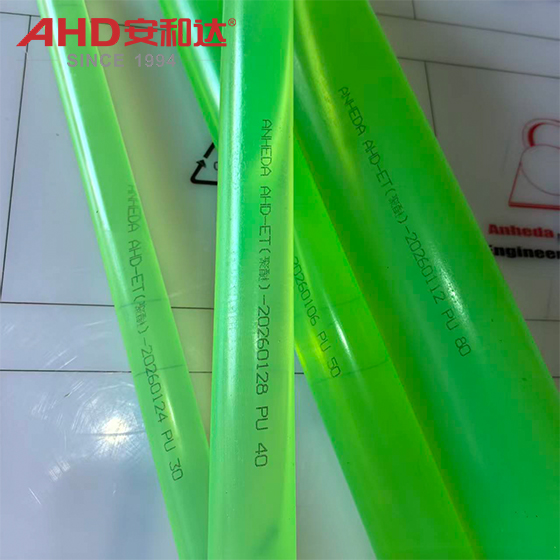
2. Dimensional Stability – Important for Machining to Close Tolerances
For precision components, the dimensional stability of PU vs Nylon rod is make-or-break. Even minor dimensional changes can render parts useless in aerospace, medical or automotive use.
Nylon’s Achilles heel is moisture absorption vs PU rod (which is a plus). Nylon absorbs 1.2–1.6% water in 24 hours, giving a linear expansion of 0.2–0.5%. This results in tolerance drift as the critical dimensions vary with humidity. Common is post machining deformation, especially in thin wall parts needing time consuming stress relief.
PU Rod has very good dimensional stability. It is less than 0.1% moisture absorption, so it will not swell or shrink in humid conditions. Its low coefficient of thermal expansion (60-80 ppm/°C) reduces heat-induced distortion during machining. AHD’s PU Rod with tight tolerances meets all the best plastic rod for tight tolerance machining needs.
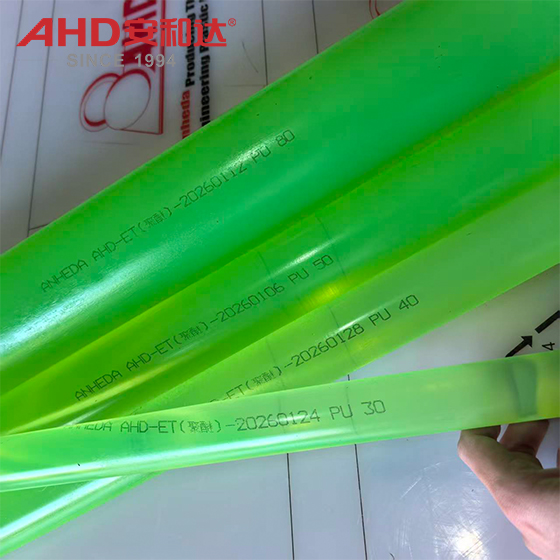
3. Wear Resistance: Comparing PU Rod and Nylon Rod for Gears and Bushings
Wear resistance of PU rod versus Nylon rod directly influences service life in dynamic applications such as gears, bushings, and bearings.
Nylon is characterized by good wear resistance and low friction coefficient (0.1-0.3). It is self-lubricating , and therefore suitable for low to moderate load applications . But Nylon wears out quickly under high pressure or constant friction, particularly in abrasive environments.
PU Rod with Exceptional Wear Resistance Its high abrasion resistance and tear strength make it ideal for heavy duty gears, bushings and wear plates. The resilience of PU allows it to absorb impact without permanent deformation, decreasing wear in dynamic loads.
4. Vibration Applications: PU Shock Absorption vs Nylon Plastic Rod
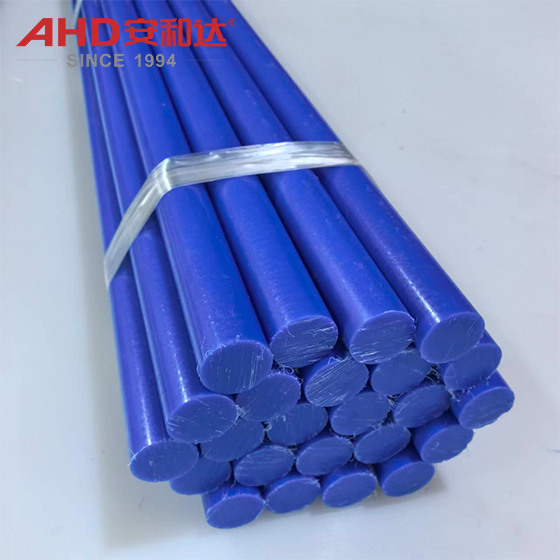
Shock absorption PU and Nylon plastic rod are important for parts that are subjected to impact or vibration, such as machine mounts, rollers and bumpers.
Nylon is not bad at absorbing shock. Its rigid structure consumes energy by deforming but recovers slowly. Heavy impact can cause nylon to crack or deform permanently.
Shock Absorber - PU Rod Its elastic structure efficiently absorbs and dissipates impact energy, reducing vibration and noise. PU is resilient and can withstand many impacts and return to its original shape. This makes it ideal for dynamic applications.
Shock Absorption Data:
Nylon Rod: Impact strength 50-60 kJ/m 2 Vibration damping Medium.
PU Rod (90A): Impact strength 80–100 kJ/m²; Vibration damping High Verdict: If the application is prone to vibration, PU Rod is the better choice. AHD PU Rods are tailor made shock absorption for specific industrial needs. Hardness A70 - A90 for your select.
5. PU Rod vs Nylon Rod Cost Comparison – Finding the Right Balance
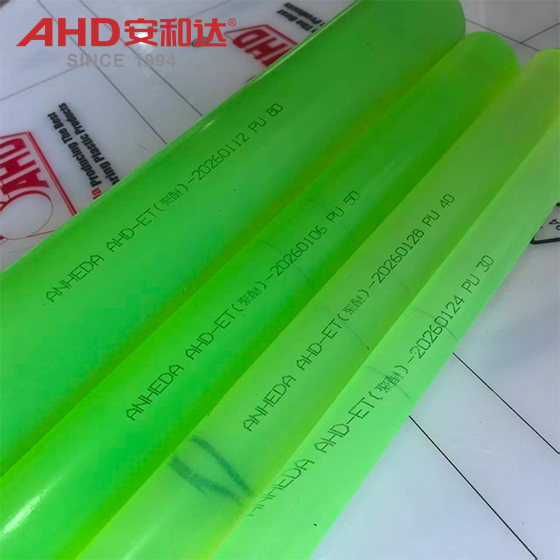
Cost Comparison PU Rod Nylon Rod Manufacturers are keenly aware of the cost comparison. Nylon is cheaper to begin with, but the durability of PU often gives a better ROI.
Nylon Rod is a cheap option. However, the wear rate and moisture-related issues cause frequent replacements, adding to long-term costs.
PU Rod has a higher first cost but the service life is 3–5 times longer. Higher purchase price offset by lower maintenance requirements and less downtime. PU Rod is cost-competitive for large-volume projects thanks to AHD’s factory-direct pricing and bulk discounts.
PU Rod is the smarter investment for long term cost savings. AHD supplies cost effective PU Rods with factory direct pricing and volume discounts.
6. Recommendations for Specific Industries
Automotive (Gaskets, Bushings, Vibration Mounts)
Choose PU Rod: For high wear, vibration-prone parts. AHD 90A PU Rods are suitable for automotive elastomers.
Avoid Nylon Rod: For humid or chemical exposed areas (e.g. engine bays).
Industrial Machinery (Gears, Rollers, Wear Plates)
Choose PU Rod For heavy duty, high friction uses. AHD’s PU Rods are made to be highly wear resistant.
Nylon Rod: Select for low-load, cost-sensitive parts (e.g., light-duty gears).
Why Choose AHD Plastic Sheet and Rod?
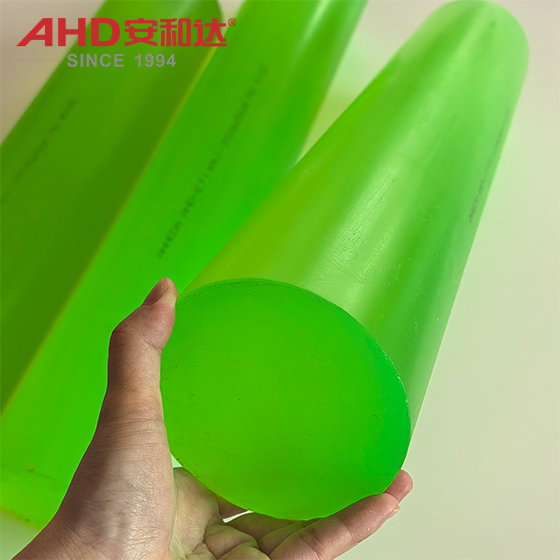
AHD is a trusted supplier of high-quality engineering plastic rods with 32 years of manufacturing experience. Our product range covers full-series engineering plastic sheet and rod, with performance compliance rates above 98%. We offer custom formulation services to tailor PU Rod hardness and properties to your specific machining requirements. We are a factory direct supplier and maintain large inventories for fast delivery to keep your projects on schedule. Our commitment to quality and customer service makes us a reliable partner for manufacturers around the world.
PU Rod FAQs
Q1: What is the optimal hardness of PU Rod for CNC machining?
A1: For general CNC work, 90A hardness is a good compromise between rigidity and machinability. Best for flexible parts are softer grades (70A-85A), and for high wear parts harder grades (D60-D80).
Q2: Can PU Rod be used for food grade applications?
A2: Yes. AHD has FDA-compliant PU Rods for food processing equipment. These rods are food contact compliant.
Q3: How is the chemical resistance of PU Rod?
A3: PU Rod has good resistance to oils, grease and many solvents. It is better than Nylon in chemical resistance, particularly to petroleum-based fluids.
PU Rod (Polyurethane Rod) is better than Nylon Rod for most precision machining applications as regards dimensional stability, wear resistance, shock absorption and long-term cost-effectiveness. While Nylon is still an inexpensive choice for low load parts, PU Rod offers better performance, making it a good plastic rod for CNC machining and tight tolerance applications.
Want to take your machining projects up a notch with quality PU Rod? AHD provides free samples, trial orders, expert advice and performance test reports. Contact us today. As your trusted partner for AHD plastic Sheet and Rod we help you achieve precision, durability and cost savings to be a supplier for your market.