The Challenge of Tropical Industrial Storage
In the humid, high-temperature climates of Malaysia and Indonesia, industrial storage is not just about capacity—it is about survival. For industries handling palm oil mill effluent (POME), acidic processing chemicals, or mining wastewater, PP tanks are a very suitable choice. It is a commonly used corrosion-resistant material in the chemical industry.
This is where Grey Polypropylene Sheet (PP Sheet) and PP Welding Rod come in. As a leading engineering plastic, PP offers an unbeatable combination of chemical inertness and structural integrity, making it the material of choice for outdoor storage tanks across Southeast Asia.

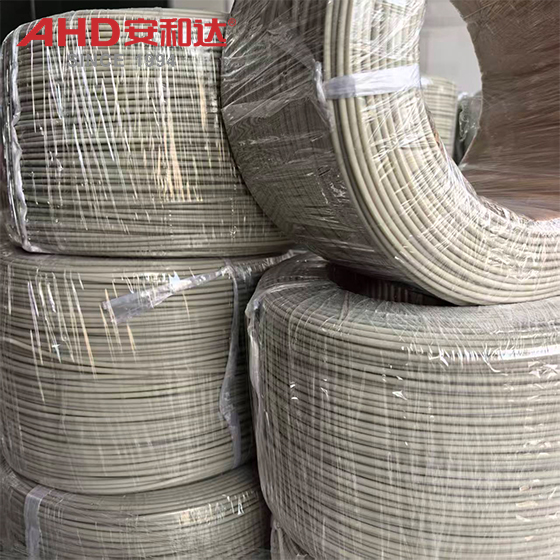
Optimized for Southeast Asia’s Chemical Processing Industry
Our PP Gray Sheets are manufactured from virgin homopolymer polypropylene, offering exceptional resistance to a wide range of acids, alkalis, and organic solvents.Unlike metal alloys that suffer from galvanic corrosion in tropical humidity, PP is chemically inert. This makes it the ideal substrate for electroplating tanks, chemical dosing systems, and scrubber units. Furthermore, our PP Welding Rods provide a seamless, monolithic bond during fabrication. This eliminates leak paths and ensures that even when storing oxidizing agents (with exceptions like concentrated chromic acid), the structural integrity remains intact, safeguarding your facility against environmental spills.
Hygienic & Cost-Effective: The Food Industry Standard
Beyond heavy industry, the food processing sectors—particularly palm oil refining, beverage production, and aquaculture—require strict hygiene standards. Our PP Gray Sheets are non-toxic and comply with international food contact regulations.
The smooth, non-porous surface of our welded PP tanks prevents bacterial growth and biofilm formation, which is critical for palm oil fractionation tanks and edible oil storage. Unlike stainless steel, PP does not require expensive passivation treatments and is immune to pitting corrosion caused by chlorides found in seawater or cleaning agents. For food manufacturers in Southeast Asia looking to reduce CAPEX without compromising safety, our PP solutions offer a 30-40% cost saving compared to 316L stainless steel alternatives, while delivering superior thermal insulation properties.
The Role of High-Purity PP Welding Rods in Structural Safety
The integrity of a storage tank is only as strong as its seams. Our PP Gray Welding Rods are manufactured with strict control over melt flow index (MFI) and additive content. For outdoor tanks exposed to monsoon seasons, we recommend using AHD PP Welding rods for superior stiffness in structural supports and areas requiring high impact resistance. This tailored approach ensures that whether you are storing edible palm oil or acidic mining tailings, the welded joints remain leak-proof under dynamic loads, providing peace of mind for factory managers in high-risk environments.
Mastering Heavy-Duty Fabrication: The 20–50mm Thick PP Gray Sheet Welding
When constructing large-scale infrastructure such as acid pickling tanks or primary sedimentation tanks, thickness equals durability. We offer 20mm to 50mm thick PP Gray Sheets for tanks.
The Double-V Butt Weld Technique
For thick plates, standard welding is insufficient. You can process that utilizes the Double-V butt weld technique:
Preparation: Edges are beveled to create a deep groove.
Multi-pass Welding: Using AHD high-quality PP Welding Rods, perform multiple passes to ensure full penetration.
Structural Integrity: This creates a joint stronger than the parent material, capable of withstanding the hydrostatic pressure of 10-meter-high tanks.
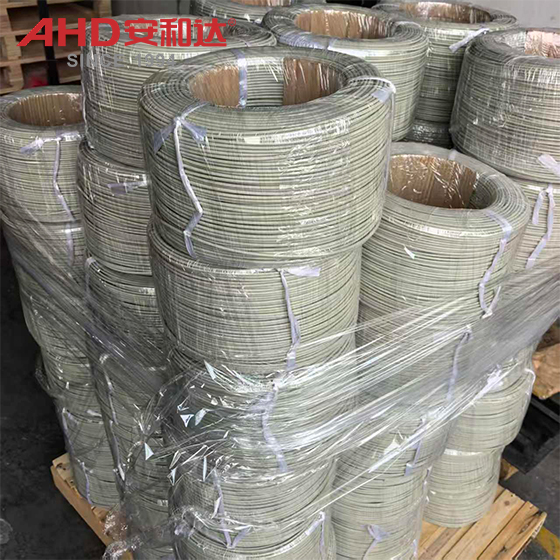
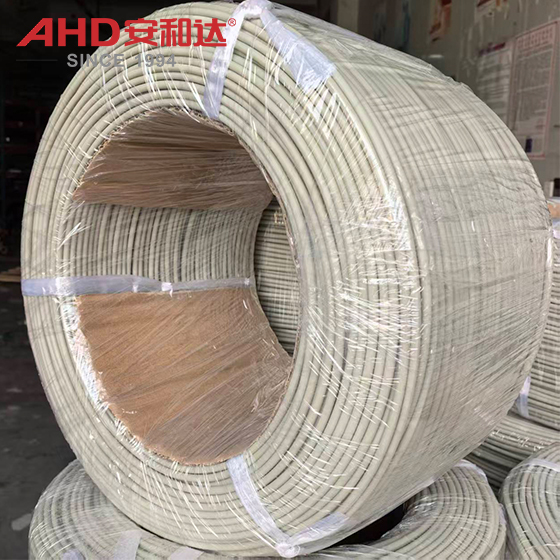
AHD PP Plastic Welding Rods
Solving Thermal Expansion in the Tropics
Southeast Asia experiences intense solar radiation. With a linear expansion coefficient of 100–150 x 10⁻⁶ m/(m·K), PP expands significantly more than steel. Failure to account for this leads to "buckling" or tank rupture.
How to Calculate and Install Expansion Joints
| Parameter | Value / Formula | Application Note |
| Daily Temp Range | 25°C – 45°C | Common in open-air sites in Southeast Asian. |
| Expansion Rate | ΔL = L × α × ΔT | For every 10m of PP sheet, expect ~15mm expansion. |
| Installation Gap | 10–15mm per 10m | Always leave gaps at the base anchoring system. |

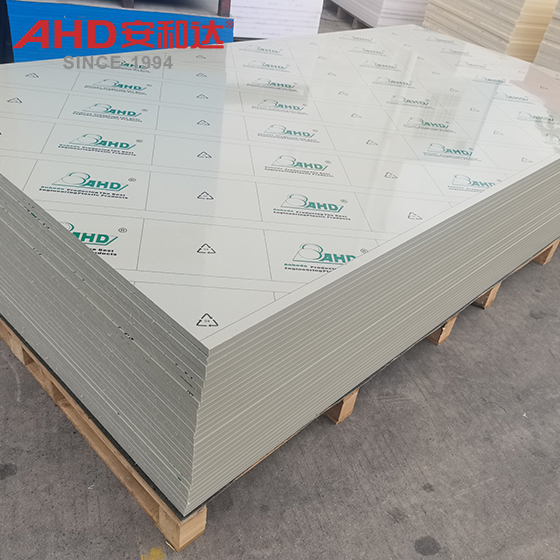
AHD Polypropylene Plastic Sheets (PP Sheet)
Chemical Resistance: The Lifeline for Palm Oil & Mining
The primary reason buyers in Malaysia and Indonesia choose our products is chemical compatibility.
PP Gray Sheet Resistance Chart
| Chemical Environment | Concentration | Temperature | Resistance Rating | Application Example |
| Palm Oil Mill Effluent (POME) | Raw / Treated | Up to 60°C | Excellent | Anaerobic digester tanks. |
| Sulfuric Acid | < 80% | Ambient | Excellent | Palm oil bleaching earth pits. |
| Sodium Hydroxide (Caustic Soda) | < 40% | Ambient | Excellent | Neutralization tanks. |
| Seawater / Brine | 100% | Ambient | Good | Desalination & mining runoff. |
| Chromic Acid | > 40% | Any | Poor | Avoid in electroplating waste. |
Q1: Your PP Gray Sheets are compliant with food safety standards for the Asian market?
Yeah. Our food-grade PP sheets are made of virgin resin and meet FDA and EU standards. They are certified for direct food contact, safe for tanks commonly used in Indonesian and Malaysian food factories.
Q2: How does PP compare to HDPE for chemical storage tanks in tropical climate?
HDPE is more flexible but PP has better heat resistance (up to 100°C continuous use against HDPE's 60°C). If you are in tropical country like Singapore or Kuala Lumpur, the surface of a tank exposed to sun can easily get up to 70°C. PP is still structurally rigid at these temperatures.
Q3: How big PP welding rod should I use for 30mm thick plates ?
For thick sheets we recommend PP welding rods of diameter 4mm or 5mm. A thicker rod gives a higher deposition rate and better fusion for multi-pass welds. Use the right size welding gun nozzle (usually 8-10mm) that fits the diameter of the rod for maximum heat transfer.
Q4. Can PP tanks be used in UV exposure in open air mining sites in Indoensia?
The standard grey PP sheets have a medium UV resistance. But for long-term outdoor exposure at high altitude mining locations, we recommend the use of a UV resistant protective coating or UV stabilized grade to prevent embrittlement over a 10 year life span.
Q5: How long is the delivery time for 20mm thickness PP sheets bulk orders to Malaysia?
We carry standard sizes (1000x2000mm/1220mm x 2440mm) for 20mm-50mm sheets. For the 1500x3000mm bigger size, the delivery usually is 5-7 days depending on the quantity.
Q6: How do I know what diameter of PP Welding Rods to use?
The golden rule is to match the rod size to the sheet thickness.
For sheets < 10mm: Use 3mm diameter welding rods.
For plates 10mm - 20mm use 4mm diameter welding rods.
For sheets > 20mm: Use 5mm diameter rods for the welding.
The right size is important for the right melt flow and to prevent voids in the weld seam . This is very important for pressure vessels or acid tanks .