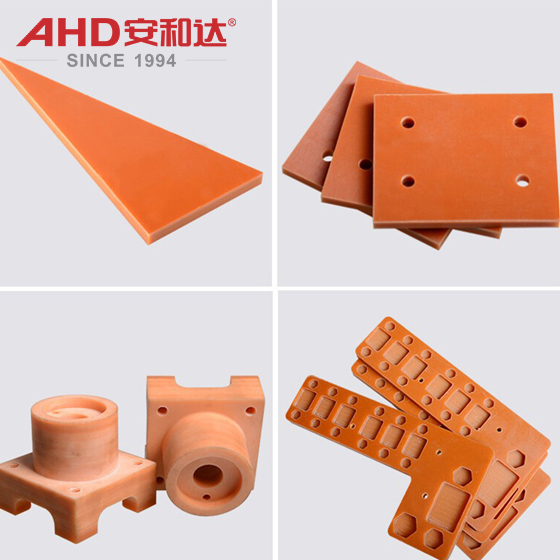
Choosing between Paper Phenolic Sheet and Bakelite Sheet directly impacts the safety, durability, and cost efficiency of electrical and industrial machinery projects. Many procurement engineers and manufacturers struggle to distinguish the practical gaps between these two widely used insulation materials, especially in high-temperature, humid, and high-voltage working scenarios. This guide clarifies the core differences between phenolic paper laminated sheet vs bakelite sheet difference, covering performance parameters, industry applications, and selection standards to help you pick the right material for your equipment. As a professional plastic board and rod manufacturer with 32 years of experience, AHD provides full-series engineering plastic solutions with factory-direct supply and fast global delivery.

Both Paper Phenolic Laminate Sheet and Bakelite Plate are thermosetting phenolic resin laminated materials, in accordance with national electrical insulation industry standards. They are widely used in low voltage electrical insulation and industrial mechanical insulation components. However, the production process and material composition make their application boundaries different.
Paper Phenolic Resin Sheet is made by impregnating high-quality kraft paper with phenolic resin, and then hot-pressing and curing under high temperature and pressure. It has uniform internal structure and stable insulation performance, is an electrical grade phenolic paper laminate sheet, and is suitable for general electrical application.
Bakelite Panels also known as bakelite plastic sheet is a traditional phenolic laminated material with higher resin content and denser curing structure. Most of the bakelite sheet products that can withstand high temperature meet the FR-2 flame retardant standards, so it can be used in harsh industrial environments under the influence of continuous mechanical friction and heat.

Performance Comparison
The choice of materials is mainly based on performance gaps. The following are the test data of industrial paper phenolic laminate sheet and electrical insulation bakelite sheet (standard environmental conditions of 25℃, 50% humidity) which fully meet the selection requirements for industrial and electrical engineering.
1. Performance of electrical insulation
Both these materials are mainly useful as electrical insulators. Their dielectric stability is quite different. The electrical phenolic paper sheet features low dielectric loss and steady insulation performance in low voltage surroundings, with perpendicular breakdown voltage of 12-18 kV/mm and 50Hz dielectric constant controlled below 4.0. It is ideally suited for low voltage electrical insulation phenolic paper sheet applications including electrical cabinet partitions and terminal blocks.
On the other hand, electrical insulation bakelite sheet has better voltage resistance stability in 90℃ transformer oil, parallel lamination breakdown voltage ≥20kV. Its insulation structure is more compact . It is the preferred material to manufacture circuit breaker inner phenolic paper laminate board and motor insulation bakelite laminated plate .
2. Workability and mechanical strength
Bakelite Sheet of High Mechanical Strength It has a tensile strength of up to 390MPA and a flexural strength of more than 120MPA. Good compression and impact resistance. It is not deformed under long-term mechanical pressure, perfect for bakelite laminate sheet for machinery and CNC fixtur . Its stable physical structure.
The machinability of paper phenolic sheet is excellent. Uniform paper substrate allows for accurate CNC cutting and drilling without cracking the edges. The phenolic paper laminated sheet has stable structural integrity after repeated processing impact resistance. Widely used for test jig insulation phenolic vs bakelite board customized processing.
3. Thermal Stability & Environmental Resilience
There is a significant difference in temperature tolerance between bakelite sheet and phenolic laminate sheet. Bakelite plastic sheet has excellent heat insulation performance and can withstand a long-term working temperature of up to 160℃, so it is suitable for welding fixture heat insulation bakelite sheet applications where it is exposed to high temperatures intermittently.
Phenolic paper laminated sheet can adapt to the continuous working temperature below 140℃. But has the lighter weight and better anti-corrosion performance. The anti-corrosion phenolic paper laminate has better stability in weak corrosive workshop environment than bakelite plate. The water resistant bakelite sheet for humid workshop effectively resists moisture penetration and prevents insulation failure in high humidity space.
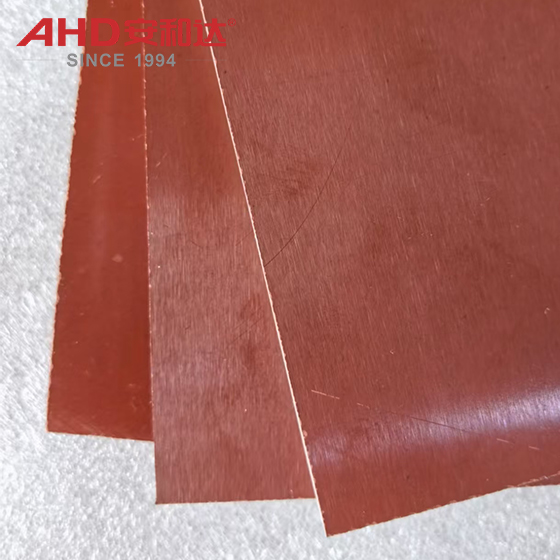
Industrial & Electrical Application Scenario Classification
Reasonable material selection based on working conditions can effectively reduce equipment failure rate and procurement costs. Combined with actual engineering cases, AHD summarizes targeted application schemes for the two materials.
1. Preferred Scenarios for Paper Phenolic Board
As cost-effective insulation materials, phenolic paper laminated board is mainly used for standard electrical and light industrial scenarios. It is commonly applied in phenolic paper laminated sheet for electrical switchgear, including internal insulation partitions of low-voltage switch cabinets, terminal block fixing plates, and ordinary circuit insulation components.
The low friction phenolic paper sheet for electrical equipment also fits light-load mechanical insulation parts, such as non-high-temperature fixture baffles and equipment insulating gaskets. For bulk procurement of standard-sized phenolic paper sheets, AHD provides factory direct supply discounts with sufficient inventory and 48-hour fast delivery.
2. Preferred Scenarios for Bakelite Sheets
Bakelite sheet is more suitable for harsh working conditions requiring high strength, high temperature resistance and moisture resistance. Industrial machinery insulation phenolic paper sheet vs bakelite sheet comparison shows that bakelite panels perform better in heavy machinery equipment insulation, motor internal insulation, and humid workshop production lines.
Custom machined bakelite sheet CNC cutting property enables personalized processing of special-shaped parts, widely used in precision testing jigs, welding heat insulation parts, and high-load mechanical insulation components. AHD supports customized size, thickness and surface treatment of bakelite plates to meet diverse industrial processing needs.

Professional Material Selection Guide & Operation Steps
To help customers quickly confirm suitable materials, AHD summarizes a set of feasible selection steps based on 32 years of manufacturing experience, suitable for all industrial and electrical procurement engineers.
First, confirm the working environment: check temperature, humidity, corrosive medium and voltage level. For low-temperature, dry, low-voltage conventional scenarios, choose electrical grade phenolic paper laminated sheet to control costs. For high-temperature, humid, heavy-load scenarios, prioritize high-insulation and high-strength bakelite sheet.
Second, confirm processing requirements: if needing complex CNC cutting, drilling and grooving, select Paper Phenolic Resin Sheet with good machinability. If the parts bear long-term mechanical impact and pressure, choose high mechanical strength bakelite plate.
Third, verify industry standards: all AHD phenolic paper sheets and bakelite panels comply with electrical insulation standards and can provide test reports to support customer project.

AHD Manufacturer Advantages & Bulk Procurement Support
As a reliable Chinese supplier specializing in phenolic plastic board and rod production for 32 years, AHD has independent production workshops and complete testing equipment. We supply full-series engineering plastic sheet and rod products, covering all specifications of Paper Phenolic Laminate Sheet and Bakelite Sheet.
We adhere to a factory direct supply mode to ensure competitive pricing for customers. Sufficient raw material inventory and standardized production lines support spot delivery of conventional products and customized processing of special specifications. Bulk procurement customers can enjoy exclusive preferential policies and long-term stable supply guarantees.
All products undergo strict insulation, mechanical and environmental resistance tests before leaving the factory, with stable quality and high consistency. We provide one-stop services including sample, professional material selection suggestions, and performance test reports to solve customers’ material selection and application problems.

Q1: What is the difference in electrical performance of phenolic paper sheet and bakelite sheet?
The main difference is the stability of insulation at high temperature and voltage resistance. Phenolic paper sheet has low dielectric loss and stable performance in the general low-voltage and room temperature environment, which is suitable for ordinary electrical insulation parts. The high temperature breakdown voltage of bakelite sheet is higher , and the moisture resistance is better , which can keep stable insulation performance in 90℃ hot oil and humid environment , more suitable for high-demand electrical equipment insulation.
Q2: Is phenolic paper laminate and bakelite sheet suitable for use in humid workshops?
Bakelite sheet is better for humid workshops. With high resin curing density, it has good water resistance to avoid moisture absorption and insulation attenuation. Phenolic paper sheet is suitable for dry indoor environments, but long-term high humidity will cause slight moisture absorption and a decrease of mechanical and insulation performance, so it is not suitable for long-term humid working conditions.
Get Customized Solutions from AHD
Still confused about choosing between phenolic paper laminated sheet and bakelite sheet for your project? Contact AHD professional engineering team now. We provide product samples, targeted material selection suggestions, performance test reports and customized processing services. With 32 years of quality assurance, factory direct supply price advantage and fast global delivery, AHD is your most trusted long-term partner for industrial and electrical insulation plastic materials!