

Frequent equipment wear, shortened part service life and repeated replacement are common costly issues for manufacturing, material handling and automated production lines operating under high abrasion working conditions. Choosing between durable Polyester Polyurethane Sheet and conventional Silicone Rubber Sheet for machinery wear protection, conveyor lining and equipment sliding components. While both industrial sheets deliver flexible protection performance, their wear resistance, structural stability and service life differ drastically in high-friction industrial scenarios. This practical industry guide helping you pick the most cost-effective Polyurethane Sheet solution for your on-site equipment operation.

Core Performance Comparison: Abrasion & Tear Resistance
Abrasion resistance is the top evaluation index for wear resistant industrial sheets, tested per industrial abrasion standard. Abrasion resistant PU sheet delivers far superior wear resistance than standard Rubber Silicone Sheet, making it the ideal wear resistant plastic sheet for continuous friction scenarios.
Test data shows polyester-based PU sheets withstand 3200+ abrasion cycles under standard industrial loads, while ordinary silicone rubber sheets only sustain 800–1200 cycles. The wear resistant polyester PU sheet features dense polyester molecular chains that enhance surface hardness and structural stability, avoiding rapid surface thinning and peeling caused by long-term material friction.
In terms of tensile and tear performance,high tensile polyester PU sheet reaches a tensile strength of 45–52 MPa and tear strength of 85 kN/m, complying with ISO 527 engineering plastic standards. By contrast, silicone rubber sheets only achieve 12–18 MPa tensile strength, prone to deformation and tearing under frequent mechanical impact. This makes tear resistant polyester PU sheet perfect for high-load industrial sliding surface sheet applications.
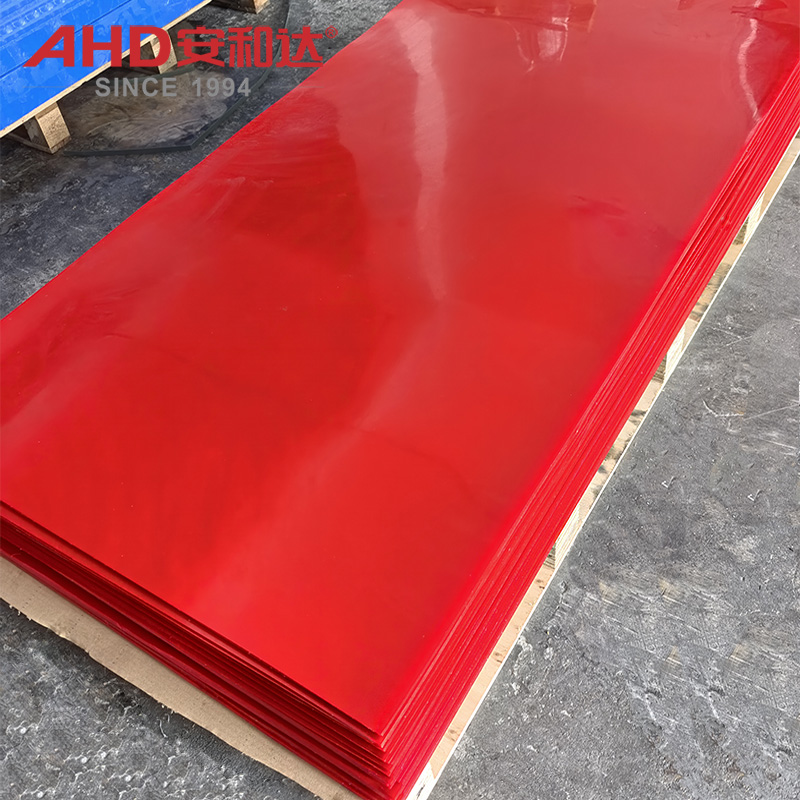
Structural Stability Under Continuous Industrial Friction
High abrasion working conditions require materials to maintain stable physical properties under long-term extrusion, sliding and impact. Most silicone rubber sheets feature high flexibility but poor rigid support, easily generating permanent compression deformation after continuous roller contact and mechanical friction.
Industrial polyurethane sheet adopts composite polyester and polyurethane formula, balancing flexibility and rigidity. It effectively buffers mechanical vibration while resisting sliding friction damage, with a permanent deformation rate below 1.2% after 1000 hours of continuous operation. This stable performance solves the frequent replacement problem of silicone wear parts in material handling wear sheet scenarios.
For packaging machine wear strips and roller contact wear plate applications, polyester PU sheets avoid surface warping, bulge and material adhesion failures common with silicone sheets. Its smooth and wear-resistant surface ensures stable equipment operation and reduces manual maintenance frequency.
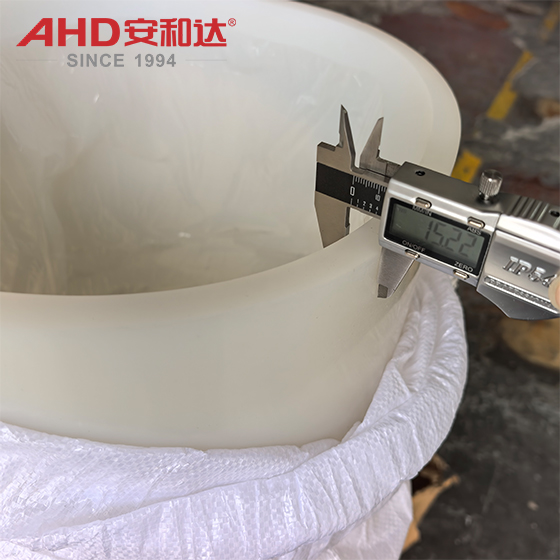
Industry Adaptation Scenarios: PU Sheet vs Silicone Sheet
Each industrial material has targeted applicable scenarios, and accurate selection directly improves equipment operation efficiency. Silicone rubber sheets excel in high-temperature resistance, food-grade sanitation and anti-aging performance, suitable for static sealing and low-friction high-temperature environments.
However, in dynamic high-wear scenarios, polyurethane sheet alternative to silicone sheet shows absolute advantages. In automated machinery wear protection and factory equipment anti-friction accessories, anti-abrasion industrial sheet made of polyester PU reduces part replacement frequency by 3–5 times compared with silicone materials.
Typical applicable scenarios of custom machinable PU sheet include automation equipment wear pads, machinery wear liner, industrial sliding surface sheet and bulk material conveying wear strips. AHD’s industrial procurement wear sheet guide summarizes that polyester PU sheets cover 90% of industrial dynamic wear scenarios, while silicone sheets are only suitable for static auxiliary protection.
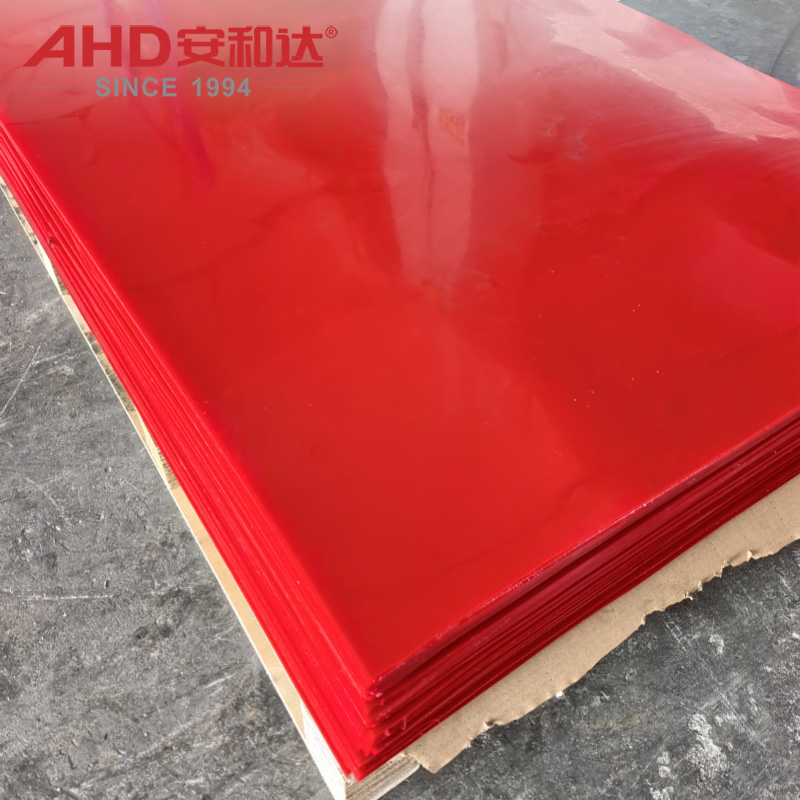
AHD Factory Advantages for Polyester PU Sheet Procurement
As a professionalpolyester PU sheet supplier with 32 years of manufacturing experience, AHD focuses on full-series engineering plastic sheet and rod production, providing one-stop industrial wear-resistant material solutions for global industrial buyers.
We support custom size polyester PU sheet processing, adapting to non-standard sizes of various machinery wear parts. Whether small-batch custom samples or bulk polyester PU sheet supplier wholesale orders, we provide preferential bulk procurement policies and fast factory direct delivery services. Sufficient spot inventory ensures 48-hour rapid shipment, solving customers’ urgent equipment maintenance demands.
All AHD Polyester PU plastic sheet products pass international industrial performance tests, with performance test reports and quality certification documents. Adhering to the factory direct sales model, guarantee stable product quality and competitive prices, and serve as a reliable long-term partner for industrial procurement wear sheet needs.
Compared with generic silicone rubber sheet products on the market, AHD’s wear resistant polyester PU sheet undergoes secondary formula optimization, with enhanced anti-abrasion and anti-tear properties, fully adapting to harsh high-frequency friction industrial environments.

Practical Selection & Installation Guidelines
The key selection principle of PU sheet or silicone sheet for wear that confuses buyers is clear: polyester PU sheets should be used in all dynamic, high friction and high load working conditions, and silicone sheets are only used for static sealing, high temperature insulation and low wear conditions.
In the process of real installation and application, the custom machinable PU sheet should be cut according to the size of the equipment wear area so that it could tightly fit. Leave 0.5-1mm expansion gaps for the installation of conveyor lining and machinery liner to avoid extrusion deformation due to thermal expansion. Regular cleaning of the surfaces allows to increase the service life of anti-abrasion industrial sheets.
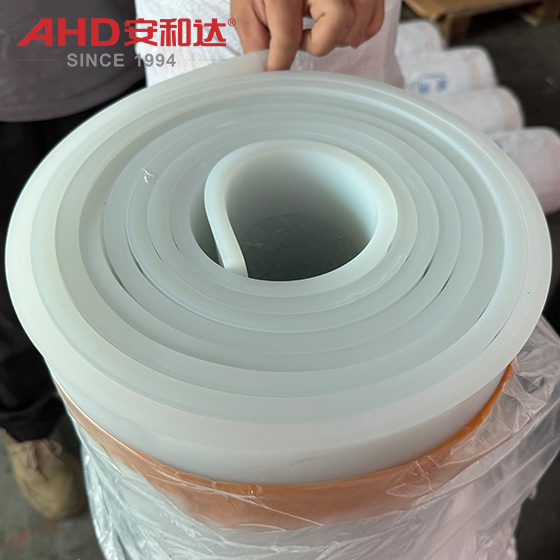
Frequently Asked Questions on Polyester PU Sheet & Silicone Rubber Sheet
Q1: More durable than silicone sheet for mechanical wear parts (e.g. polyethylene PU sheet)?
A1: Yes. Abrasion tests confirmed that polyester PU sheet has 3-4 times higher abrasion resistance and 3 times higher tear strength than ordinary silicone sheet. It is more suitable for dynamic mechanical wear conditions such as automation equipment wear pads and conveyor liner sheets, while the silicone sheet is only suitable for low friction static protection.
Q2: Is the polyester PU sheet of custom size a substitute for silicone sheet in all the industrial wear applications?
A2: Not all the time. Polyester PU sheet is predominant in high abrasion working conditions. But silicone rubber sheet has better high temperature resistance (-50°C~250°C) and food grade sanitation performance. Silicone sheet is more suitable for high temperature static sealing and medical food equipment accessories; PU sheet is the best substitute of dynamic friction and load-bearing wear parts.
Q3: What are the advantages of procurement of bulk Industrial PU Sheet from AHD?
A3: AHD is a professional industrial PU sheet wholesale manufacturer, we provide custom processing, full-spec spot supply, factory direct price, bulk order discount. We support samples, offer performance test reports, and ensure rapid delivery and stable quality to meet the long-term batch procurement needs of industrial enterprises.