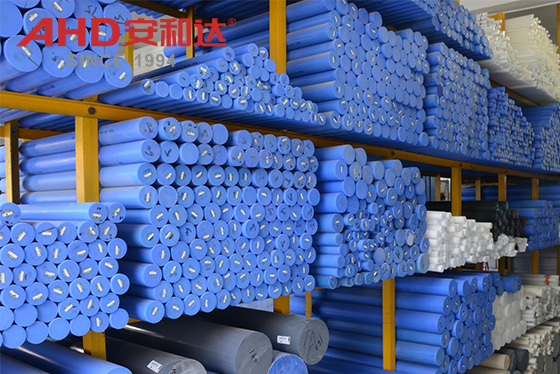
If gearbox bushing failures are still eating away at your wind farm maintenance budget, you’re not alone. The operators of offshore and onshore turbine fleets are increasingly replacing bronze and steel wear parts with casting MC nylon rod. And the reason is not hype, it’s data. It reduces friction, repels moisture and reduces the weight of rotating assemblies, as well as long term maintenance costs. So let’s break down the actual performance numbers, the industry standards, and the logic behind this decision.
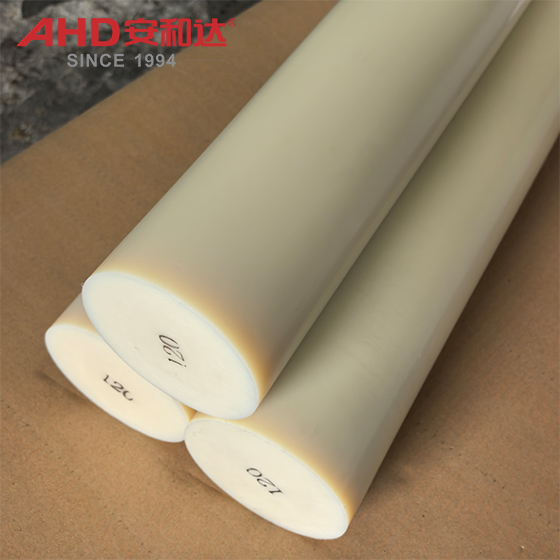
Why Wind Turbine Gearboxes Are a Wear-Part Headache
Wind turbine gearboxes run under conditions few industrial components face: constant torque reversals, wide temperature swings, salt-air exposure offshore, and almost no room for error during scheduled maintenance.
Traditional bronze bushings and steel wear plates handle load well, but they bring three recurring problems to gearbox housings and yaw/pitch systems:
Corrosion in humid or coastal environments, especially on offshore platforms
Added rotational mass, which increases stress on adjacent bearings
Dry-running risk when grease intervals are missed at remote sites
Because turbine access often requires crane trucks onshore or vessel charters offshore, every unplanned bushing replacement carries a cost far beyond the part itself. This is the core reason procurement teams have started specifying cast nylon bushings for wind turbine maintenance instead of defaulting to metal.
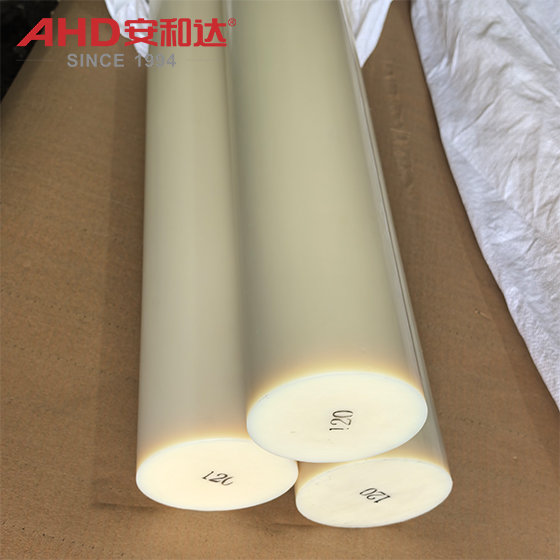
MC Nylon Rod vs Bronze and Steel Casting: How They Perform
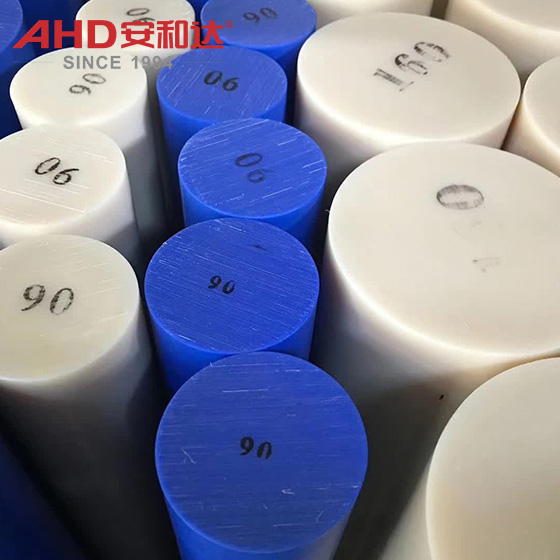
Cast MC (monomer casting) nylon is made by a polymerization process, and has a denser and more uniform molecular structure than extruded nylon, hence its different performance under sustained load. Here’s how it generally compares to the metal alternatives it’s replacing:
| Cast MC Nylon Rod | Bronze Bushing | Steel Wear Plate | |
| Density (g/cm³) | ~1.15–1.17 | ~8.9 | ~7.85 |
| Tensile Strength (MPa) | 80–90 | 200–300 | 400+ |
| Coefficient of Friction (dry) | 0.15–0.25 | 0.3–0.4 | 0.4–0.6 |
| Self-Lubricating | Yes |
No
|
No |
| Corrosion Resistance | Excellent | Moderate | Poor (untreated) |
| Relative Weight vs. Steel | ~85% lighter | Heavier | Baseline |
The bottom line for gear uses: cast nylon MC rod won’t outmuscle steel on pure tensile strength, but wear part applications in which friction, weight and corrosion resistance are more important than maximum load capacity, it’s a better long-term choice. That's the reason it's designed for bushings, sleeves and guide components and not for primary load-bearing gears.
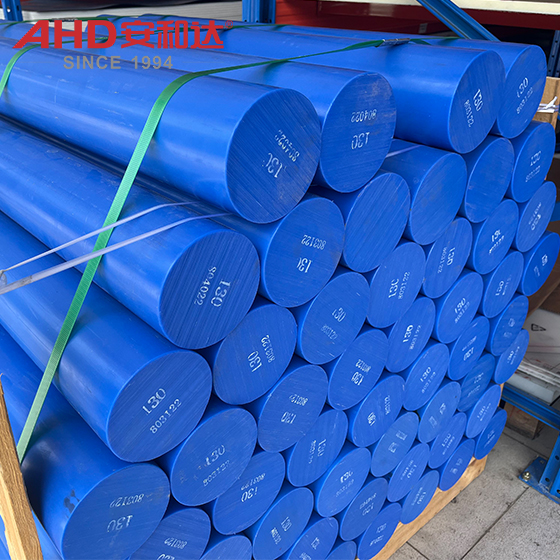
Important key performance parameters for gearbox applications
The most important four numbers for engineers analyzing the mechanical properties of cast MC nylon rod for gearbox wear parts are:
Rockwell Hardness (R Scale): 110–125 Resistance to surface deformation due to repeated contact (important for bushings that are cyclically loaded)
Izod Impact Strength: 3–6 kJ/m2 Demonstrates how the material responds to the rapid torque spikes typical in turbine startup and braking events.
Water Absorption rate : 5.5-6.5% (24hr, saturation) Cast nylon does absorb some moisture and this has a slight effect on dimensional stability. This is something to take into account for humid coastal installations using appropriate machining tolerances.
Operating Temperature Range: -40°C to +100°C (120°C for short term) Virtually covers all onshore and offshore turbine nacelle conditions, without the need for pre-heating.
Please note that these numbers are typical values for cast MC nylon (usually called MC901 or similar grades). Performance varies with manufacturer and casting quality, so it’s better to find a vendor that provides verified test reports than to look at the marketing copy on a spec sheet.
Real World Application: Retrofit of a Gearbox Offshore
So what's behind this material switch? One of the common scenarios in the industry is an offshore wind operator that has a fleet of aging turbines that was replacing bronze planetary carrier bushings about every 14-18 months due to pitting corrosion from salt-air condensation inside the nacelle housing.
After changing to machined cast MC nylon rod bushings to the original bronze specs, the same components were still in service after 30+ months with no signs of corrosion related degradation and less grease consumption due to the material’s self-lubricating properties. The lighter weight also eased the load a bit on the adjacent bearing seats.
This kind of performance is why cast MC nylon rod for offshore wind turbine bushing has grown from a cost-saving experiment to a standard maintenance spec on several fleets.
Selection Guide: How to Choose the Right Rod Diameter and Grade
The correct cast MC nylon rod is not something you can pick for everyone. Here’s the practical process procurement and maintenance teams typically use:
Get the OD/ID and tolerance range of the original component. Nylon shrinks a bit when machined so you usually order over-sized stock to allow for finish machining to spec.
Determine the type of load. Radial load (bushings), axial thrust (thrust washers) or sliding wear (guide rails) will determine if standard MC nylon or an oil-filled/MoS2-filled grade is the best choice.
Consider ambient conditions – Oil-filled cast nylon grades can offer better dimensional stability at offshore or high-humidity sites.
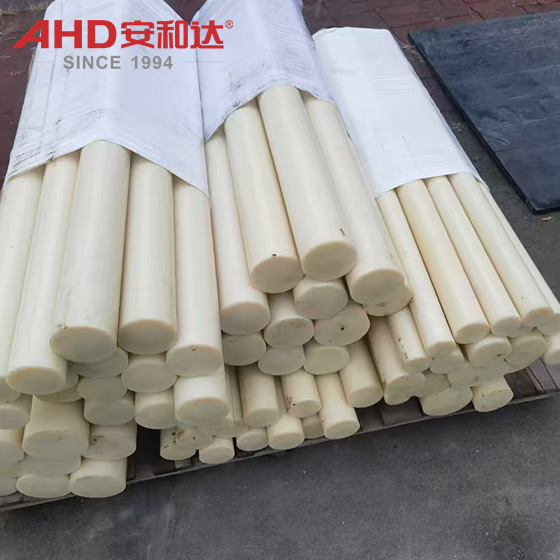
Check the availability of the rod diameter – gearbox bushings generally require diameters from 50mm to 300mm. Check if your supplier has the size in stock instead of making a custom order which will increase the lead time.
Before you order in bulk, ask for a material test report, particularly from a supplier you have not used before.

Where AHD comes into the picture
AHD Polymer has been producing engineering plastic sheets and rods for 32 years and a large portion of that manufacturing experience is in casting MC nylon rod for industrial wear part applications.
Some practical advantages that are worth knowing if you’re sourcing:
We are factory direct suppliers of full range of diameters normally used in gearbox bushing & sleeve machining without distributor markups.
Large inventory with fast delivery, which is important when a scheduled maintenance window does not allow for long custom lead times.
Custom services for non-standard diameters, lengths, or oil-filled grades for specific gearbox retrofits.
Bulk purchase discounts for fleet operators with multiple turbine units on recurring maintenance
Complete scope of engineering plastics other than cast nylon rod – PTFE, POM, UHMWPE and other sheets and rods, all wear-resistant. For teams looking to standardize on multiple wear-part specs with a single supplier.
1. What is the average lead time for custom machined cast MC nylon rod bushings for gearbox applications?
Standard MC nylon Rod for standard diameters that are already stocked can ship in 3 days. Machining to custom tolerances usually adds only a couple of days to production. Non-standard inventory diameters take longer because they require a dedicated casting run – always confirm current stock availability before finalizing a maintenance schedule around a delivery date.
2. How does Polyester PU Sheet stack up against cast MC Nylon rod in wear applications?
Polyester PU (polyurethane) sheet generally has greater abrasion resistance and elasticity than cast nylon and is more suited to impact pads, conveyor liners and vibration-dampening applications rather than rigid load bearing bushings. Where dimensional rigidity under sustained load is the priority, such as in gearbox sleeves and bushings, cast MC nylon rod is still the better choice.
3. What is the maximum diameter of cast MC nylon rod that is available for use in gearbox bushings?
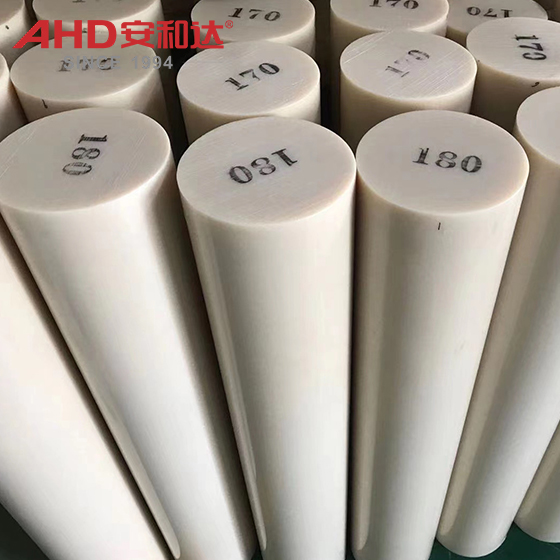
Cast MC nylon rod is usually produced in diameters from about 20mm to 300mm or larger, because the casting process (as opposed to extrusion) allows for thick, solid sections without internal voids. The majority of orders for gearbox bushings are in the range of 50mm-300mm, machined down to the finished bushing OD/ID with allowance for a slight post-machining shrinkage of the material. Don’t assume you can get the full range of stock diameters on short notice. Always confirm the exact diameters with your supplier.
4. If a cast MC nylon rod is placed in a gearbox bushing, does it require lubrication?
Because of the molecular structure of the material, cast MC nylon is naturally self lubricated and can operate with less grease than a bronze or steel bushing under the same conditions. However, “self-lubricating” doesn’t mean maintenance free. Periodic lubrication is still recommended under continuous high load or high speed operation to maximize the service life of the gearboxes – especially for continuous duty gearboxes.