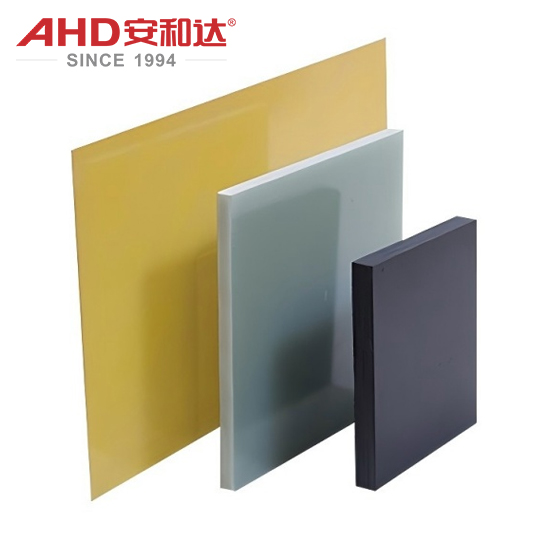

Epoxy glass fiber sheet is a general term for composite sheets made of glass fiber cloth as reinforcement and epoxy resin as the matrix. FR4 (Flame Retardant 4) is a high-performance subtype of epoxy glassfiber sheet that meets specific industry standards and is designed specifically for the electrical and electronics fields. The following analyzes their characteristics, advantages, and key differences:
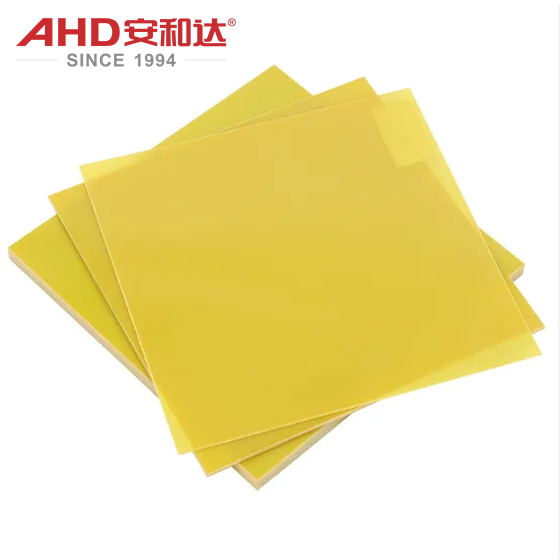
I. Characteristics and Advantages of yellow epoxy glassfiber sheets
Characteristics:
1. Base Material Composition: Made of glass fiber cloth as a reinforcement layer and epoxy resin as a bonding matrix, it is produced through a hot press molding process.
2. General Performance:
• Mechanical Strength: The high modulus of glass fiber imparts excellent tensile, compressive, and flexural strength to the sheet (typical tensile strength is approximately 300-500 MPa).
• Electrical Insulation: Epoxy resin has a dielectric constant (Dk) of approximately 4.5-5.0 (at 1 MHz) and a low dissipation factor (Df) of approximately 0.005-0.01, making it suitable for low-frequency or low-frequency insulation applications.
• Chemical Resistance: Resistant to acids, alkalis, and organic solvents (such as alcohols and hydrocarbons), but strong oxidizing acids (such as concentrated sulfuric acid) may cause the resin to decompose.
• Temperature Resistance: The long-term operating temperature of conventional epoxy fiberglass board is approximately -50°C to 105°C (unmodified), with short-term temperature resistance reaching 120-130°C.
• Processability: It can be processed into various shapes through cutting, drilling, CNC milling, and other processes.
3. Adjustability: Depending on the type of epoxy resin (e.g., epoxy novolac, brominated epoxy, silicone-containing epoxy) and the type of glass fiber (e.g., E-type, T-type, D-type), different properties (e.g., weather resistance, flame retardancy, dielectric properties) can be customized.
Advantages:
• Cost flexibility: When compliance with specific standards is not mandatory, the material formulation and process can be simplified, making it suitable for applications with less stringent performance requirements and at a lower cost than high-end FR4.
• Performance tunability: By adjusting the resin formulation (e.g., adding fillers or flame retardants) or the number of fiber layers, requirements for mechanical strength, weather resistance, or specific environments (such as humidity and salt spray) can be met.
• Wide range of applications: In addition to the electronics field, it can also be used in non-precision applications such as industrial equipment protective panels, mold backing plates, and insulating structural components.
AHD Yellow epoxy sheet
II. Characteristics and Advantages of FR4 Glassfiber Sheet
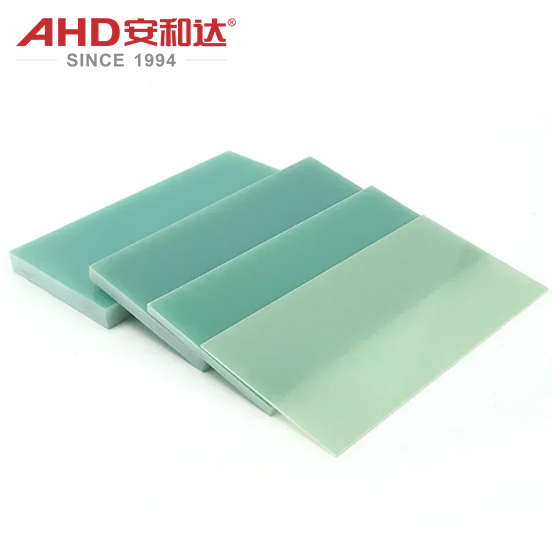
FR4 is a standardized epoxy glass fiber sheet that strictly adheres to international and industry standards and is designed specifically for the electrical and electronics industry. Its core features are optimized for high reliability and consistency.
Features:
1. Strict Standard Constraints:
• Flame Retardancy: Must pass UL94 V-0 certification (self-extinguishing time ≤10 seconds for thickness ≤3mm). Some high-end FR4 sheets can achieve V-0 or even 5VA (a more stringent flame retardancy rating).
• Electrical Performance: Dielectric constant (Dk) is approximately 4.2-4.8 at 1 MHz, dissipation factor (Df) ≤0.008 (conventional type), and high-frequency versions can achieve Dk as low as 3.5-3.9 (10 GHz).
• Thermal Performance: Glass transition temperature (Tg) ≥130°C (Tg130) for conventional types, ≥150°C (Tg150) for medium-Tg types, and ≥170°C (Tg170) for high-Tg types. Short-term temperature resistance reaches 260-300°C (welding applications).
• Mechanical Precision: Strictly controlled thickness tolerances and high surface flatness (warpage ≤0.5%).
2. Enhanced Key Performance:
• Moisture and Heat Resistance: Passes moisture absorption testing (≤0.1%) and maintains high insulation resistance (≥1×10¹⁰ Ω) in high temperature and humidity environments (85°C/85% RH).
• Soldering Resistance: Withstands multiple reflow soldering cycles (no delamination or blistering), making it suitable for high-temperature processes in PCB manufacturing.
Advantages:
• High Reliability: Standardized production and rigorous testing ensure batch-to-batch performance consistency, making it particularly suitable for electronic devices requiring high safety and stability.
• Suitable for Electronic Applications: Low dielectric loss, high heat resistance, and flame retardancy make it a preferred material for PCB substrates.
• Mature Supply Chain: Large-scale production is available globally, ensuring stable supply and manageable costs.
AHD G10 FR4 Glassfiber Sheet
Ⅲ. Summary of the differences
| Epoxy Glassfiber Sheet | FR4 Glassfiber Sheet | |
| Definition and Standards | Generally refers to fiberglass + epoxy composite panels, not governed by mandatory standards. | Epoxy fiberglass panels that meet specific industry standards (such as NEMA LI-1) are a subcategory of the former. |
| Performance Highlights | High versatility, with flexible performance adjustments (e.g., low cost, weather resistance). | Focus on electronic-grade reliability: high flame retardancy (V-0), low dielectric loss, and high heat resistance (Tg ≥ 130°C). |
| Applications | Industrial protective panels, mold backing plates, non-precision insulation components, etc. | PCB substrates, electronic and electrical insulation components, high-frequency communication equipment, etc. |
| Consistent performance | Batch-to-batch variability is significant (depending on formulation and process control). | Strict quality control ensures highly consistent performance from batch to batch. |
| Cost | Due to process simplification or performance adjustments, costs may be lower (depending on specific needs). | Standardized production and quality requirements result in slightly higher costs than general-purpose products. |
FR4 is essentially a standardized electronic-grade epoxy fiberglass sheet. It meets stringent performance specifications (flame retardancy, heat resistance, and electrical properties) to meet the requirements of precision electronics applications like PCBs. General-purpose epoxy fiberglass sheet, on the other hand, offers greater flexibility and is suitable for industrial applications with lower performance requirements or those requiring customization. The choice should be based on the specific application: FR4 is preferred in the electronics industry, while general-purpose epoxy fiberglass sheets can be selected based on cost and performance requirements for non-electronic applications.