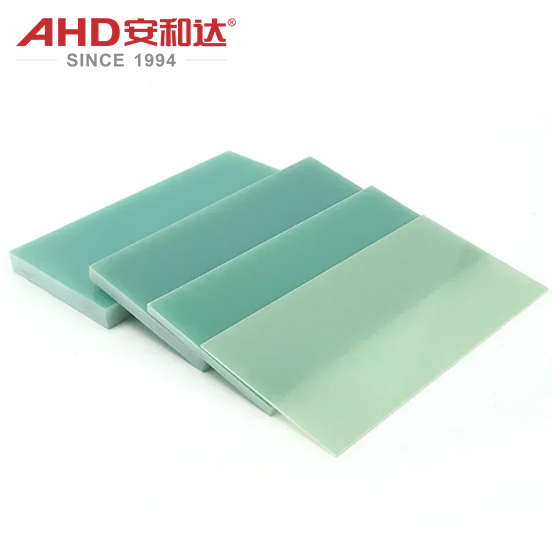

Bakelite, epoxy glass fiber, FR4 glass fiber, and phenolic cotton board are all thermosetting laminated composite materials widely used in electrical insulation, electronics, and machinery manufacturing. The following analyzes their similarities and key differences:
Similarities
1. Material Type: Both are thermoset composite materials (cannot be remelted or reshaped after curing). They are composed of a resin and a reinforcement material, combining the corrosion resistance of the resin with the mechanical properties of the reinforcement.
2. Electrical Insulation: Both possess excellent electrical insulation properties and are suitable for insulating structural components (such as circuit boards and insulating supports) in electrical equipment.
3. Heat Resistance: Both cured resin systems can withstand certain high temperatures (the specific temperature varies depending on the resin type) and can be used stably in conventional industrial environments.
4. Applications: They are widely used in the electronics, electrical, and machinery manufacturing industries as insulating components, structural components, or functional materials.
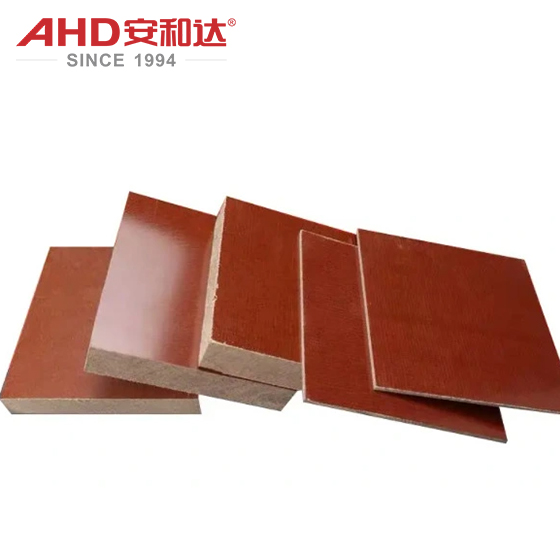
AHD cotton phenolic laminate sheet
Core Differences
1. Different Matrix Resins
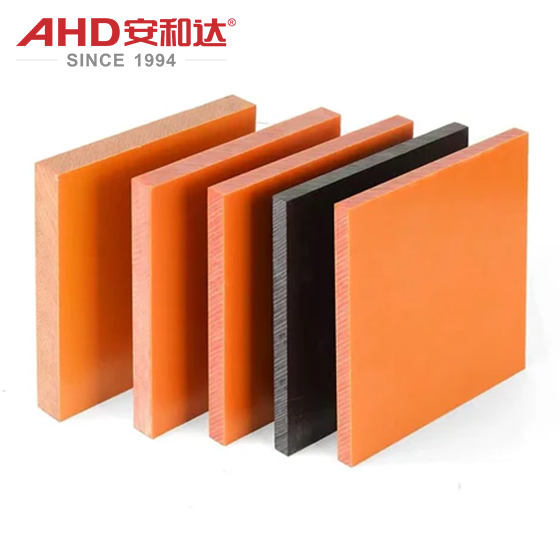
• Bakelite sheet: Based on a phenolic resin matrix, it is formed by the condensation reaction of phenol and formaldehyde and is a thermosetting phenolic resin.
• Epoxy glass fiber sheet/FR4 Glassfiber Sheet: Based on an epoxy resin matrix, most commonly bisphenol A epoxy resin, cross-linked with a curing agent (such as anhydride or amine) to form a three-dimensional network structure.
• Phenolic cotton cloth sheet: Also based on a phenolic resin matrix, it uses the same resin type as Bakelite, but with a different reinforcement material.
2. Different Reinforcement Materials
• Bakelite Sheet: The reinforcement material is typically wood pulp, paper pulp, or cotton linters (short fibers), which are bonded to the phenolic resin through heat pressing to form the board.
• Epoxy Glass Fiber Sheet/FR4 Sheet: The reinforcement material is continuous glass fiber cloth (E-type glass fiber is the most common), with long, directional fibers, significantly improving mechanical properties.
•Phenolic cotton cloth sheet: The reinforcing material is cotton fiber cloth (long fiber fabric), the fiber length and strength are higher than the short fiber of bakelite board, but lower than glass fiber.
Key performance differences
| Bakelite sheet | Epoxy glass fiber sheet | FR4 glass fiber sheet | Phenolic cotton cloth sheet | |
| Mechanical Strength | Low (short fiber reinforcement, more brittle) | Medium (dispersed glass fiber, medium strength) | High (continuous glass fiber reinforcement, high impact resistance and tensile strength) | Medium-high (long cotton fiber reinforcement, better toughness than bakelite) |
| Heat Resistance | Good (heat deformation temperature approximately 150-200°C) | Good (conventional Tg approximately 105-120°C) | Excellent (FR4 Tg ≥ 130°C, high Tg types can reach over 180°C) | Good (phenolic resin itself has excellent heat resistance, approximately 180-200°C) |
| Dimensional Stability | Fair (wood pulp fiber has high hygroscopicity) | Medium (glass fiber reduces hygroscopicity) | Excellent (glass fiber + highly cross-linked epoxy resin, low expansion coefficient) | Medium (cotton fiber has slightly higher hygroscopicity than glass fiber) |
| Machinability | Easy to cut and drill, but with a rough surface. | Excellent machining performance, suitable for precision machining. | Requires specialized tools (high hardness), suitable for precision operations such as PCB drilling. | Machinability similar to bakelite, but slightly better toughness. |
| Flame retardancy | Self-extinguishing (UL94 V-1~V-2) | Can be added with flame retardants (conventional V-1~V-2) | High flame retardancy (UL94 V-0, FR4 standard requirements) | Self-extinguishing (UL94 V-1~V-2) |
| Typical Applications | Low-end electrical insulation components (sockets, switches, handles) | General mechanical components, non-precision insulation supports | PCB substrates, high-reliability electronic components, precision molds | Motor slot wedges, high-voltage insulation components, ablation-resistant components |
Cost and Positioning
• Bakelite Laminate: Low raw material (wood pulp) cost, mature manufacturing process, and lowest price. It is primarily used in low-end applications with low performance requirements.
• Phenolic Cotton Cloth Laminate: Cotton cloth costs more than wood pulp but less than fiberglass, with a medium price. It is used in mid-range insulation applications requiring a certain degree of toughness.
• Epoxy Fiberglass Laminate: The fiberglass and epoxy resin cost more, with a medium to high price. It is used for general structural components in the mechanical and electronic fields.
• FR4 Fiberglass Laminate: Must meet stringent electrical and mechanical standards (such as UL94 V-0 and high Tg), requires high manufacturing process requirements, and is the most expensive. It is a core base material in the electronics industry.
Summary
The core differences between the four types of PCBs stem from the choice of resin type and reinforcement material:
• Phenolic resins (bakelite, phenolic cotton) focus on heat resistance and self-extinguishing properties, making them suitable for low-end or ablation-resistant applications;
• Epoxy resins (glass fiberboard, FR4) emphasize high mechanical strength and dimensional stability. FR4, due to its glass fiber reinforcement and high Tg properties, has become a benchmark material in the electronics industry.
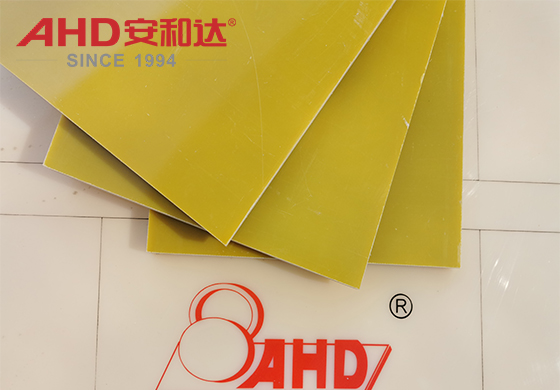
AHD G10 FR4 Glassfiber Sheet