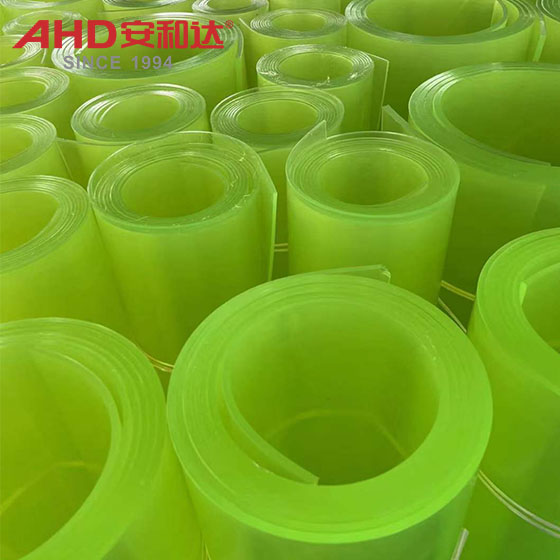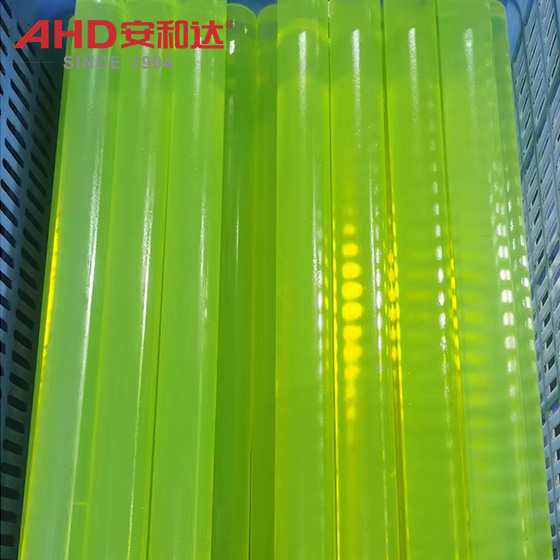
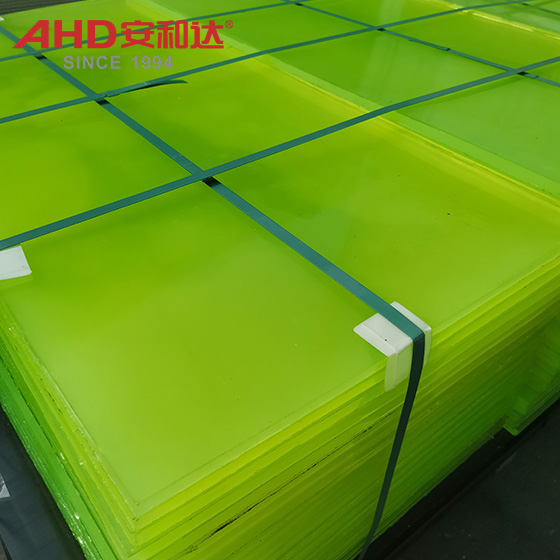
AHD polyurethane sheet
1. Definition of Polyether PU
PU polyether refers to a polyurethane (PU) whose soft segment (flexible chain segment) is composed of polyether polyols. Its core structural characteristic is that the backbone of the flexible portion of the molecular chain contains numerous ether bonds (-O-). These ether bonds are generated through ring-opening polymerization of epoxy monomers (such as ethylene oxide (EO) and propylene oxide (PO).
Polyether polyols are key raw materials for PU polyethers. Common examples include polypropylene oxide ether glycol (PPG) and ethylene oxide-propylene oxide copolyether glycol (EO-PO copolymer). Due to the chemical stability of the ether bonds (resistance to hydrolysis and UV resistance), PU polyethers typically exhibit superior water resistance, low-temperature resistance, and flexibility.
Structural characteristics: The ether bond has weak polarity, the molecular chain is highly flexible, and the ether bond is not easily hydrolyzed (good chemical stability).
2. Definition of Polyester PU
Polyester PU refers to a polyurethane whose soft segment (flexible chain segment) is composed of polyester polyols. Its core structural characteristic is that the flexible backbone of the molecular chain contains numerous ester bonds (-COO-). These ester bonds are formed through the polycondensation reaction of dibasic acids (such as adipic acid and terephthalic acid) with diols (such as ethylene glycol and butanediol).
Polyester polyols are key raw materials for Polyester PU, with common examples including polyethylene adipate (PEA) and polybutylene adipate (PBA). Due to the strong polarity and strong intermolecular forces (high hydrogen bonding) of ester bonds, Polyester PU generally exhibits higher mechanical strength, wear resistance, and oil resistance, but weaker hydrolysis resistance.
Structural characteristics: The ester bond has strong polarity and strong intermolecular forces (many hydrogen bonds), but the ester bond is easily hydrolyzed by water, acid, and alkali.
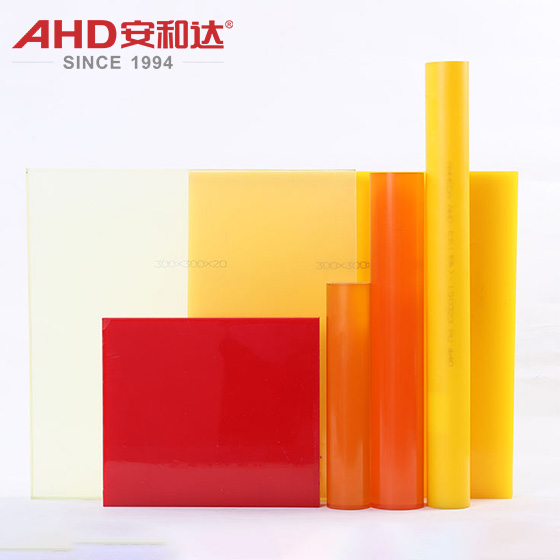
PU Polyether Sheet and Rod
| Performance Dimensions | PU Polyether | Polyester PU |
| Hydrolysis Resistance | Excellent (ether bonds are stable and not easily broken by water, acids, or alkalis) | Slightly lower(ester bonds are easily broken by water, acids, or alkalis) |
| Low-Temperature Resistance | Better (ether bonds are highly flexible and retain elasticity at -40°C) | Fair (ester bonds are slightly more rigid and tend to become brittle at low temperatures) |
| Mechanical Strength | Low (low intermolecular forces, medium tensile strength) | Higher (high intermolecular forces, higher tensile strength and hardness) |
| Wear Resistance | Fair (low intermolecular friction) | Excellent (high polarity promotes intermolecular bonding, resulting in excellent wear resistance) |
| Oil/Solvent Resistance | Fair (good resistance to non-polar solvents) | Excellent (ester bonds offer strong resistance to polar solvents such as oils) |
| Weather Resistance | Good (strong resistance to UV degradation) | Slightly lower (ester bonds are susceptible to UV damage and breakage) |
| Cost | Slightly lower (polyether polyol production technology is mature) | Slightly higher (polyester polyol raw material (diacid) costs are relatively high) |
Application Differences
PU Polyether:
Suitable for applications requiring hydrolysis resistance, low-temperature resistance, or high flexibility.
Water-resistant sealants (construction, electronic component packaging).
PU Polyester:
Suitable for applications requiring high mechanical strength, wear resistance, or oil resistance.
Oil-resistant seals (automotive engine oil seals, hydraulic system seals).
The key difference between PU Polyether and Polyester PU lies in the chemical structure of the soft segment: the former has ether bonds as its backbone, emphasizing hydrolysis resistance and low-temperature resistance; the latter has ester bonds as its backbone, emphasizing high mechanical strength and wear resistance. The choice should be based on specific requirements (e.g., whether the application will come into contact with water, whether low-temperature resistance or high wear resistance is required).
AHD PU Sheet Roll and PU Rod