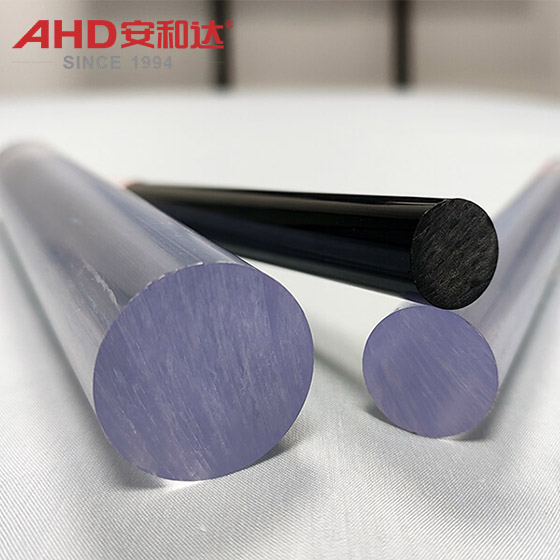
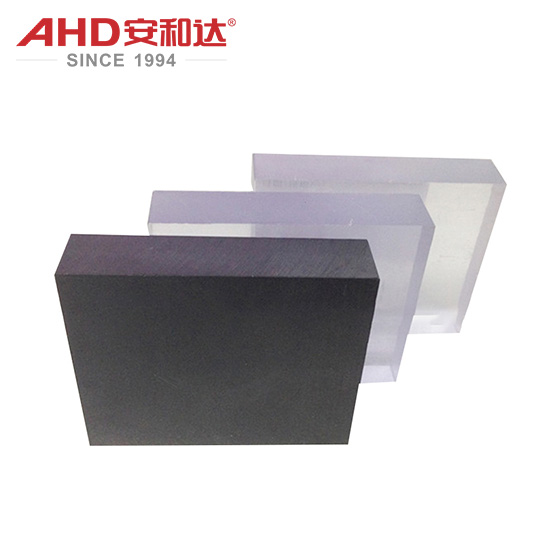
Definitions, Advantages, and Differences between Flame Retardant PC, ESD PC, and Standard PC
Polycarbonate (PC)'s fundamental properties (such as high impact strength, transparency, and heat resistance) are its core strengths, but various applications place additional demands on it (such as fire resistance and anti-static properties). The following details the three types from the perspectives of definition, core characteristics, advantages, and differences:

1. General Purpose PC
Definition
General Purpose PC is an unmodified polycarbonate produced through a basic polymerization process. No special functional additives (such as flame retardants or antistatic agents) are added, preserving the original performance balance of PC.
Core Characteristics
• Mechanical Properties: Notched impact strength of 60-80 kJ/m² (high toughness), tensile strength of 60-70 MPa, flexural modulus of 2.4 GPa;
• Thermal Properties: Heat deflection temperature (HDT, 1.86 MPa) approximately 130°C, long-term operating temperature range of -40°C to 120°C;
• Optical Properties: Light transmittance of 88%-90%, haze <0.5% (high transparency);
• Other Properties: Chemical resistance (resistant to weak acids and oils), easy processing (injection molding and extrusion).
Advantages
• Balanced overall performance and low cost (unmodified, simple production process);
• Excellent transparency, suitable for applications requiring high aesthetics;
• Excellent toughness, impact resistance and resistance to breakage.
Limitations
• Flammable (without flame retardant treatment, UL94 flammability rating is HB, and dripping easily ignites);
• Prone to static electricity generation (high surface resistivity, approximately 10^14-10^16 Ω/sq, prone to static electricity accumulation);
• Not resistant to strong acids and alkalis (prolonged exposure will cause degradation).
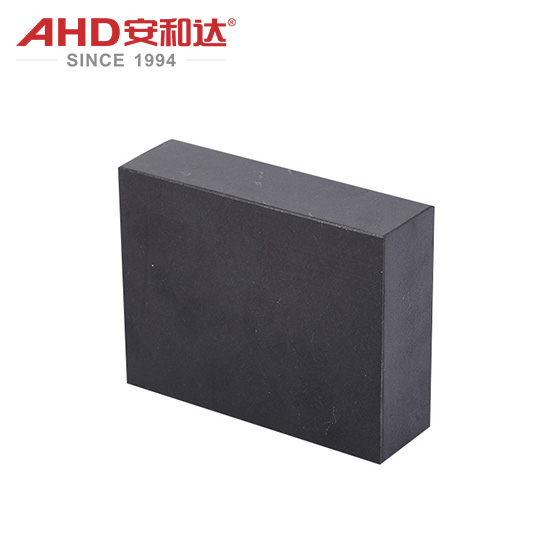
2. Flame Retardant PC
Definition
Flame-retardant PC is modified by adding flame retardants or using copolymerization to significantly improve the material's fire resistance, enabling it to meet the UL94 standard for flame retardancy ratings such as V-0 and V-1.
Core Characteristics
• Flame retardancy: UL94 V-0 (self-extinguishing at a thickness of 0.8mm), V-1 (self-extinguishing at a thickness of 3.2mm), or higher;
• Thermal properties: Some flame retardants can improve heat resistance (HDT may rise to above 140°C);
• Other properties: A slight loss of transparency may occur (brominated flame retardants tend to yellow, while phosphorus/inorganic flame retardants have less of an effect); mechanical properties are essentially maintained (impact strength ≥ 50 kJ/m²).
Advantages
• Fire Safety: Self-extinguishes or flames retardant upon exposure to fire, reducing the risk of molten droplet ignition (V-0 grade, no dripping);
• Widely Applicable: Suitable for applications requiring fire protection, such as electronic equipment and electrical enclosures;
• Halogen-Free Options: Phosphorus-based, nitrogen-based, or inorganic flame retardants can achieve halogen-free flame retardancy, complying with environmental regulations.
Limitations
• Higher cost than standard PC (flame retardants are more expensive);
• Some brominated flame-retardant PCs may release toxic gases, limiting their use in food and medical applications;
• Highly filled flame-retardant PCs (such as those with inorganic flame retardants) may reduce impact toughness and transparency.
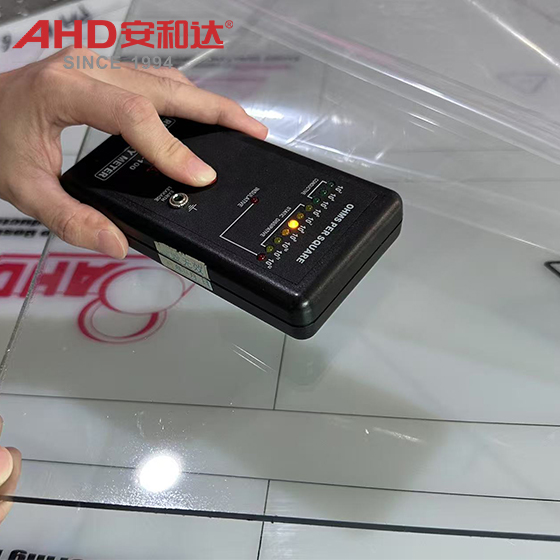
3. ESD PC (Electrostatic Discharge Protective PC)
Definition
ESD PC (Electrostatic Discharge Protective PC) is modified PC that has been modified by adding antistatic agents (such as quaternary ammonium salts, conductive carbon black) or conductive fillers (such as carbon nanotubes, metal powders) to reduce surface resistivity and inhibit static electricity accumulation and discharge.
Core Characteristics
• Antistatic Performance: Surface resistivity (RS) of 10^6-10^11 Ω/sq (static dissipative type), which quickly conducts static electricity.
• Other Properties: Mechanical properties (impact strength ≥ 50 kJ/m²) and transparency (carbon black filling affects transparency; transparent ESD PC requires nano-scale conductive fillers) are largely maintained.
• Durability: Antistatic agent migration type (short-term effectiveness) or filler dispersion type (long-term stability).
Advantages
• Anti-static failure: Prevents component breakdown and dust absorption caused by static electricity accumulation;
• Protects sensitive devices: Suitable for packaging or housings for precision electronic components;
• Wide adaptability: Available in transparent or opaque versions.
Limitations
• Significantly higher cost than standard PC (conductive fillers/antistatic agents are expensive);
• Filled ESD PC may reduce transparency or impact toughness;
• Antistatic performance is significantly affected by the environment (effectiveness decreases at low humidity).
Difference
| PC | Flame Retardant PC | ESD PC | |
| Modification Targets | Balance of Basic Properties | Improve Flame Retardancy/Fireproofing | Suppress Static Electricity Accumulation and Discharge |
| Performance Specifications | Impact strength, light transmittance, heat resistance | UL94 flame retardancy rating (V-0/V-1) | Surface resistivity (10^6-10^11 Ω/sq) |
| Modification Methods | None (or only basic formula adjustment) | Addition of flame retardants (bromine/phosphorus/nitrogen-based) | Addition of antistatic agents/conductive fillers (carbon black/carbon nanotubes) |
| Applications | Everyday products (toys, containers), non-functional parts | Electronic device housings, electrical connectors, automotive interiors | Precision electronic component packaging, semiconductor plant components, anti-static trays |
| Cost | Lowest | Medium (higher than regular PC) | High (higher than regular PC and flame-retardant PC) |
| Potential Limitations | Flammable, susceptible to static electricity, and intolerant to strong acids and alkalis | May yellow/reduce transparency (bromine-based) |
May affect transparency/toughness, depending on ambient humidity
|
Summary
• Standard PC: Offers balanced basic performance, suitable for applications requiring high aesthetics and toughness but without special protection requirements.
• Flame-retardant PC: Focuses on fire protection, suitable for electronic equipment and electrical components that must comply with safety regulations.
• ESD PC: Focuses on anti-static protection, suitable for applications such as precision electronics and cleanrooms that must avoid electrostatic damage.
Selection requires a comprehensive consideration of specific requirements (fire protection, anti-static, cost) and the application scenario (whether the product will be exposed to static electricity or ignition sources).
AHD PC Rods