


AHD Anti-static Polyetheretherketone Sheet
What is ESD PEEK sheet?
ESD PEEK sheet (anti-static polyetheretherketone sheet) is a functional material created by adding conductive fillers (such as carbon black, carbon nanotubes, metal powder, or conductive fibers) to the high-performance specialty engineering plastic polyetheretherketone (PEEK). This material retains PEEK's inherent excellent properties (high-temperature resistance, chemical resistance, and high strength) while also possessing controllable anti-static capabilities. Its core characteristic is a surface resistivity controlled to 10⁶-10¹¹ Ω/sq (meeting ESD protection standards). This effectively conducts static electricity to prevent accumulation while preventing interference with precision electronic equipment due to excessive conductivity. It is a key material offering both anti-static and high-performance performance in harsh environments.
How ESD PEEK Sheet is Made?
The production of ESD PEEK sheets requires a balance between the properties of PEEK resin (such as high melting point and crystallinity) and the uniform dispersion of conductive fillers. The core process includes raw material selection, mixing and dispersion, molding, and post-processing:
1. Raw Material Selection
PEEK resin:
Pure PEEK is typically used. The glass transition temperature (Tg) of unreinforced PEEK is approximately 143°C, and the melting point (Tm) is approximately 343°C.
Conductive fillers:
• Carbon black: The most commonly used (low cost). Choose a small particle size and highly structured filler (such as acetylene black) to improve dispersibility and conductivity (addition level 5%-15%).
• Carbon nanotubes (CNTs)/graphene: A small amount (1%-5%) can achieve high conductivity and has minimal impact on PEEK mechanical properties (but can be difficult to disperse).
• Conductive fibers: These form a conductive network by bonding and are suitable for applications requiring high conductivity (but may reduce flexibility).
2. Mixing and Dispersion
The conductive filler must be evenly dispersed in the PEEK resin. Failure to do so will result in localized conductivity unevenness or the formation of "islands" (inability to form a continuous conductive network). Due to the high melting point of PEEK (343°C), conventional solution blending (which requires solvents) is not suitable. Mechanical blending combined with high-temperature melt dispersion is primarily used:
• Premixing: PEEK resin pellets and conductive filler are added to a high-speed blender according to the desired ratio and mixed to achieve a preliminary dispersion of the filler.
• Melt Dispersion: Melt blending is performed in a twin-screw extruder (320-360°C), utilizing high shear forces to break up filler agglomerates.
• Granulation: The melt-blended material is cut into pellets (2-5 mm in diameter) by a pelletizer for subsequent molding.
3. Molding Processing
PEEK is highly crystalline (with a crystallinity of up to 30%-40%), requiring strict control of molding temperature and cooling rate to avoid internal stress:
• Compression Molding: Suitable for thick plates. Place the prepreg (or pellets) into a mold (preheated to 360-380°C), apply a pressure of 15-30 MPa, hold for 2-5 minutes, and then cool in the furnace.
• Extrusion Molding: Pellets are extruded into sheets using an extruder and then calendered (at 350-370°C). Surface roughness can reach Ra ≤ 0.5 μm.
• Injection Molding: Suitable for complex shapes. Pellets must be dried (120°C/4 hours) before injection into the mold (barrel temperature 360-380°C, mold temperature 150-180°C).
4. Post-Processing
• Machining: Turning, milling, or grinding to the target dimensions.
• Surface Treatment: Polishing is recommended to reduce the coefficient of friction (e.g., for sliding parts). For welding or bonding, plasma cleaning or chemical etching is recommended to roughen the surface (to improve bond strength).
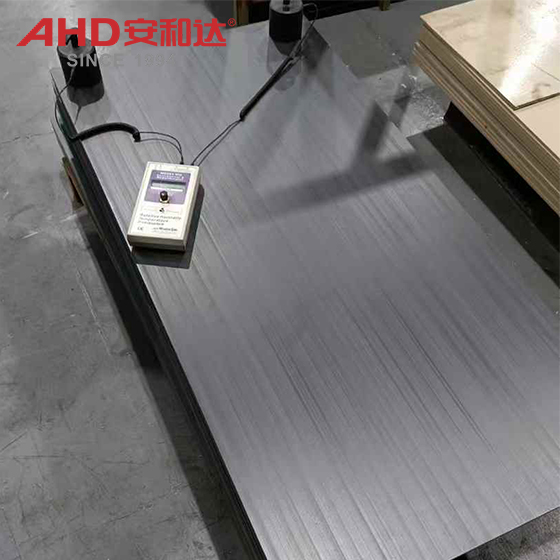
Features:
Antistatic Performance: Surface resistivity of 10⁶~10¹¹ Ω/sq (static dissipation time <1 second), compliant with ESD S20.20 standards;
Basic PEEK Properties:
Temperature Resistance: Long-term operating temperature of 250°C, temporarily up to 300°C; glass fiber reinforced, long-term operating temperature of 300°C;
Chemical Resistance: Virtually unreactive with strong acids, bases, and organic solvents (such as alcohols and hydrocarbons), with the exception of concentrated sulfuric acid and nitric acid;
High Mechanical Strength: Unreinforced PEEK has a tensile strength of 72.9 MPa;
Radiation Resistance: Extremely resistant to gamma rays and X-rays;
Self-lubricity and Wear Resistance: Friction coefficient of 0.3 (unreinforced) to 0.2 (reinforced), surpassing most engineering plastics in wear resistance.
Advantages (compared to common anti-static materials and other engineering plastics):
Comprehensive high performance: Compared to common anti-static plastics, ESD PEEK offers significantly superior temperature resistance, chemical resistance, and mechanical strength.
Long-term stability: The conductive filler is evenly embedded within the PEEK matrix (not surface-coated), making it less susceptible to conductivity loss due to wear, scratches, or chemical corrosion.
Lightweight: Its density is significantly lower than that of metal, making it suitable for lightweight applications.
Radiation resistance: It offers stable performance in radiation environments, such as those in the nuclear industry and medical radiotherapy equipment.
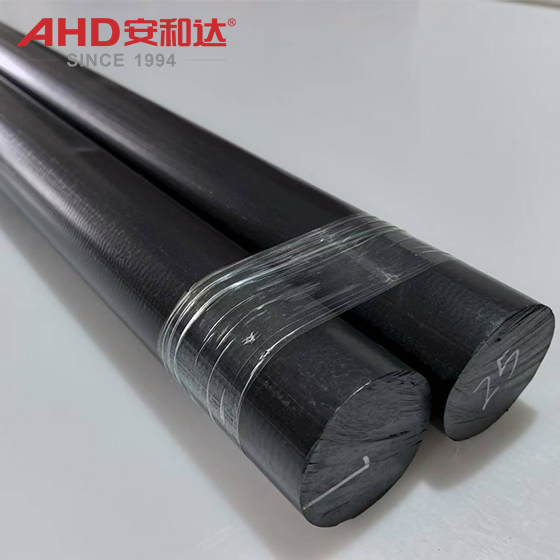
Common Applications
ESD PEEK sheet, with its combined properties of "anti-static, resistant to harsh environments, and high strength," is widely used in applications sensitive to static electricity and demanding environmental requirements:
1. Electronics and Semiconductors
• Wafer/Chip Carriers: Used for wafer handling and testing in semiconductor manufacturing (anti-static to prevent chip breakdown, temperature resistance up to 250°C for high-temperature processes);
• FPC (Flexible Printed Circuit) Processing Fixtures: Low friction, high solder temperature resistance (260°C), preventing static electricity from attracting dust and affecting soldering accuracy;
2. Precision Manufacturing and Robotics
• Optical Equipment Platforms: Precision carriers for laser cutting machines and photolithography machines (anti-vibration, low expansion coefficient, anti-static to prevent dust attraction);
• Robotic Joint Components: Conductive PEEK gears and slides (self-lubricating, wear-resistant, anti-static to prevent charge accumulation that interferes with sensors).
3. Medical and Laboratory
• Precision Instrument Fixtures: Sample holders for laboratory chromatographs and mass spectrometers (resistant to organic solvents, anti-static to prevent sample adsorption).
4. Aerospace and Defense
• Satellite electronics cabin components: resistant to cosmic ray radiation and anti-static to protect sensitive electronic equipment;
• Aviation connectors: resistant to aviation fuel/hydraulic oil corrosion.
5. Chemical and Energy
• Anti-static reactor linings: linings for tanks storing highly corrosive liquids (chemical resistance and anti-static to prevent explosions caused by static sparks);
• Lithium battery electrode carriers: resistant to electrolyte corrosion and anti-static to prevent impurities adsorbed by the electrode, which could affect battery performance.
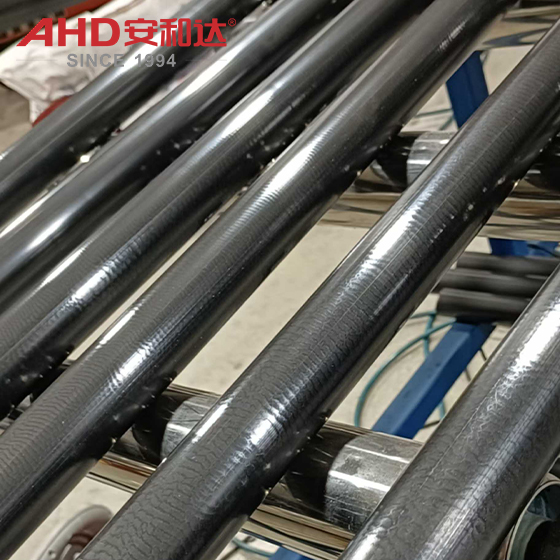
Usage Precautions
1. Temperature Limits:
• Unreinforced ESD PEEK should be used at temperatures ≤ 250°C for long-term use and ≤ 300°C for short-term use.
2. Conductivity Stability:
• Carbon black/CNT-filled sheets should be protected from strong UV exposure (this may cause filler aging and decreased conductivity).
3. Machining:
• Diamond-coated tools should be used for cutting at low cutting speeds, as frictional heat can easily decompose the filler.
• Avoid excessive cooling (such as cold water quenching), as this can cause cracking due to internal stress.
4. Chemical Compatibility:
• Avoid contact with strong oxidizing acids, as this may break the PEEK backbone.
• Long-term exposure to highly polar solvents (such as dimethyl sulfoxide) requires corrosion resistance testing (some fillers may swell in the solvent).
5. Electrostatic Performance Verification:
• Surface resistivity testing is required for each batch to ensure compliance with the 10⁶ to 10¹¹ Ω/sq standard.
• During long-term use, regular inspections should be conducted to check for conductive network failure.
ESD PEEK sheet is a key modified form of PEEK material. By incorporating conductive fillers, it imparts antistatic properties while retaining PEEK's core properties (high-temperature resistance, chemical resistance, and high strength), making it a key material for addressing the challenges of "electrostatic protection" and "resistance to harsh environments" in electronics, semiconductors, precision manufacturing, and medical fields. Its core value lies in its ability to achieve a balance of properties difficult to achieve with a single material, making it an indispensable functional material in high-end manufacturing.