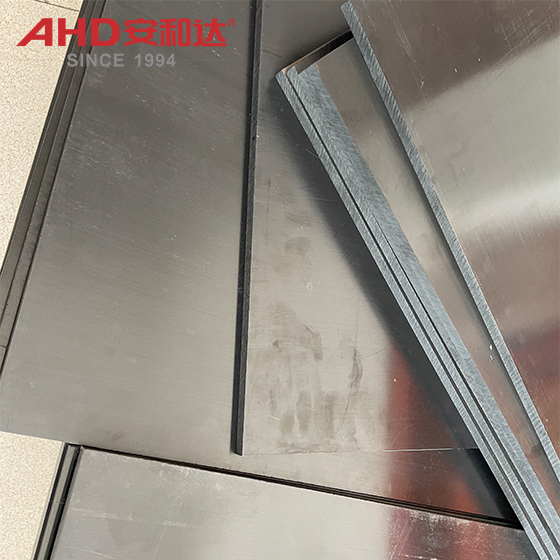
What is PEEK Glassfiber Sheet?
PEEK Glassfiber Sheet (glass fiber reinforced polyetheretherketone sheet) is a high-performance specialty engineering plastic sheet made by compounding glass fiber (GF) with polyetheretherketone (PEEK) resin. PEEK is a semi-crystalline aromatic thermoplastic polymer that inherently exhibits excellent properties such as high temperature resistance, chemical resistance, and high mechanical strength. The addition of glass fiber (typically 10% to 50%) further enhances its tensile strength, modulus, dimensional stability, and heat resistance, while maintaining some chemical resistance and self-lubricating properties. PEEK GF sheet is a key material in high-end manufacturing, particularly in applications requiring both high strength and resistance to harsh environments.

How to make Glassfiber PEEK Sheet?
1. Raw Material Selection
• PEEK resin: Pure or pre-dried resin is commonly used.
• Glass fiber: Alkali-free glass fiber is typically used, with a length of 0.5-3 mm (chopped strands) or continuous fiber, and the surface is treated with a coupling agent to improve interfacial bonding with PEEK.
2. Mixing and Dispersion
The glass fiber must be evenly dispersed in the PEEK resin; otherwise, it will result in localized strength deficiency or "fiber clumping." Due to PEEK's high melting point, melt blending is primarily used:
• Twin-screw extrusion: PEEK pellets and chopped glass fibers (e.g., 30% GF) are fed into a twin-screw extruder (barrel temperature 320-360°C). High shear forces (screw speed 150-300 rpm) disperse the fibers and melt blend with the resin.
• Granulation: The melt-blended material is cut into cylindrical pellets (2-5 mm in diameter) by a pelletizer for subsequent molding.
3. Molding
Different molding processes are available depending on the required sheet thickness and size:
• Compression molding: Suitable for thick sheets. The prepreg (or pellets) are placed in a preheated mold (360-380°C), and a pressure of 15-30 MPa is applied. The pressure is maintained for several minutes, and the mold is then cooled to prevent internal stress.
• Extrusion: The pellets are extruded into a continuous sheet using an extruder, and then calendered (temperature 350-370°C). Surface roughness can reach Ra ≤ 0.5 μm.
• Injection molding: Suitable for complex shapes. The pellets must be dried before injection into the mold (barrel temperature 360-380°C, mold temperature 150-180°C).
4. Post-Processing
• Machining: Use diamond-coated or cubic boron nitride (CBN) tools for turning and milling (cutting speed ≤ 800 rpm) to minimize conventional tool wear.
• Surface Treatment: Polish to Ra ≤ 0.2 μm to reduce the coefficient of friction. If welding is required, use plasma cleaning to roughen the surface (to improve bonding strength).
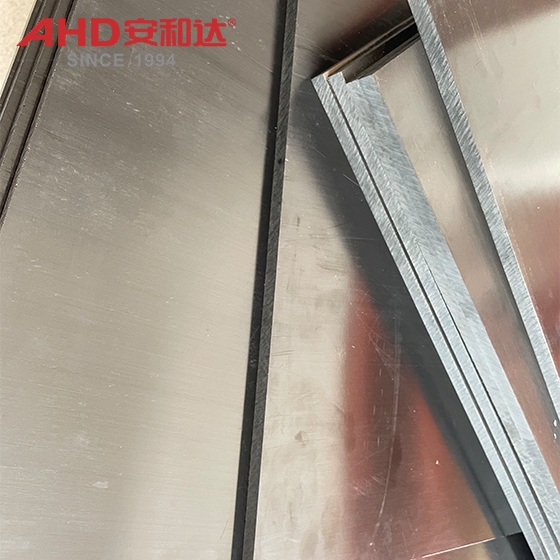
Glassfiber PEEK Plastic Sheet
Features:
High Mechanical Strength:
• Unreinforced PEEK: Tensile strength 90-100 MPa, elastic modulus 3.6 GPa;
• 30% glass fiber reinforced PEEK (PEEK 30GF): Tensile strength ≥145 MPa, elastic modulus ≥9.5 GPa;
• 50% glass fiber reinforced PEEK (PEEK 50GF): Tensile strength ≥280 MPa, elastic modulus ≥16 GPa.
High Temperature Resistance:
• Long-term operating temperature: 30% glass fiber reinforced PEEK increases to 250°C (short-term operating temperature up to 310°C);
• Glass transition temperature (Tg): Increased from 143°C to 160°C (30% glass fiber reinforced PEEK).
Dimensional Stability:
• Coefficient of Thermal Expansion (CTE): Pure PEEK is 3.6×10⁻⁵/°C, while 30% glass fiber reinforced PEEK reduces this to 1.5×10⁻⁵/°C, resulting in minimal deformation at high temperatures.
Chemical Resistance:
• With the exception of strong oxidizing acids like concentrated sulfuric acid and nitric acid, it is virtually unreactive with organic solvents such as alcohols, hydrocarbons, and ketones (comparable to pure PEEK).
Other Properties:
• Radiation Resistance: Extremely resistant to gamma rays and X-rays.
• Self-lubrication and Wear Resistance: The coefficient of friction is 0.2-0.3, superior to most engineering plastics.
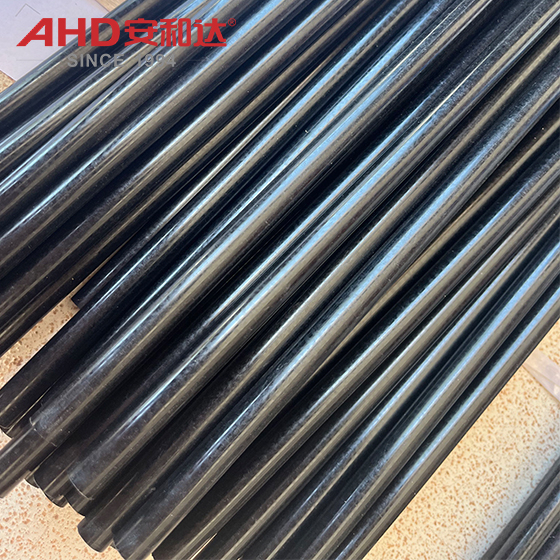
Advantages (compared to pure PEEK and other engineering plastics):
Significantly improved strength and stiffness: The addition of glass fiber elevates PEEK from a "high-performance plastic" to a "metal-like engineering material," enabling it to directly replace some metal components.
Lightweight: Density is approximately 1.4-1.5 g/cm³ (only 1/6 that of steel and 1/2 that of aluminum).
Excellent fatigue resistance: Glass fiber reinforcement achieves a high fatigue strength retention rate (>80%), making it suitable for long-term dynamic load scenarios.
High-temperature stability: Mechanical properties degrade slowly at high temperatures.
Common Applications
PEEK Glassfiber sheet, with its combined properties of high strength, high temperature resistance, and chemical resistance, is widely used in high-end manufacturing applications:
1. Aerospace
• Structural components: Aircraft engine peripheral brackets, wing gussets (resistant to temperatures up to 280°C, with strength approaching that of aluminum alloy, and 30% lighter);
• Interior components: Pilot seat frames, door hinges (oil-resistant and fatigue-resistant).
2. Automotive
• Engine peripheral components: Underhood brackets, gearbox covers (resistant to engine and transmission oil corrosion, with a long-term operating temperature of 150-200°C);
• Chassis and suspension: Lightweight control arms, shock absorber brackets (high strength and impact resistance).
3. Electronics and Semiconductors
• Precision Equipment Structural Parts: Frames and guide rails for semiconductor manufacturing equipment (temperature resistance up to 260°C, vibration resistance, and dimensional stability);
• 5G Communications Equipment: Base station antenna support frames (weather-resistant and UV-resistant).
4. Industrial Equipment
• Industrial Pumps and Valves: Corrosion-resistant valve housings and seals (strong acid and alkali resistance, high strength).
5. Rail Transit
• High-Speed Rail Components: Bogie brackets and brake system connectors (vibration-resistant and fatigue-resistant).
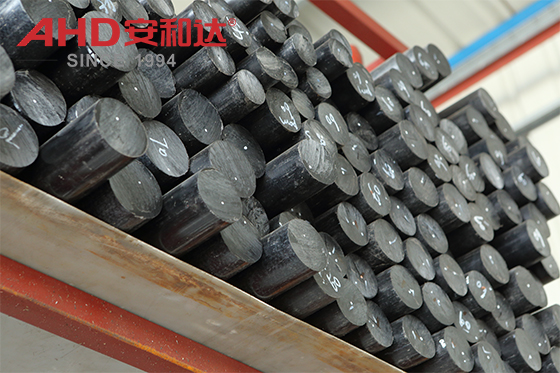
Precautions for Use
1. Temperature Limits:
• Long-term operating temperature: 30% GF-reinforced PEEK ≤ 250°C, 50% GF-reinforced PEEK ≤ 300°C; short-term resistance to 350°C is possible, but avoid exposure to open flames.
2. Machining:
• Use diamond-coated cutting tools, cutting speeds ≤ 800 rpm, and feed rates ≤ 0.1 mm/min (to avoid fiber pull and surface roughness).
• Avoid high-speed milling to prevent frictional heat generation and PEEK decomposition.
3. Chemical Compatibility:
• Avoid contact with strong oxidizing acids (such as concentrated nitric acid and aqua regia), as these may break the PEEK backbone.
• Long-term exposure to highly polar solvents requires corrosion resistance testing (some fillers may swell in the solvent).
4. Long-term Performance Stability:
• Periodically check tensile strength.
• Avoid prolonged exposure to UV light. (PEEK GF without UV inhibitors will gradually yellow, but mechanical properties will be minimally affected.)
PEEK Glassfiber sheet is a high-performance material composed of PEEK and glass fiber. While retaining the core properties of PEEK, the "gold of plastics," it significantly improves its strength and rigidity through glass fiber. It is a key material for replacing metals in aerospace, automotive, electronics and other fields. Its core value lies in the balance between lightweight and high performance of "replacing steel with plastic."