

ESD PEEK Sheet (antistatic PEEK Sheet) and Carbon Fiber PEEK Sheet (carbon fiber reinforced PEEK Sheet) both use PEEK (Polyetheretherketone)as a matrix, but their core modification methods and application scenarios differ significantly. The following is a detailed comparison of the two from four perspectives: composition and appearance, core characteristics, differentiation methods, and application differences.
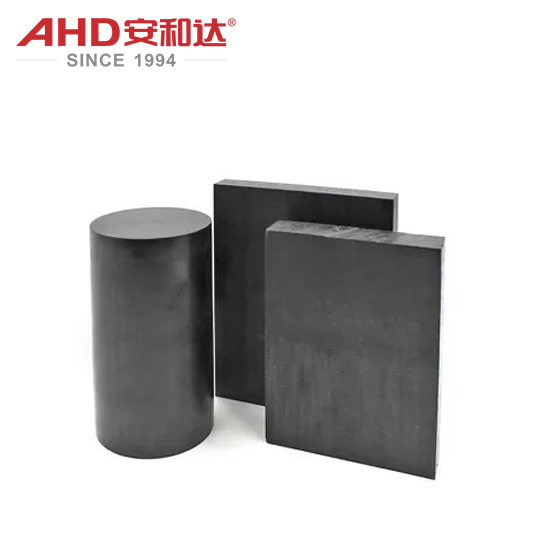
Differences in composition and appearance
ESD PEEK Plastic Sheet
The PEEK resin is used as a matrix, with conductive fillers (such as carbon black, carbon nanotubes, metal powder, and conductive fibers) added. The fillers are dispersed to form a conductive network, achieving ESD protection.
Appearance Characteristics
- Color: Varies depending on the conductive filler (carbon black fillers tend to be dark gray/black, while carbon nanotube fillers may tend to be lighter gray);
- Surface: Smooth and even (no noticeable texture when the filler is evenly dispersed);
- Transparency: Opaque.
Carbon Fiber PEEK Sheet
PEEK resin serves as the matrix, with carbon fiber (CF) (chopped or continuous) added. Fiber reinforcement enhances mechanical properties, with electrical conductivity being a secondary property (depending on the carbon fiber content).
Appearance Characteristics
- Color: Deep black (carbon fiber itself is black);
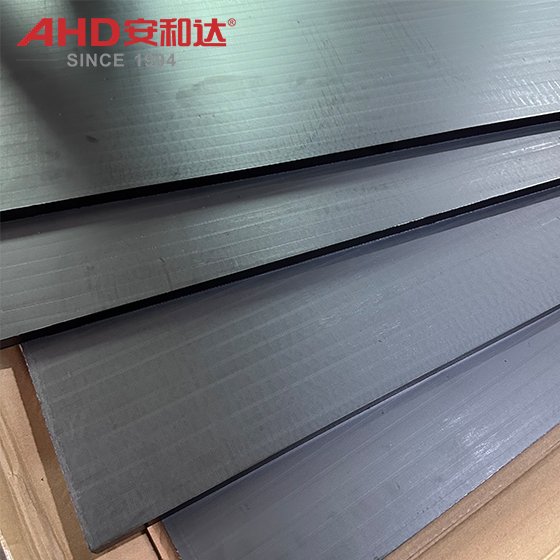
- Surface: Visible carbon fiber texture (patterns formed by randomly distributed chopped fibers or oriented continuous fibers);
- Transparency: Opaque (carbon fiber blocks light).
Feature Comparison
1. Electrical properties
ESD PEEK Sheet
Resistivity range: Strictly controlled to 10 6 ∼10 12 Ω (surface/volume resistivity) to slowly dissipate or conduct static electricity.
ESD Protection Design: Designed specifically for ESD protection, the device boasts a fast static dissipation time (typically less than 1 second).
Carbon Fiber PEEK Sheet
Resistivity range:
Depends on the carbon fiber content (typically 5%–30%):
- Chopped fibers (5%–15%): Volume resistivity 10⁰ to 10⁸ Ω;
- Continuous fibers (>30%): Volume resistivity 10⁰ to 10⁸ Ω;
- Electrical conductivity is not a key objective, relying primarily on the "percolation effect" of the carbon fibers.
ESD Protection Design:
Without a dedicated ESD design, conductivity is a "side effect" of carbon fiber, which may lead to excessively high local resistance due to uneven fiber distribution (additional modification is required for use in ESD scenarios).
2. Mechanical properties
| Features | ESD PEEK Sheet | Carbon Fiber PEEK Sheet |
| Tensile strength | Close to pure PEEK, filler addition may be slightly reduced (because the interfacial bonding force is weaker than the matrix). | Significantly improved (chopped fiber reinforcement: 120~200 MPa; continuous fiber reinforcement: 250~350 MPa). |
| Flexural modulus | About 3.6~4.0 GPa (similar to pure PEEK level). | Significantly improved (chopped fiber reinforcement: 8~12 GPa; continuous fiber reinforcement: 15~25 GPa). |
| Fatigue resistance | Close to pure PEEK. | Better (carbon fiber inhibits crack growth). |
| Friction resistance | Friction coefficient is about 0.3 (similar to pure PEEK) | Lower (carbon fiber reduces friction, about 0.2~0.25). |
3. Thermal performance
ESD PEEK Sheet
Long-term operating temperature: 250°C (same as pure PEEK).
Thermal conductivity: Approximately 0.25 W/(m·K) (pure PEEK level).
Thermal expansion coefficient: about 3.6×10⁻⁵/℃ (pure PEEK level).
Carbon Fiber PEEK Sheet
Long-term operating temperature: 250℃ (carbon fiber does not reduce temperature resistance).
Thermal conductivity: Reduce (carbon fiber limits thermal expansion, about 2.5×10⁻⁵/℃).
Thermal expansion coefficient: about 3.6×10⁻⁵/℃ (pure PEEK level).
4. Other Features
Chemical resistance
ESD PEEK Sheet: Same as pure PEEK (resistant to most organic solvents, strong acids, and bases).
Carbon Fiber PEEK Sheet: Same as pure PEEK (carbon fiber has excellent chemical resistance).
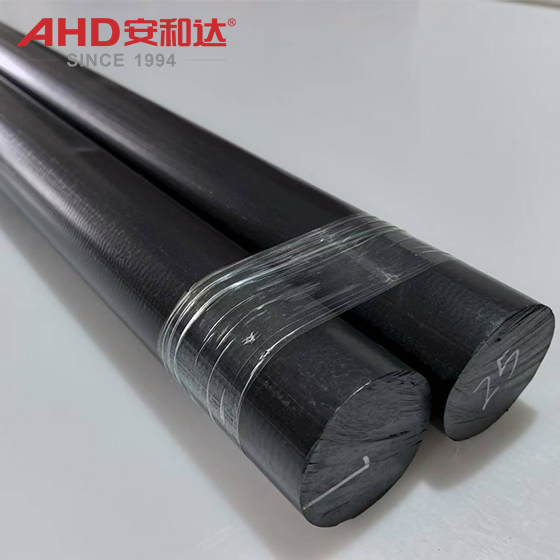
How to distinguish between the two?
You can quickly identify them using the following methods:
1. Appearance Observation
ESD PEEK Sheet: The surface is smooth, with no noticeable fiber texture. The color varies from dark gray to light gray depending on the filler.
Carbon Fiber PEEK Sheet: The surface has distinct carbon fiber textures (randomly distributed chopped fibers or directional continuous fibers), and the overall color is deep black.
2. Resistivity Test
Use a multimeter or four-probe method to test the surface resistivity:
ESD PEEK Sheet: The resistivity ranges from 10⁶ to 10⁻² Ω (meets ESD protection standards).
Carbon Fiber PEEK Sheet: The resistivity is typically <10⁻ Ω (the higher the carbon fiber content, the lower the resistivity).
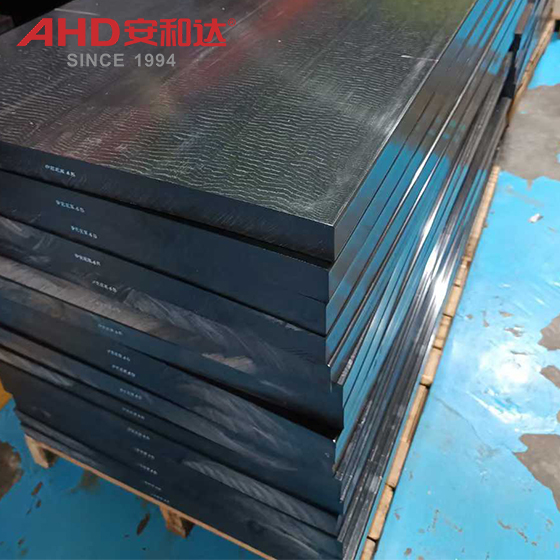
Typical applications of ESD PEEK Plastic Sheet
Core requirements: Anti-static + basic weather resistance, suitable for scenarios sensitive to static electricity but with low mechanical load requirements:
Electronic manufacturing: Wafer carriers (anti-static to prevent chip breakdown), PCB testing fixtures (anti-static to protect circuits), IC chip packaging (anti-static + shock-resistant).
Medical equipment: surgical instrument trays (anti-static, dust-proof, and capable of withstanding high-temperature sterilization), medical electronic device enclosures (anti-static to protect internal components).
Industrial Automation: Precision sensor protective covers (anti-static to avoid dust interference with signals), lightweight fixtures (anti-static + basic load).
Typical Applications of Carbon Fiber PEEK Sheet
Core Requirements: High strength + Lightweight, suitable for scenarios with high mechanical performance requirements and the need for weather resistance.
Aerospace: Internal brackets for satellites/spacecraft (lightweight + radiation-resistant), precision instrument guide rods (high rigidity ensures accuracy).
Semiconductor equipment: vacuum chamber structural components (vacuum-resistant and high rigidity), wafer transfer robotic arms (high strength to withstand loads).
High-end industry: Robot joint components (high modulus and fatigue-resistant), precision machine tool guides (low friction + high rigidity).
Summary
The essential difference between ESD PEEK Sheet and Carbon Fiber PEEK Sheet lies in the modification objective: the former focuses on "ESD protection", while the latter emphasizes "mechanical reinforcement". When making a choice, one should weigh the requirements of the specific application scenario.
If anti-static is required, choose ESD PEEK Sheet.
For high strength and lightweight requirements, choose Carbon Fiber PEEK Sheet.
For special scenarios (such as the simultaneous need for ESD protection and high strength), it can be achieved through the composite modification of "carbon fiber + conductive fillers", but the cost is relatively high.