

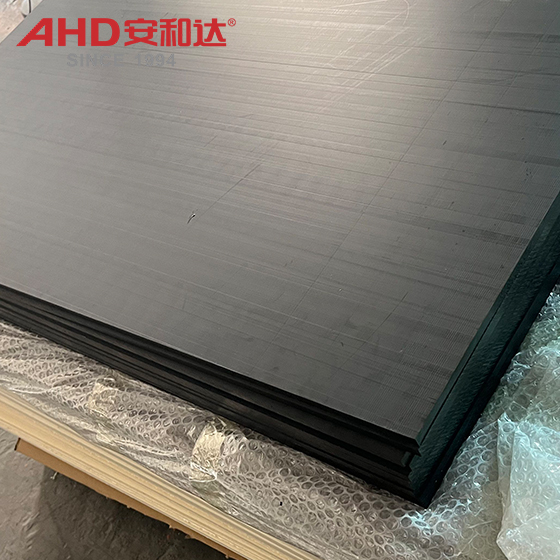
What is ESD PEI Sheet?
ESD PEI Sheet is a composite sheet that combines electrostatic discharge (ESD) protection and high-performance polymer properties of polyetherimide (PEI). The core is to add anti-static components to the PEI substrate to enable it to suppress the generation, accumulation, and rapid conduction of static electricity, while retaining the excellent physical and chemical properties of PEI itself.
How is it formed?
The formation of ESD PEI sheet mainly involves two key steps: PEI substrate preparation and ESD functionalization modification.
1. Preparation of PEI substrate
PEI is a high-performance engineering plastic that is formed by the condensation reaction of binary anhydrides (such as phthalic anhydride) and diamines (such as 4,4 '- diaminodiphenyl ether) in polar non proton solvents (such as dimethylacetamide, DMAc). The basic PEI sheet/film is obtained by melt extrusion, film casting or compression molding.
2. ESD functionalization modification
Additive modification: During the production process, conductive fillers (such as carbon black, carbon nanotubes, metal powders, conductive polymers (PPy, PEDOT: PSS), etc.) are added to form a conductive network in the PEI matrix through the fillers, reducing the surface resistivity (usually from 10 ¹⁶ Ω/sq of pure PEI to 10 ⁶~10 ¹² Ω/sq, meeting ESD protection requirements).
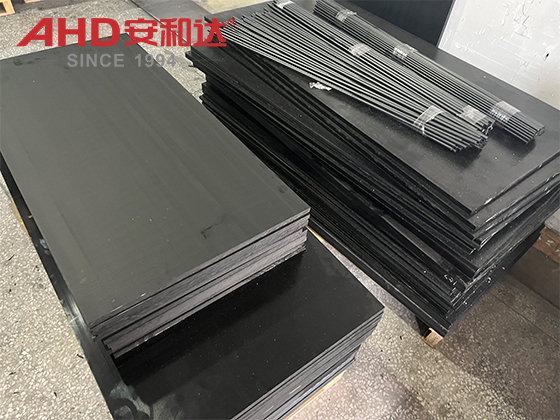
ESD Polyetherimide Rod and Sheet
Features and Benefits of anti static PEI
The ESD PEI Sheet combines the high performance and ESD protection functions of PEI, with the following core features:
1. Basic characteristics (from Polyetherimide Sheet)
High temperature resistance: Long term use temperature -50 ℃~+170 ℃, glass transition temperature (Tg) of about 217 ℃, short-term temperature resistance can reach 210 ℃.
Excellent mechanical properties: high strength (tensile strength ≥ 100 MPa), high modulus (elastic modulus ≥ 3.1 GPa), fatigue resistance, and impact resistance (notch impact strength ≥ 5 kJ/m ²).
Chemical corrosion resistance: resistant to most organic solvents (such as alcohols, hydrocarbons, halogenated hydrocarbons), acidic and alkaline environments (except for strong oxidizing acids such as concentrated sulfuric acid and concentrated nitric acid).
Low moisture absorption: The water absorption rate is only 0.25%, and the dimensional stability is good.
Transparency: The transmittance of unfilled pure PEI film is ≥ 85% (optional), suitable for scenes with optical requirements.
2. ESD functional characteristics
Controllable conductivity: The surface resistivity (SR) can be adjusted (10 ⁶~10 ¹² Ω/sq) to meet the requirements of different ESD protection levels.
Quickly dissipate static electricity: The charge decay time is short (usually<1 second), avoiding component damage caused by static electricity accumulation.
Anti static durability: Additive modification fixes conductive channels through a filler network, which is resistant to friction and aging.
3. Comprehensive advantages
Compared to traditional ESD materials such as PVC, ABS, PS, ESD PEI Sheet has significant advantages:
The temperature resistance far exceeds that of PVC (PVC has a long-term use temperature of<80 ℃);
Mechanical strength higher than ABS/PS, suitable for precision fixtures or high load scenarios;
Better chemical corrosion resistance, suitable for harsh environments such as chemical and semiconductor industries;
Low moisture absorption avoids fluctuations in conductivity caused by water absorption (traditional anti-static materials are prone to failure after moisture absorption).
Main application areas and specific application methods
ESD PEI Plastic Sheet, with its dual advantages of "high performance+ESD protection", is widely used in high-end manufacturing fields that are sensitive to static electricity and have strict environmental requirements
1. Electronic semiconductor manufacturing
SMT surface mount technology production line: As a PCB carrier, tray, and nozzle pad, it prevents static electricity from damaging chips (such as ICs and sensors) during the mounting process.
IC packaging and testing: used for wafer Cassette and test fixtures to avoid electrostatic breakdown of chips during testing.
Electronic component packaging: replaces traditional anti-static bubble wrap as an inner packaging material for precision components such as MEMS and laser diodes, with temperature and moisture resistance.
2. Medical and Life Sciences
Electrostatic sensitive medical equipment: used as an operating pad for precision instruments such as electrocardiographs and ultrasonic devices to prevent static electricity interference caused by the movement of medical staff.
Biosensor carrier: As a substrate material for flexible sensors (such as wearable heart rate monitoring patches), it balances ESD protection and biocompatibility (in compliance with ISO 10993 biosafety standards).
3. Automotive Electronics
Car electronic component protection: used for fixing trays of car cameras and sensors (such as millimeter wave radar), resistant to high temperatures (-40 ℃~+125 ℃) and vibration environments in the car engine compartment.
Manufacturing of new energy batteries: As a sorting tray for lithium battery electrodes, it prevents electrostatic adsorption of metal particles and short circuits.
4. Aerospace and Defense
Precision instrument carrier: used for transportation/storage trays of satellite payloads and radar components, resistant to space high and low temperature cycles (-55 ℃~+125 ℃) and radiation environments.
Military electronic equipment: As an operating pad for missile guidance systems and communication equipment, it must meet electrostatic protection standards.
Summary
ESD PEI Sheet is a key material in the high-end manufacturing field, which combines the high performance of PEI with ESD functional modification to solve the problems of traditional anti-static materials such as temperature difference resistance and low strength. Its core value lies in providing a dual guarantee of "protection+durability" for electrostatic sensitive devices, which are widely used in high reliability scenarios such as electronics, medical, and automotive. Attention should be paid to environmental control, conductivity maintenance, and compliance verification during use to maximize its effectiveness.