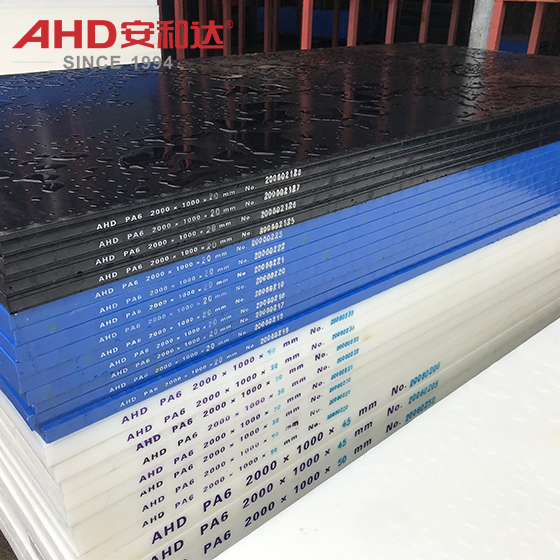
Comparison of PA 6 Nylon Rod and PA66 Glassfiber Rod
1. Material Composition
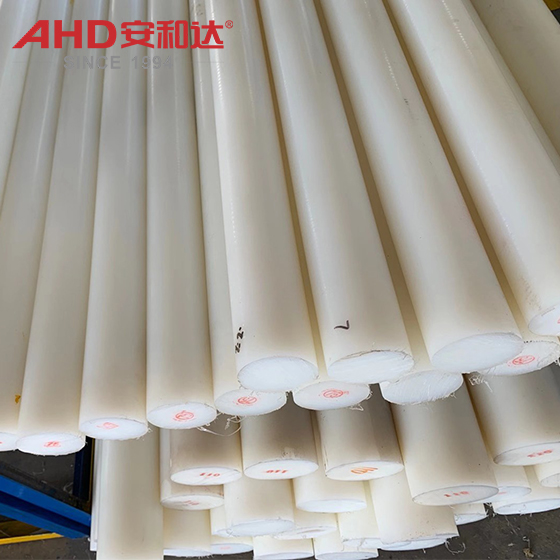
PA6 (Nylon 6): A semi-crystalline polyamide formed by the ring-opening polymerization of caprolactam. Its molecular chain contains amide bonds (-CONH-) and has a crystallinity of approximately 40%-50%.
PA66 (Nylon 66): A semi-crystalline polyamide formed by the condensation polymerization of adipic acid and hexamethylenediamine. Its molecular chain contains denser amide bonds (two per repeating unit), resulting in a higher crystallinity (approximately 50%-60%) and a higher melting point than PA6.
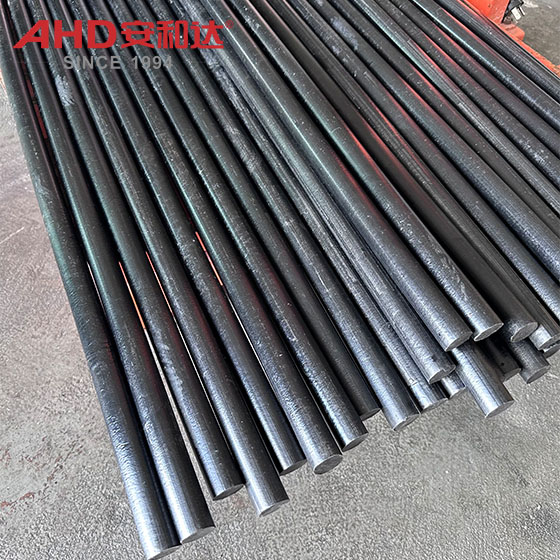
PA66 Glassfiber Rod: Glass fiber (GF, typically 10%-60%, with 20%-30% being common) is added to a PA66 matrix. The fiber reinforcement is then melt-blended or compression-molded to enhance mechanical properties and heat resistance.
2. Physical Properties
| Features | PA6 | PA66 | PA66 Glassfiber |
| Density (g/cm³) | 1.13-1.15 | 1.14-1.16 | 1.3-1.45 (increases with GF content) |
| Water Absorption (23°C/50% RH) | 3.5% (Balanced) | 2.5% (Balanced) | ≤0.5% (Significantly Reduced) |
| Shrinkage | 1.5%-2.5% (after molding) | 1.0%-1.5% (higher crystallinity, more uniform shrinkage) | 0.2%-0.5% (fiber-restricted shrinkage) |
3. Mechanical properties
| Features | PA6 | PA66 | PA66 Glassfiber |
| Tensile Strength (MPa) | 60-80 | 70-90 | 150-300 (30% GF) |
| Elastic Modulus (GPa) | 3-3.5 | 3.5-4.5 | 8-12 (30% GF) |
| Elongation at break (%) | 5-25 | 3-15 | 1-5 (high rigidity) |
| Notched Impact Strength (kJ/m²) | 5-10 (Remains tough even at low temperatures) | 3-8 (High crystallinity, slightly increased brittleness) | 8-15 (Fiber bridging absorbs energy) |
| Hardness (Rockwell D) | 80-100 | 100-110 | 110-125 (increases with GF content) |
4. Thermal Performance
| Features | PA6 | PA66 | PA66 Glassfiber |
| Melting Point (°C) | 220-225°C | 260-265°C | 260-265°C (base melting point remains unchanged) |
| Heat Deflection Temperature (HDT, 1.8 MPa) | 50-60°C | 70-80°C | 200-250°C (30% GF) |
| Long-term operating temperature (°C) | 80-100 | 100-120 | 120-150 |
5. Chemical Properties
Solvent Resistance: Both PA6 and PA66 are resistant to organic solvents such as hydrocarbons, ketones, and esters, but are susceptible to attack by strong acids (such as concentrated sulfuric acid) and strong bases (such as sodium hydroxide), and hydrolysis is accelerated at high temperatures.
Weather Resistance: PA6 is more sensitive to UV rays (amide bonds are susceptible to photodegradation) and requires the addition of an antioxidant. PA66, due to its more compact molecular chains, has slightly better weather resistance.
Glass Fiber Effect: PA66 GF further enhances chemical stability, as the fiber inhibits molecular chain swelling, resulting in superior acid and alkali resistance compared to pure PA66.
6. Processability
| Features | PA6 | PA66 | PA66 Glassfiber |
| Melt Flowability | Good (low viscosity, easy to fill thin-walled parts) | Poor (high viscosity, requires high-pressure injection) | Poor (glass fiber increases viscosity, requires high shear) |
| Processing Temperature | 220-260°C | 260-300°C | 270-320°C (higher melting temperature required) |
| Mold Design | Cooling rate control is required (fast crystallization) | Dwelling time needs to be extended | Warping prevention is required (glass fiber orientation causes anisotropy) |
| Molding cycle | Short (fast crystallization) | Long (slow crystallization) | Longer (high viscosity + high crystallization tendency) |
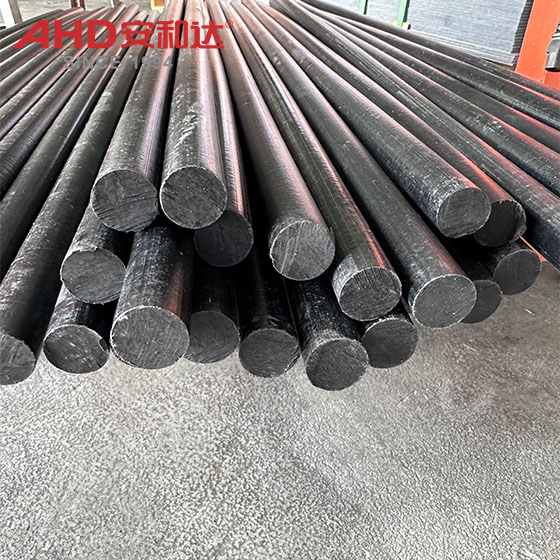
7. Core Advantages Summary
PA6:
Lower cost (lower raw material and processing energy consumption);
Excellent processability (excellent flowability, suitable for complex structures);
Excellent toughness (strong impact resistance and shock absorption);
High overall cost-effectiveness, suitable for general-purpose mechanical parts.
PA66 Glassfiber:
Outstanding mechanical properties (strength and stiffness 3-5 times that of PA6);
Significantly improved heat resistance (HDT exceeds 200°C, long-term temperature resistance to 150°C);
Excellent dimensional stability (low shrinkage and low CTE, suitable for precision parts);
Enhanced chemical resistance (especially oil and solvent resistance).
Conclusion:
PA6 is suitable for general-purpose applications with high requirements for cost and processability, while PA66 glass fiber reinforced rods are irreplaceable in high-load, high-temperature, or precision applications and must be selected based on specific working conditions (load, temperature, and precision).
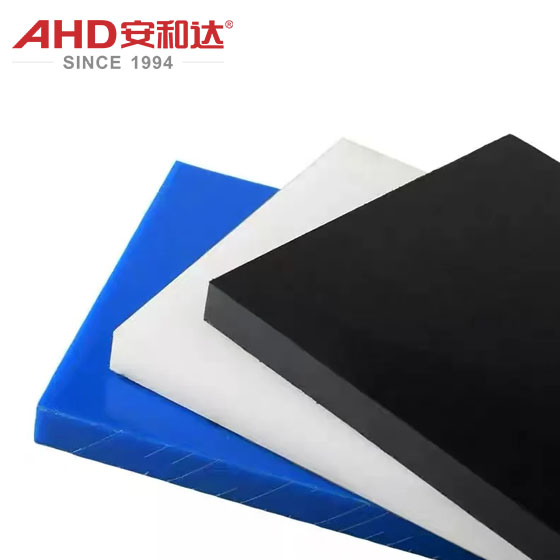
AHD PA6 Sheets