

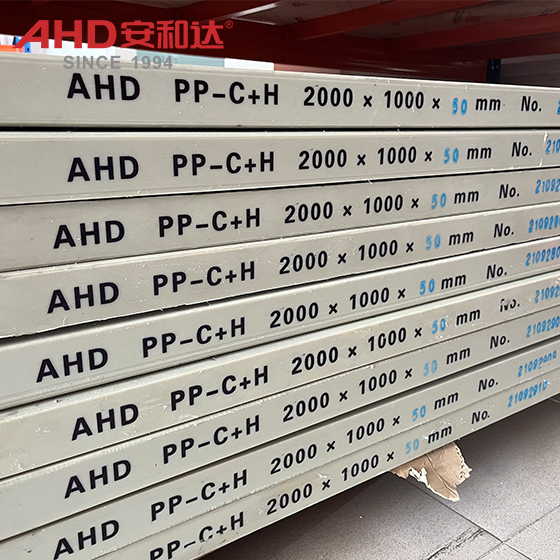
Blending (co-modification) PP-H (homopolymer polypropylene) with PP-C (copolymer polypropylene) is a common method for optimizing plastic properties. Because both are polypropylene-based materials (main chains are composed of propylene units), they exhibit good compatibility. By adjusting the blending ratio and processing, a balance of rigidity and toughness can be achieved, while also enhancing specific properties. The following analysis focuses on performance characteristics, potential enhancements, and application scenarios:
I. Core Features and Advantages of Blending
The essence of blending PP-H and PP-C is to complement each other by leveraging the "rigid component (PP-H)" with the "tough component (PP-C)" to compensate for the shortcomings of either material, achieving a balanced performance of "rigidity and toughness." Specific features are as follows:
1. Mechanical Properties: Simultaneous Improvement of Rigidity and Toughness
Rigidity (Hardness, Strength): PP-H's high crystallinity and regular molecular chains impart fundamental rigidity to the material. After blending, it retains much of PP-H's tensile strength and hardness, avoiding the significant loss of rigidity associated with the addition of PP-C alone.
Toughness (Impact Resistance): PP-C's random/block ethylene segments disrupt PP-H's regular crystalline structure, reducing stress concentration points and significantly improving low-temperature notched impact strength while maintaining room-temperature toughness.
2. Temperature Resistance: Expands low-temperature application range while retaining medium- and high-temperature performance.
Low-temperature toughness: The ethylene segments in PP-C lower the glass transition temperature (Tg) of the material. The low-temperature brittleness temperature of the blended material can be reduced from -10°C (pure PP-H) to -20°C to -25°C, making it suitable for lower temperature environments.
Medium- and high-temperature stability: PP-H's high crystallinity maintains the material's medium- and high-temperature rigidity (long-term operating temperatures can still reach 80-100°C), avoiding the loss of heat resistance associated with excessive PP-C content.
3. Processing Performance: Optimizing Flow and Molding Stability
Flowability: PP-C has a lower degree of crystallinity and a looser molecular chain. This reduces the material's melt viscosity after mixing, improving flow during injection molding (especially for thin-walled or complex-structured products). PP-H's crystallinity also suppresses warpage caused by excessive flow.
Dimensional Stability: PP-H's high crystallinity improves the material's ability to control shrinkage, reducing warpage and dimensional deviation after molding, making it suitable for high-precision products.
4. Chemical Resistance and Stress Cracking Resistance: Synergistic Enhancement
Chemical Resistance: Both materials share a polypropylene backbone structure, resulting in consistent resistance to acids, bases, and organic solvents (except for strong oxidizing acids), with no significant decrease after blending.
Stress Cracking Resistance: The ethylene blocks in PP-C disperse stress concentration points within the PP-H molecular chain (such as microcracks generated during processing or use), extending the stress cracking resistance of the blended material by 2-3 times.
II. Key Performance Enhancements
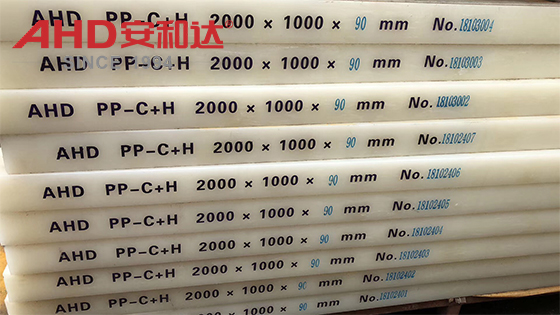
By adjusting the blend ratio of PP-H and PP-C (typically 50%-80% PP-H, 20%-50% PP-C), the following properties can be enhanced:
| Target Performance | Implementation Mechanism | Applicable Ratio Reference |
| Balance of rigidity and toughness | PP-H provides rigidity, while PP-C disrupts crystal regularity to improve toughness. | PP-H:PP-C = 7:3 or 6:4 |
| Low-temperature impact resistance | The ethylene segments in PP-C lower the Tg, reducing brittleness caused by molecular chain freezing at low temperatures. | PP-H:PP-C = 6:4 or 5:5 |
| Processing Flow | PP-C's low crystallinity reduces melt viscosity, improving mold filling during injection molding/extrusion. | PP-H:PP-C = 8:2 (favoring PP-H) or 5:5 (favoring flow) |
| Dimensional Stability | PP-H's high crystallinity inhibits shrinkage, while PP-C's flexibility reduces deformation caused by internal stress. | PP-H:PP-C = 7:3 or 8:2 |
| Stress crack resistance | The ethylene block in PP-C acts as a "toughening phase," dispersing crack propagation paths. | PP-H:PP-C = 6:4 or 5:5 |
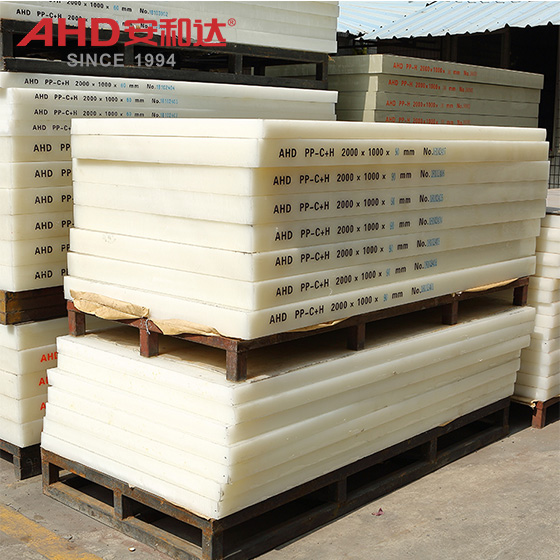
AHD PP sheet
III. Main Application Scenarios
PP-H/PP-C blends, due to their excellent balance of rigidity and toughness, are suitable for applications requiring high overall mechanical properties or requiring wide temperature ranges (especially low temperatures). Typical applications include:
1. Home Appliances and Household Products
Washing Machine/Air Conditioner Components: Such as washing machine spin drum brackets (must withstand mechanical stress) and air conditioner vent grilles (must be heat and impact resistant);
Kitchen Utensils: Such as plastic cutting boards (must withstand impact from cutting and high-temperature dishwashing) and food storage containers (must resist cracking in low-temperature refrigeration and be strong enough for daily use);
Furniture Accessories: Such as plastic chair legs (must bear loads and withstand impact from drops) and drawer slides (must be low friction and resist stress cracking).
2. Automotive Parts
Interior components: such as instrument panel frames (requires rigidity and temperature resistance);
Exterior components: such as headlight brackets (requires heat resistance and resistance to vibration stress);
Functional components: such as air conditioning ducts (requires heat resistance and resistance to stress cracking) and air filter housings (requires rigidity and chemical resistance).
3. Pipes and Building Materials
Hot and cold water pipes: Replace some PP-R pipes (pure PP-R is more expensive), using PP-H pipes to enhance rigidity (reducing deformation under water pressure) while retaining the low-temperature toughness of PP-C;
Municipal pipe fittings: such as drainage pipe joints (requires resistance to stress cracking and resistance to brittle fracture during installation).
4. Industrial and Consumer Goods
Industrial components: such as gears (requires rigidity and fatigue resistance), pallets (requires load-bearing and drop-impact resistance), and chemical tank linings (requires chemical resistance and stress crack resistance).
Common goods: such as luggage wheel brackets (requires rigidity and impact resistance) and plastic tool handles (requires non-slip performance, grip strength, and breakage resistance).
Summary
By leveraging the complementary strengths of rigidity and toughness, PP-H and PP-C blends significantly outperform single materials in terms of comprehensive mechanical properties, wide temperature range adaptability, and processing stability. They are particularly suitable for applications requiring combined impact resistance, load-bearing capacity, and temperature resistance (such as home appliances, automobiles, and pipelines). This modification method is less expensive than developing new specialized resins and is a common performance optimization strategy used in industry.
