A Comprehensive Analysis of PP-C (Polypropylene Copolymer) and PP-H (Polypropylene Homopolymer) Plastics
Polypropylene (PP) is a widely used plastic. Based on the polymerization method, it can be divided into homopolymer (PP-H) and copolymer (PP-C). The following detailed comparison of the two in terms of definition, structure, properties, and applications.
I. Basic Definitions
PP-H (Polypropylene Homopolymer):
A polymer formed solely from propylene (C₃H₆) monomers through addition polymerization. The molecular chain contains only propylene units (-CH₂-CH(CH₃)-) and exhibits a highly regular structure.
PP-C (Polypropylene Copolymer):
A polymer formed by the copolymerization of propylene with a small amount of other monomers (most commonly ethylene, but may also contain butene). Depending on the copolymerization method, it can be categorized as follows:
Random Polypropylene (PP-R): Ethylene is randomly dispersed throughout the propylene chain;
Block Polypropylene (PP-B): Ethylene forms long, continuous blocks (e.g., a "propylene segment-ethylene segment-propylene segment" structure).
In practice, "PP-C" generally refers to copolymerized polypropylene (including PP-B and PP-R), but specific application scenarios require careful consideration.
II. Similarities
Basic Chemical Properties: The main chain consists entirely of propylene units, offering excellent chemical stability, resistance to acids, alkalis, and organic solvents (except strong oxidizing acids), and is non-toxic and odorless. Suitable for food contact applications (such as tableware and food packaging).
Physical State: All are thermoplastics and can be repeatedly heated and formed (by injection molding, extrusion, and other processes).
Density and Appearance: Density is approximately 0.90-0.91 g/cm³, making them lightweight. Appearance is generally translucent to opaque (influenced by crystallinity).

Ⅲ. Differences
1. Molecular Structure Differences
PP-H: The molecular chain contains only propylene units, resulting in a highly regular structure and easy crystallization (crystallinity is typically 50%-70%).
PP-C: The introduction of ethylene monomer disrupts the regularity of the propylene chain, resulting in a lower crystallinity (typically 30%-50%) and a more "loose" molecular chain.
2. Differences in mechanical properties
| Performance | PP-H | PP-C |
| Stiffness/Hardness | High (tensile strength approximately 30-40 MPa) | Relatively low (tensile strength approximately 20-30 MPa) |
| Impact Toughness | Highly brittle at low temperatures (<0°C) (notched impact strength <2 kJ/m²) | Excellent low-temperature toughness (notched impact strength >5 kJ/m² at -10°C) |
| Stress crack resistance | Poor (prone to cracking due to stress concentration) | Good (ethylene block alleviates stress concentration) |
3. Temperature Resistance Differences
PP-H: Long-term operating temperature range is approximately -10°C to 100°C, prone to creep at high temperatures (>120°C); glass transition temperature (Tg) is approximately -10°C to 0°C.
PP-C: Due to its low crystallinity, its molecular chains are more flexible at low temperatures, maintaining good toughness at -20°C; however, its stiffness decreases significantly at high temperatures (long-term operating temperature range is approximately -20°C to 90°C).
4. Processing Performance
PP-H: High crystallinity and a narrow melting point (approximately 160-170°C) require strict temperature control during processing, otherwise uneven shrinkage or warping may occur.
PP-C: Low crystallinity and a wide melting point range (approximately 140-160°C) offer improved fluidity and a wider processing window, making it suitable for injection molding of complex structures.
IV. Differences in Applications
Advantages and Applications of PP-H
Core Advantages: High rigidity, high hardness, high temperature resistance, and excellent dimensional stability.
Typical Applications:
Home appliance housings (such as washing machine drums and air conditioner vents);
Industrial components (such as gears, brackets, and chemical containers);
Daily necessities (such as rigid plastic cups, lunch boxes, and storage boxes);
Construction (such as PP-H pipes for cold water transportation).
Advantages and Applications of PP-C
Core Advantages: Excellent low-temperature toughness, strong impact resistance, and resistance to stress cracking.
Typical Applications:
Low-temperature products (such as outdoor plastic parts in northern China and refrigeration equipment accessories);
Pipe systems (such as PP-B cold water pipes and PP-R hot water pipes; PP-R is used for hot water pipes due to its superior heat resistance due to random copolymerization);
Impact-resistant structural parts (such as automotive bumper linings and internal buffer components of home appliances);
Complex injection molded parts (such as thin-walled products and precision parts).
V. Summary
PP-H is a "rigidity specialist," suitable for applications requiring high hardness and high-temperature resistance.
PP-C is a "toughness specialist," suitable for applications requiring low temperatures, impact resistance, or processing flexibility.
When choosing between the two, balance the performance of the two based on specific requirements (such as temperature, impact load, and dimensional accuracy). Further optimization can be achieved through blending and modification if necessary.
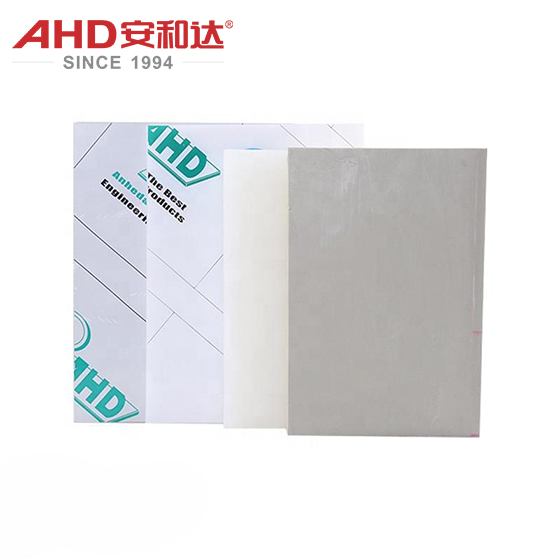
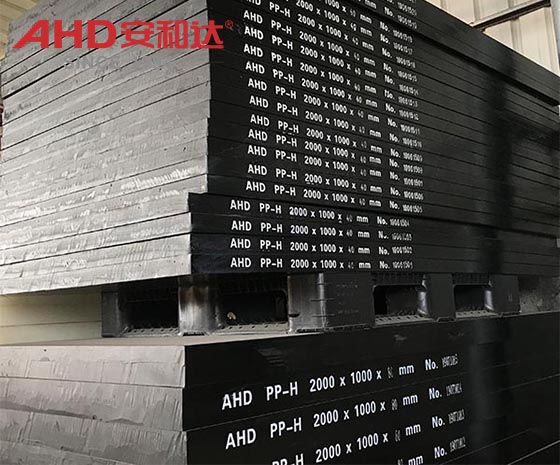
AHD polypropylene sheet