

PEEK (Polyetheretherketone) and PTFE (polytetrafluoroethylene) are two commonly used high-temperature sealing materials. Each has unique performance advantages and limitations, and is suitable for different operating scenarios. The following comparative analysis focuses on key performance dimensions and summarizes their applicable scopes:
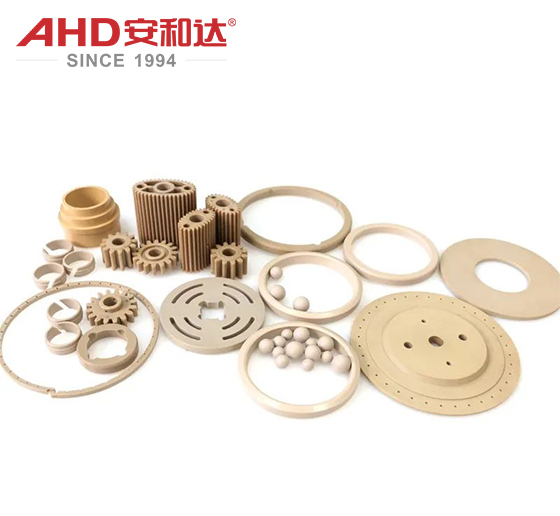
PEEK Machined Parts
I. Core Performance Comparison
1. High-Temperature Resistance
PEEK: Long-term operating temperature reaches 250°C, and short-term resistance can reach 310°C. Its heat deflection temperature (HDT, 1.8 MPa) is approximately 315°C, and its mechanical property retention is high at high temperatures (tensile strength at 200°C is over 80%).
PTFE: Long-term operating temperature is approximately 260°C, but it softens easily at high temperatures (>200°C). Its heat deflection temperature is only 120°C (1.8 MPa), and its mechanical properties decrease significantly with increasing temperature (tensile strength at 200°C is only 30% of room temperature).
Conclusion: While both materials offer similar long-term temperature resistance, PEEK offers superior high-temperature mechanical stability, making it suitable for high-temperature, high-pressure, and load-bearing applications.
2. Mechanical Properties
PEEK: Excellent overall mechanical properties, with a tensile strength of 90-100 MPa, an elastic modulus of 3.6 GPa, strong creep resistance (creep strain <1% at 200°C/1000 hours), and low compression set (approximately 15% deformation after 50% compression at 200°C/22 hours).
PTFE: Soft material, with a tensile strength of only 20-25 MPa and an elastic modulus of 0.5 GPa, poor creep resistance (creep strain >10% at 250°C/1000 hours), and high compression set (approximately 30% deformation after 50% compression at 25°C/24 hours, more severe at high temperatures).
Conclusion: PEEK's rigidity, deformation resistance, and load-bearing capacity far exceed those of PTFE, making it suitable for high-pressure, high-precision seals. PTFE requires modification (e.g., with glass fiber or carbon fiber) to increase its strength (strength can reach 40-50 MPa after filling), but is still weaker than PEEK.
3. Chemical Stability
PEEK: Resistant to most organic solvents (such as alcohols and hydrocarbons), oils, and weak acids and bases, but susceptible to corrosion from highly polar solvents (such as concentrated sulfuric acid and nitric acid) or high-temperature halogens (such as molten sulfur).
PTFE: Almost unreactive with all chemicals (except molten alkali metals and elemental fluorine), its corrosion resistance to strong acids (aqua regia), strong bases, and organic solvents makes it the "King of Plastics."
Conclusion: PTFE's chemical resistance is superior to PEEK across the board, making it suitable for environments with highly corrosive media.
4. Friction and Wear Resistance
PEEK: The coefficient of friction is approximately 0.3 (unlubricated), which can be reduced to 0.15 by filling with PTFE or graphite. It exhibits excellent wear resistance and is suitable for lubricated dynamic seals.
PTFE: Excellent self-lubrication (coefficient of friction 0.04 unlubricated), but pure PTFE is susceptible to cold flow wear. Filling improves wear resistance, making it suitable for low-speed, unlubricated, or boundary lubrication applications.
Conclusion: Pure PTFE has a lower friction coefficient but is prone to wear; PEEK has better wear resistance and is suitable for sealing environments with medium to high speeds or abrasive particles.
5. Processing and Cost
PEEK: Processing requires high-temperature equipment (injection temperature 360-400°C), resulting in complex processes and high raw material costs.
PTFE: Easy to process (molding and push-molding), with controllable shrinkage and low raw material costs.

Ⅱ. Advantages Summary
| Performance Dimensions | PEEK Seal Advantages | PTFE Seal Advantages |
| High-temperature and high-pressure resistance | Excellent mechanical stability at high temperatures, including creep and compression set resistance | Slightly higher upper temperature limit for long-term resistance, but significant softening at high temperatures |
| Mechanical Properties | High strength, high rigidity, and strong load-bearing capacity | Requires filler modification; pure material is relatively soft |
| Chemical corrosion | Resistant to most common media | Resistant to almost all chemical corrosion (except molten alkali metals, etc.) |
| Friction and Wear Resistance | After filling, it offers excellent wear resistance, making it suitable for dynamic sealing. | It has excellent self-lubrication properties, making it particularly suitable for low-speed, non-lubricated applications. |
| Cost | High | Low |
III. Application Comparison
Typical Applications for PEEK Seals
High-Temperature and High-Pressure Applications: Petrochemical (e.g., wellhead seals, high-pressure reactors), aircraft engines (fuel/hydraulic system seals), automotive turbochargers (200-300°C high temperatures and high-pressure oil and gas).
Dynamic Seals: Mechanical seals and pump shaft seals (requires wear resistance and load-bearing performance).
Oil/Solvent-Resistant Environments: Hydraulic systems and lubricating oil seals (resistant to corrosion from mineral and synthetic oils).
Typical Applications for PTFE Seals
Highly Corrosive Environments: Chemical reactors (exposed to aqua regia, concentrated acids/alkalis), pharmaceutical equipment (acidic/solvent media), semiconductor cleaning lines (hydrofluoric acid, etc.).
Low-Load/Low-Speed Seals: Food Machinery (e.g., beverage filling machine piston seals), bathroom valves (low-pressure water/gas seals).
Low-Friction Requirements: Precision instruments (e.g., focusing mechanisms in optical equipment), cryogenic equipment (PTFE offers superior low-temperature toughness compared to PEEK).

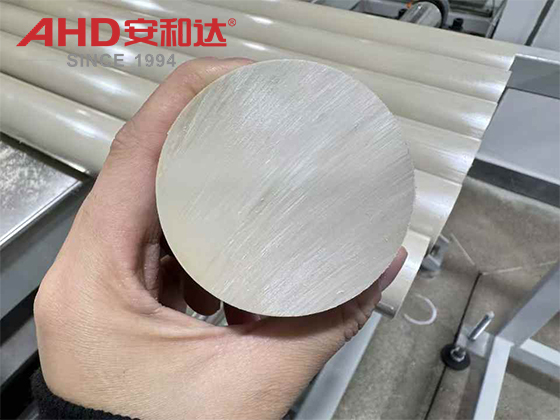
PEEK Plastic Rod to PEEK Parts
IV. Selection Recommendations
Prefer PEEK when sealing requirements involve high temperatures (>200°C) and high pressures (>10 MPa), dynamic friction, and oil/solvent resistance.
Prefer PTFE when the media is highly corrosive (such as aqua regia or concentrated acid), the operating conditions are low pressure and low speed, or cost is sensitive (some creep is acceptable).
Modification Options: PTFE can be improved by filling it with glass fiber (to increase strength) or carbon fiber (to improve thermal conductivity), or by blending it with PTFE/PEEK, narrowing the gap with PEEK while still maintaining a lower cost than pure PEEK.
In summary, the choice between PEEK and PTFE requires a comprehensive consideration of temperature, pressure, media corrosiveness, mechanical load, and cost. Each has its own unique advantages in different scenarios.
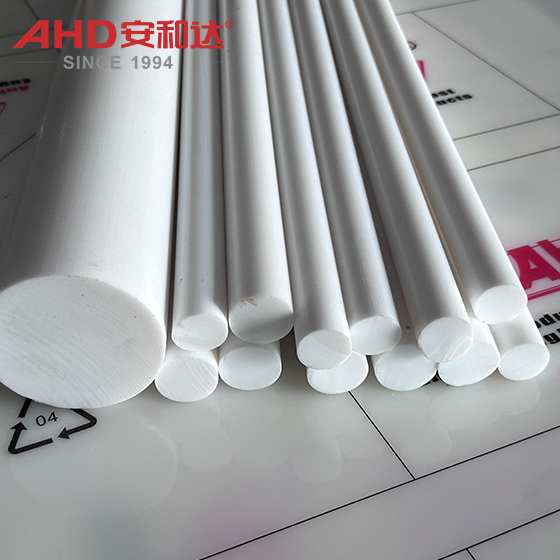
PTFE Part
