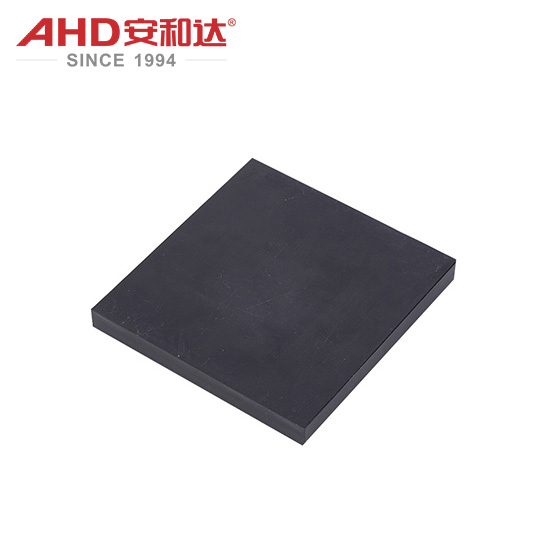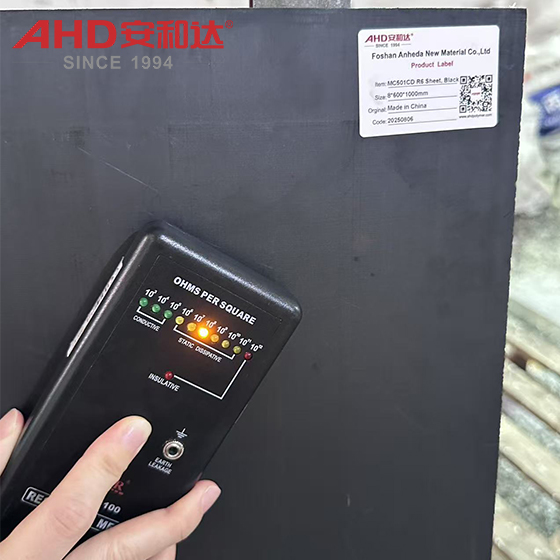
Definition of PA6 Antistatic Sheet:
PA6 antistatic sheet is a functional sheet material made from nylon 6 (polycaprolactam, PA6) with antistatic modifiers (such as conductive carbon black, metal fibers, antistatic surfactants, or polymeric antistatic agents) added through blending, extrusion, or injection molding. While retaining the inherent excellent properties of PA6, the modified material reduces surface resistivity, providing both antistatic and conductive properties. It is primarily used in applications requiring static control.
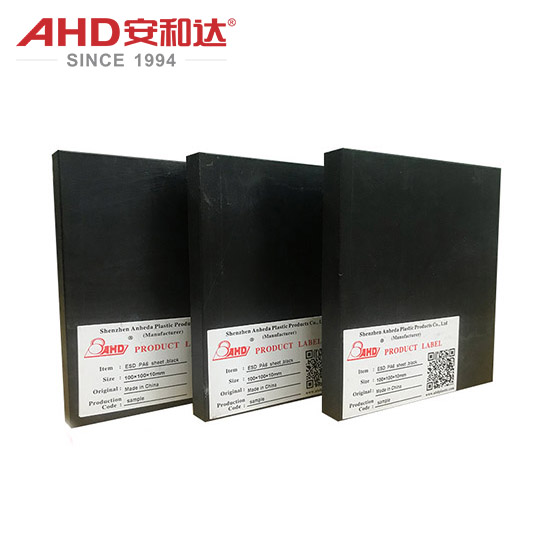
AHD ESD PA6 Nylon Sheet
Core Features of ESD PA6 Nylon Plastic Sheet
PA6 anti-static sheet features combine the basic properties of PA6 with the added functionality of anti-static agents. These include:
1. Stable Anti-Static Performance
The surface resistivity is typically controlled between 10⁶ and 10¹¹ Ω (depending on the type and amount of anti-static agent added). This effectively conducts static charges, preventing component damage or dust absorption caused by static buildup.
Long-Lasting Anti-Static Effect: When conductive fillers (such as carbon black and metal fibers) are used, the conductive network is evenly dispersed within the PA6 matrix, offering excellent migration resistance and maintaining anti-static performance over long-term use (months to years). Surfactant-based fillers may experience migration, leading to diminished effectiveness over time (depending on application requirements).
2. Retains the fundamental advantages of PA6 Sheet
Excellent mechanical properties: High tensile strength (approximately 75-90 MPa), flexural modulus (approximately 2600-3200 MPa), good impact resistance, and strong fatigue resistance, making it suitable for load-bearing or dynamic load applications.
Good chemical resistance: Resistant to oils, hydrocarbon solvents, weak acids and bases, and not easily corroded by common industrial chemicals.
Moderate temperature resistance: Long-term operating temperature range is approximately -40°C to 100°C (short-term operating temperature can reach 120°C), superior to common plastics (such as PE and PP) and lower than PA66.
Self-lubrication and wear resistance: Low coefficient of friction (approximately 0.15-0.3), wear resistance, suitable for sliding parts or frequent friction applications.
3. Excellent Processability
PA6 has excellent melt flowability (melting point approximately 220°C). It can be formed into sheets, rods, or complex structural parts through processes such as injection molding, extrusion, and thermoforming, with high dimensional stability.

Key Advantages
Compared to other anti-static materials (such as PVC, PET, and conductive ABS), PA6 anti-static sheeting offers the following advantages:
More balanced overall performance: Compared to PVC (brittle and low temperature resistance) or PET (high cost and high hygroscopicity), PA6 offers high strength, temperature resistance, and chemical resistance, making it suitable for a wider range of applications.
Lightweight and cost-effective: Its density is lower than metal, and its processing cost is lower than that of conductive engineering plastics (such as conductive PC/ABS).
Persistent performance: PA6 anti-static sheeting modified with conductive fillers is less affected by ambient humidity (compared to surfactant-based materials, whose resistivity may decrease in high humidity).
Recyclability: PA6 itself is recyclable, and modified PA6 retains a certain recycling value (but contamination with anti-static agents must be avoided).