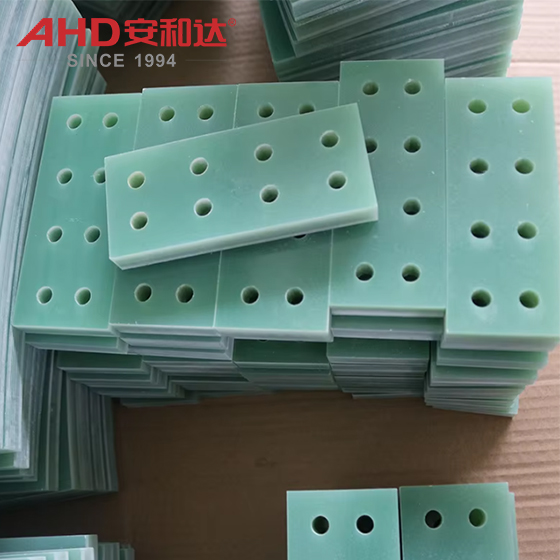
To understand ESD FR4 board, we must first clarify its core definition: it is a modified epoxy glass cloth laminate based on traditional FR4 board, with anti-static (ESD) properties imparted through a special process. Essentially, it's "FR4 board with ESD protection." The following details this technology from four perspectives: its definition, characteristics and advantages, differences from traditional FR4, and specific applications.
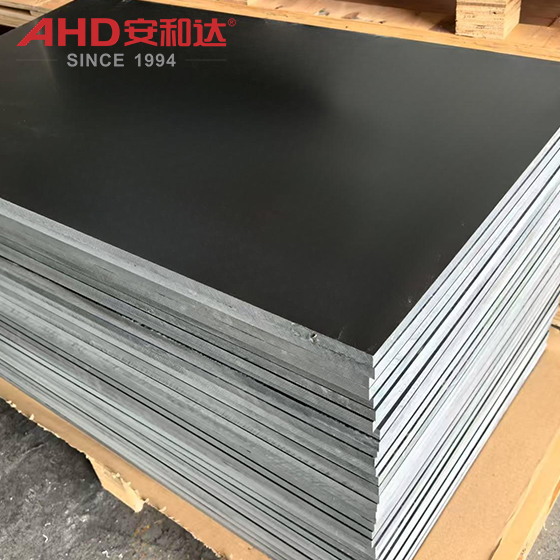
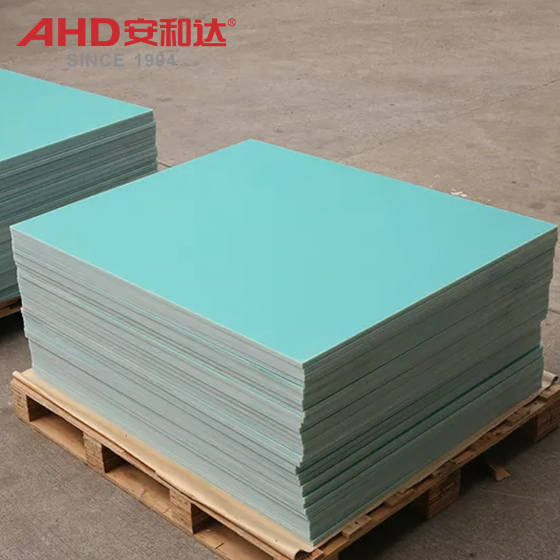
AHD ESD Glass Fiber Sheet
Ⅰ. What is ESD FR4 board?
First, let's break down the core terminology and clarify its essence:
FR4: The industry-standard designation for epoxy glass cloth laminates. "F" stands for temperature resistance (long-term operating temperature ≤ 150°C), "R" stands for "resin," and "4" is a serial number. The substrate is glass cloth, and the binder is epoxy resin. After hot pressing, it becomes a basic board with excellent insulation properties. It is one of the most commonly used insulating substrates in the electronics industry.
ESD: Electrostatic Discharge. The core of ESD FR4 board is to modify the surface or interior of the board to have a controllable surface resistance (typically 10⁶ to 10¹¹Ω). This allows for the gradual release of static charge (rather than accumulation or rapid discharge), preventing static electricity from damaging sensitive components or posing safety risks.
In short, ESD FR4 board is "a functional board that has been modified from traditional FR4 to make it antistatic in order to solve the hazards of static electricity". It retains the basic performance of FR4 and adds electrostatic protection capabilities.
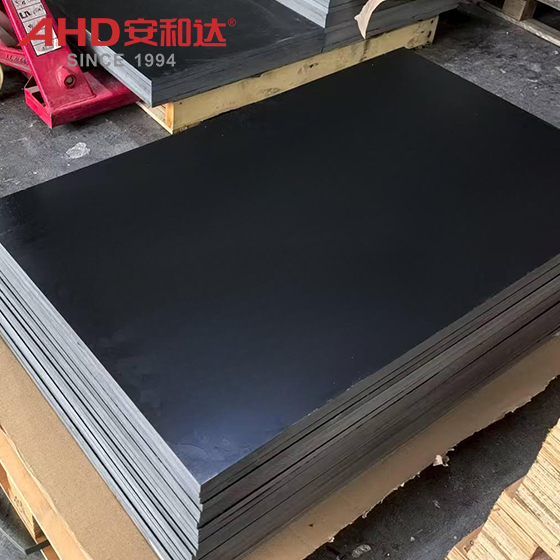
II. Features and Advantages of ESD FR4 Boards
The advantages of ESD FR4 boards revolve around "maintaining basic performance and providing strong ESD protection," specifically encompassing five core features:
1. Excellent ESD Protection
Controllable surface/volume resistivity: Surface resistivity is typically controlled between 10⁶ and 10¹¹Ω. It neither conducts electricity like metal (preventing short circuits) nor insulates like traditional FR4 (preventing static electricity accumulation);
Slow Discharge of Electrostatic Charge: It quickly reduces the static voltage to a safe range (typically <100V), preventing electrostatic discharge (ESD) from causing breakdown or damage to electrostatically sensitive components (ESDs) such as chips and sensors;
Stable Antistatic Performance: Antistatic performance is achieved through "intrinsic modification" (rather than surface coating). This ensures that antistatic performance remains stable even after long-term use, friction, or changes in ambient humidity (30% to 60% RH). (Surface-coated antistatic boards are susceptible to wear and tear.)
2. Retains the basic properties of traditional FR4
As a modified FR4, its core physical, mechanical, and insulation properties are consistent with traditional FR4, meeting the basic requirements of the electronics industry:
Insulation Performance: Volume resistivity ≥ 10¹⁴Ω・cm (controllable only in the anti-static area; non-anti-static areas maintain high insulation), excellent dielectric constant (approximately 4.5-5.5 at 1MHz), and dielectric loss tangent (≤0.02), making it suitable for high-frequency signal applications.
Mechanical Strength: Flexural strength (≥ 450MPa longitudinally, ≥ 400MPa transversely) and impact strength are high, making it resistant to cutting, drilling, and other processes without breaking.
Heat and Environmental Resistance: Short-term temperature resistance reaches 260°C, and it is resistant to heat, humidity, and chemical corrosion (such as alcohol and detergents), making it suitable for harsh industrial environments.
3. Strong Processing Compatibility
Fully compatible with traditional FR4 processing techniques: PCB industry processes such as drilling, milling, cutting, hot pressing, and soldering can be directly adopted without adding new equipment or adjusting processes.
Customizable: Thickness and size can be adjusted as needed to suit different scenarios.
4. High Safety
No Spark Risk: Static electricity is slowly discharged, preventing sparks, making it suitable for use in flammable and explosive environments.
5. Excellent Cost-Effectiveness
Compared to other specialized antistatic materials (such as antistatic ceramics and metal-based composites), ESD FR4 boards cost only slightly more than traditional FR4. However, they simultaneously meet the triple requirements of "insulation, antistatic, and mechanical strength," eliminating the need for additional protective layers and resulting in lower overall costs.
Ⅲ. Core Differences between ESD FR4 Boards and Traditional FR4 Boards
| Comparison of dimensions | Traditional FR4 board | ESD FR4 board |
| Core Functions | Insulation, Support (No ESD Protection) | Insulation, Support + ESD Protection (Core Difference) |
| Surface Resistivity | >10¹⁴Ω (strong insulation, prone to static accumulation) | 10⁶~10¹¹Ω (controllable antistatic, slow discharge) |
| Static Electricity Risk | High: Static electricity accumulation can easily cause ESD, potentially damaging sensitive components. | Low: Static electricity is rapidly discharged, eliminating ESD risk. |
| Modification Process | No antistatic modification (epoxy + glass cloth only) | Requires addition of antistatic agents (e.g., carbon nanotubes, conductive fillers) or surface/internal modification |
| Applicable Scenarios | Non-ESD-sensitive scenarios (such as ordinary household appliance PCBs and mechanical supports) | ESD-sensitive scenarios (such as semiconductors and precision electronics) |
| Cost | Lower (base material) | Slightly higher (than traditional FR4) |
| Performance compatibility | Basic insulation and mechanical properties only | Basic performance + antistatic performance (no conflict) |
IV. Specific Applications of ESD FR4 Boards
1. Semiconductor and Microelectronics Industry
Wafer Processing/Packaging: Used in wafer carriers, packaging trays, and chip test jigs to prevent static electricity from damaging wafers or chips.
Semiconductor Equipment Components: Insulating partitions, guide rails, and suction cups within equipment to prevent static electricity from damaging semiconductor components during operation.
2. Electronic Components and PCB Industry
Precision PCB Substrates: Used in high-frequency communication PCBs and automotive electronics PCBs to ensure signal insulation transmission while preventing static electricity from interfering with signals or damaging chips.
Electronic Component Trays/Transfer Boxes: Used for transporting/storing components such as ICs, resistors, and capacitors to prevent static electricity from attracting dust and damaging components during transportation.
SMT Production Line Components: SMT placement machine nozzle holders and feed rails to prevent static electricity from causing component displacement or damage during placement.
3. Medical Electronics Industry
Internal insulation components in medical equipment: such as internal partitions and support structures in ECG monitors, ultrasound equipment, and surgical robots. Medical electronic components are sensitive to static electricity and must meet medical-grade insulation and environmental protection requirements.
4. Industrial Automation and New Energy Industry
Industrial Control Equipment: Internal insulation panels in PLCs, inverters, and servo drives. Industrial environments are dusty and subject to frequent friction, which easily generates static electricity and requires protection for control chips.
New Energy Industry: Insulation components in lithium battery manufacturing equipment. Lithium batteries are extremely sensitive to static electricity (static sparks can cause cell combustion). ESD FR4 boards can mitigate this risk.
Aerospace Electronics: Internal PCB substrates in satellites and spacecraft. Space is airless, so static electricity cannot be dissipated through the air, requiring the material's inherent anti-static properties.
In summary, ESD FR4 board is a "functionally upgraded version" of traditional FR4 board. Its core value is to solve the hazards of electrostatic discharge without sacrificing basic performance. It is a "must-have material" in the field of electrostatic sensitive electronics.
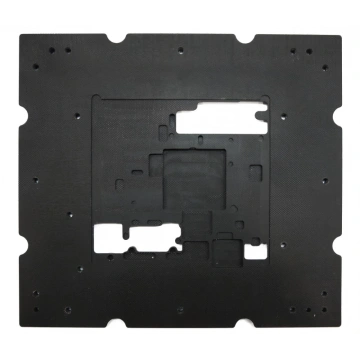
AHD FR4 Parts