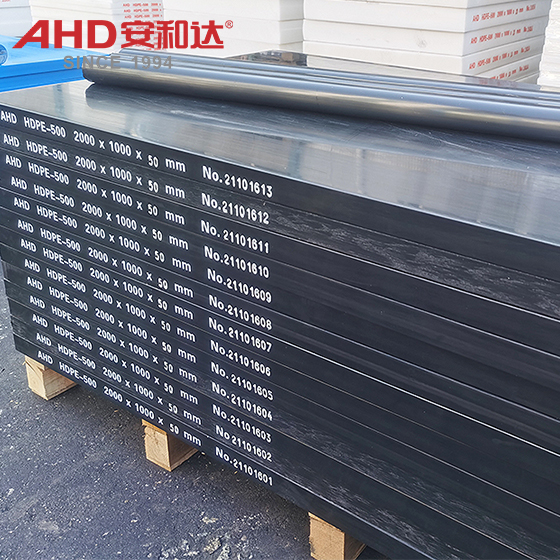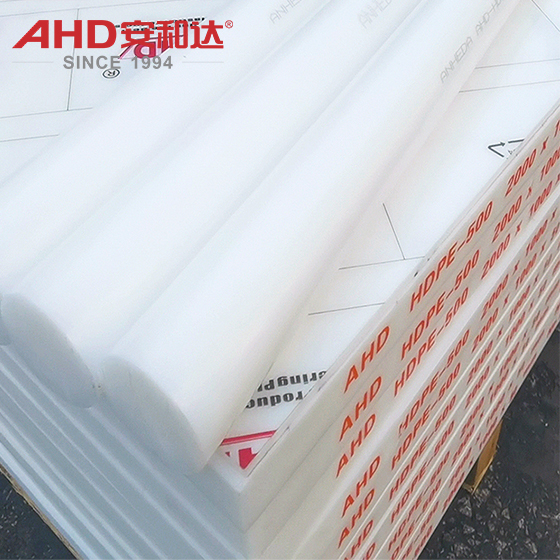
Polyethylene (PE) with different molecular weights exhibits significant differences in performance, which directly influences their diverse applications.
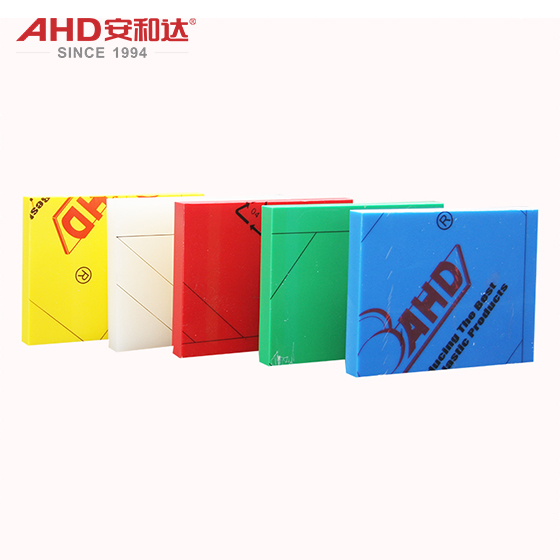
We can imagine polyethylene molecular chains as strands of "noodles" of varying lengths.
Low molecular weight PE (LDPE): Like short grains of rice, it flows easily but lacks structural strength.
Normal molecular weight PE (HDPE): Like ordinary dried noodles, it is of moderate length, possessing a certain strength and being easily formed.
Ultra-high molecular weight PE (UPE): Like several meters of spaghetti, it is tightly intertwined, extremely strong, but almost impossible to flow.
Below, we will explain in detail the differences brought about by molecular weight from the perspectives of performance and application.

Ⅰ. The Effect of Molecular Weight on PE Properties
As molecular weight (often indirectly characterized by the melt index (MFI), which is inversely proportional to molecular weight) increases, PE properties exhibit regular changes:
| Performance Indicators | Molecular weight decreases (MFI increases) | Molecular weight increases (MFI decreases) | Principle Description |
| Flowability (Processability) | Improved | Worsened | Molecular chains become shorter, with fewer entanglements, making them more likely to slip. |
| Tensile Strength | Decrease | Increase | Short molecular chains have weaker tensile strength |
| Impact resistance/toughness | Significantly reduced | Significantly improved | Long and tightly entangled molecular chains require a significant amount of energy to break. |
| Hardness/rigidity | Decrease | Increase | Strengthen the intermolecular chain forces |
| Abrasion resistance | Significantly reduced | Very significantly improved | The entangled network of long molecular chains effectively resists scratches and wear. |
| Environmental stress cracking resistance | Reduced | Significantly improved | Long chain entanglement inhibits crack propagation |
| Chemical resistance | Slightly worse | Better | Denseer structure, less likely to penetrate |
Core principle: Molecular weight is an amplifier of PE's performance.
Increasing molecular weight improves overall mechanical properties (strength, toughness, and wear resistance), but at the expense of significantly increasing processing difficulty.
Lowering molecular weight significantly improves processing flowability, but the material becomes more brittle and loses strength.
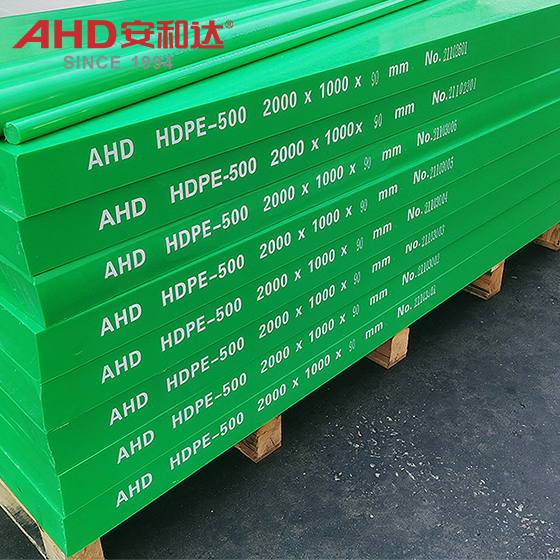 AHD HDPE Sheet and HDPE Rod
II. Classification and Application of PE of Different Molecular Weights
Based on molecular weight, the PE family is primarily divided into the following categories:
1. Low Molecular Weight Polyethylene (LMWPE)
Molecular weight: Typically around several thousand.
State: A waxy, soft solid at room temperature.
Properties: Very low strength, but excellent flexibility and lubricity.
Applications: Primarily used as a processing aid, for example:
Wax: Used in candles, cosmetics, and coatings.
Lubricant: Added to plastics or rubber to improve flow.
Coating: Provides waterproofing and gloss.
2. Standard Molecular Weight Polyethylene (General-Grade HDPE/LLDPE)
This is the type of polyethylene we encounter most often in our daily lives.
Molecular Weight: From tens of thousands to over two hundred thousand.
Properties: Offers an optimal balance of strength, toughness, and processability.
Applications: Extremely versatile.
Injection Molded Products: Toys, Storage Boxes, Buckets, Bottle Caps.
Blow Molded Products: Various Bottles and Cans (such as Milk Bottles and Shampoo Bottles).
Extruded Products: Pipes, Wire and Cable Jacketing, and Films (Shopping Bags and Packaging Film).
3. High Molecular Weight Polyethylene (HMWPE)
This can be considered an enhanced version of general-purpose HDPE.
Molecular Weight: Typically between 200,000 and 500,000.
Properties: Excellent impact and tear resistance, especially resistance to repeated impact. Processing is more challenging than general-purpose grades.
Applications: Used in demanding applications.
Large Containers: Chemical storage tanks, large water tanks.
High-Strength Film: An upgraded version of shopping bags, thinner and stronger.
Engineering Components: Mechanical parts requiring high impact resistance.
4. Ultra-High Molecular Weight Polyethylene (UPE)
This is the performance king of the PE family.
Molecular Weight: Over 1.5 million, typically 3-6 million.
Properties: Extremely wear-resistant, impact-resistant, and self-lubricating. However, its extremely high viscosity after melting makes it impractical for conventional plastics processing (injection molding, extrusion), requiring specialized processes such as pressing and sintering.
Applications: High-end specialty engineering plastics.
Wear-resistant components: Textile machinery gears, mining conveyor belt liners, artificial joints (acetabulums).
Ballistic Protection: Body armor, cut-resistant gloves.
Self-lubricating components: Bearings and bushings in environments where lubricants cannot be used.
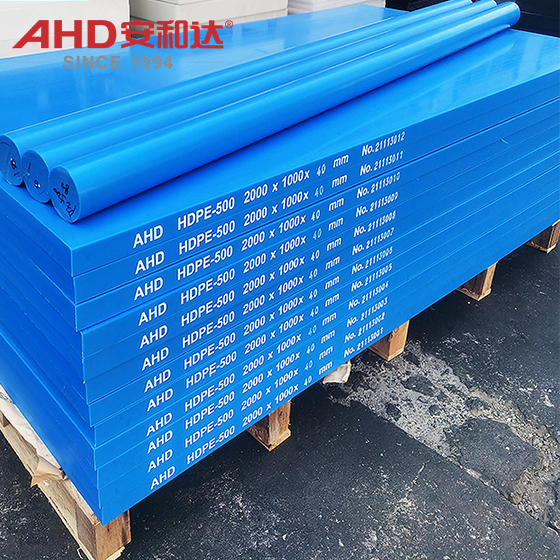
AHD High Density Polyethylene Sheet and Rod
Summary
You can understand the molecular weight ladder of PE as follows:
| Type | Molecular Weight Level | Image Metaphor | Core Characteristics | Main Applications |
| Low molecular weight PE | "Rice grain" | Waxy, easy to flow | Lubricating, waterproof | Additive, wax |
| Ordinary HDPE/LLDPE | "Noodles" | Balanced, easy to process | Excellent overall performance | Daily necessities, packaging, pipes |
| High molecular weight HDPE | "Extended noodles" | Strong, impact-resistant | High toughness, tear resistance | Large containers, heavy packaging |
| Ultra-High Molecular Weight PE | "Extra-Long Spaghetti" | Extremely tough, wear-resistant, and difficult to process | King of wear and impact resistance | High-end engineering, medical, and protective applications |
Therefore, when selecting PE materials, engineers are essentially looking for the optimal balance between product performance (strength, toughness, and wear resistance) and processing costs, along the molecular weight spectrum.
AHD HDPE Plastic Sheet And Rod