

PVDF Welding Rod (Polyvinylidene Fluoride welding rod) Details
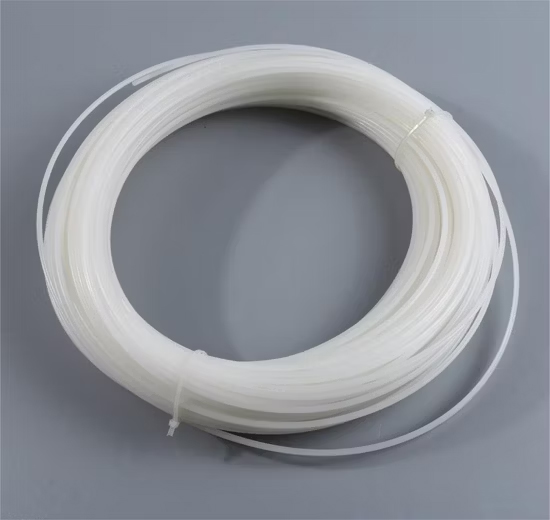
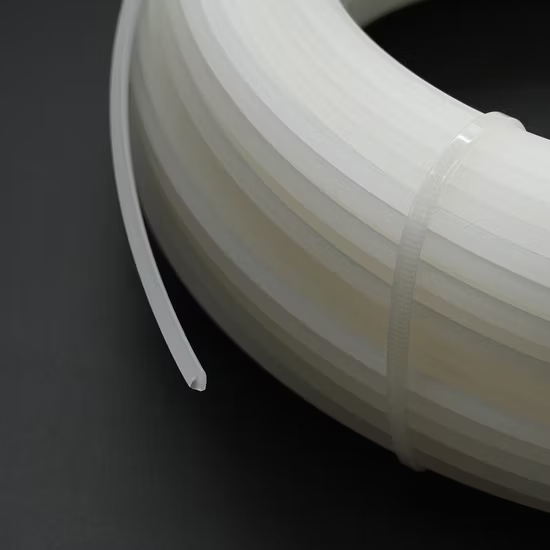
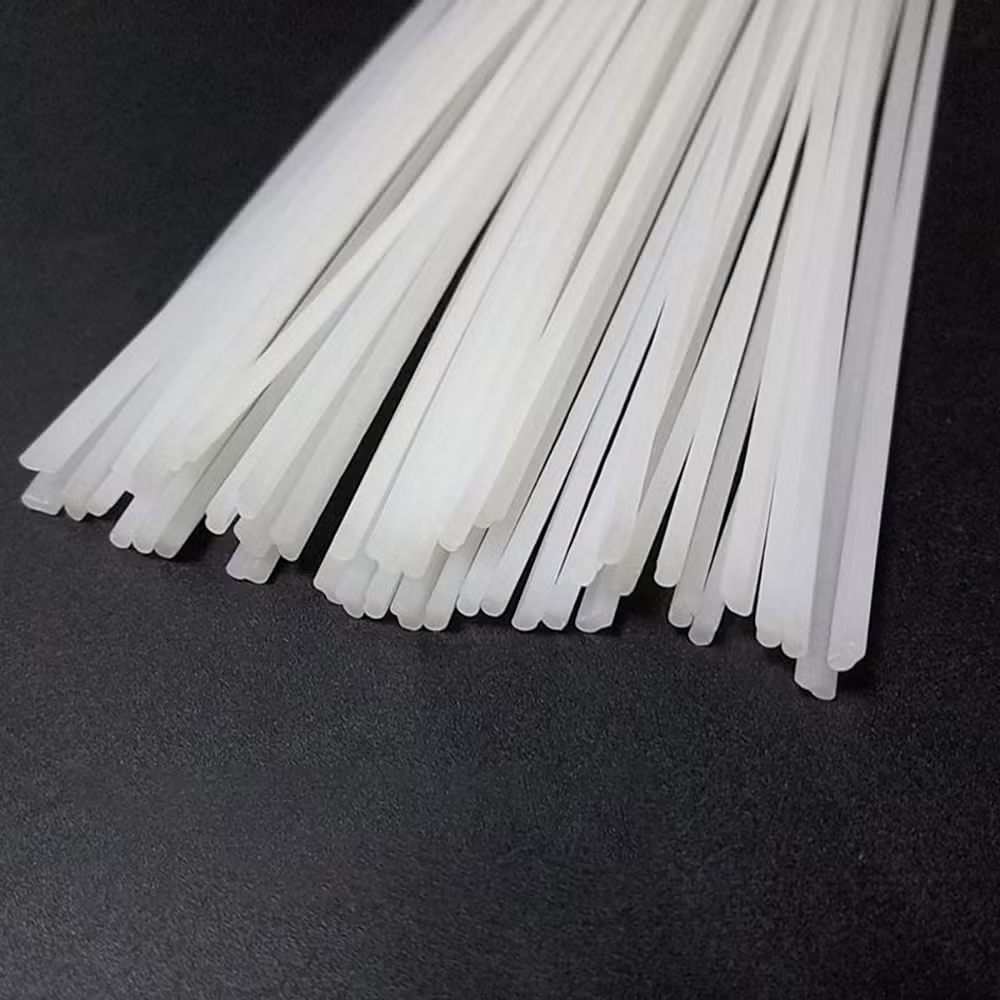
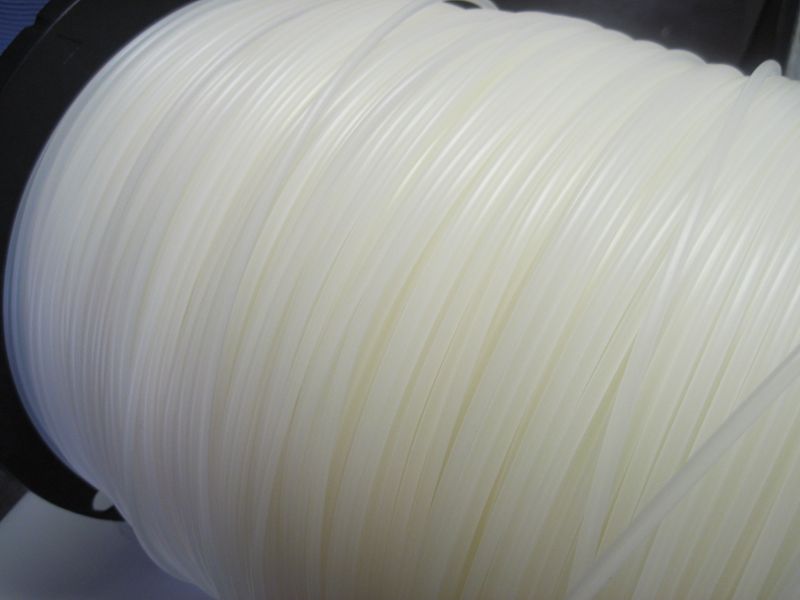
PVDF welding rod is a rod-shaped welding consumable made from polyvinylidene fluoride (PVDF) resin. It is primarily used for joining and repairing PVDF products (such as pipes, plates, and containers). Its core function is to fuse the PVDF base material and the welding rod through a heat-melting process, creating a high-strength, highly leak-tight joint.
Source:
PVDF welding rods are made from high-purity PVDF resin (usually in granular form) and are formed into rods through an extrusion process. The production process requires strict control of temperature, pressure, and cooling rate to ensure that the density, melt index (MFI), and mechanical properties of the welding rod closely match those of the PVDF base material. High-quality PVDF welding rods must possess the same chemical resistance, temperature resistance, and stress cracking resistance as the base material.
Characteristics
The properties of PVDF Plastic welding rods are closely related to their base resin, PVDF. Due to the welding process requirements, they possess the following key attributes:
Chemical Resistance: Inheriting the excellent properties of PVDF, it is resistant to corrosion by strong acids (such as hydrochloric acid and sulfuric acid), strong bases, organic solvents (such as acetone and methanol), and halogens, making it suitable for harsh chemical environments.
High Temperature Resistance: The long-term operating temperature range is -40°C to 140°C (short-term operation can reach 145°C), and the welded joint remains stable within this temperature range.
Mechanical Strength: The tensile strength and impact resistance of the welded joint approach those of the parent material (typical tensile strength ≥40 MPa), avoiding localized fragility caused by welding.
Weather and Aging Resistance: UV and oxidation resistant, with minimal performance degradation after long-term exposure to outdoor environments or high-radiation environments.
Low Permeability: Due to its compact molecular structure, the welded joint has virtually no risk of media permeation, making it suitable for high-purity fluid transportation.
Application Areas and Specific Scenarios:
PVDF welding rods, due to their highly compatible chemical resistance, high-temperature resistance, and high purity, are primarily used in applications requiring extremely high material corrosion resistance, cleanliness, or structural reliability.
1. Chemical and Petrochemical Industries
The core function of PVDF welding rods in this industry is to connect corrosion-resistant equipment and handle highly corrosive media:
Pipeline Systems: Used for connecting or repairing chemical reactors and material conveying pipelines.
Storage Tanks and Containers: PVDF tanks storing corrosive liquids require PVDF welding rods for their joint welds to prevent corrosion and leakage caused by welding defects.
Waste Gas Treatment Equipment: PVDF welding rods are used to connect the linings or pipelines of acidic and caustic scrubbers and caustic scrubbers in chemical plants to protect against corrosion from sulfur oxides and chlorine.
2. Semiconductor and Electronics Industry
Semiconductor manufacturing requires extremely high purity and impurity-free performance. PVDF welding rods are used to construct clean fluid systems:
High-purity chemical delivery piping: Ultra-pure acids, deionized water, and solvents (such as isopropyl alcohol) used in semiconductor processes require welding with PVDF welding rods to prevent contamination of the media by welding impurities.
Cleanroom ventilation systems: Acidic and alkaline exhaust ducting in semiconductor workshops (such as fluorine-containing exhaust gases generated by etching processes) is welded using PVDF welding rods, which are corrosion-resistant and have low leaching properties, meeting SEMI (Semiconductor Equipment and Materials International) cleanroom standards.
3. Water Treatment and Environmental Engineering
In water treatment, PVDF welding rods are used for key components that are resistant to acid, alkali, and aging.
Wastewater treatment equipment: PVDF piping, membrane module supports, and corrosion-resistant agitator shaft connections in neutralization tanks in landfill leachate treatment systems are welded with PVDF welding rods to withstand long-term corrosion from high-concentration salts and strong acids and alkalis. Pure Water Preparation Systems: PVDF valves and fittings in reverse osmosis (RO) and electrodeionization (EDI) units are welded to ensure leak-free locations to prevent pure water contamination.
4. New Energy and Battery Manufacturing
The new energy sector places stringent requirements on materials for electrolyte corrosion resistance and high-temperature stability:
Lithium Battery Production Equipment: Electrolyte delivery piping and reaction tanks are connected using PVDF welding rods to resist electrolyte swelling and corrosion.
Photovoltaic Module Encapsulation: Repairing PVDF-coated components on some photovoltaic backsheets or frames, or connecting with corrosion-resistant brackets, leverages its weather resistance to extend equipment life.
5. Food and Pharmaceutical Industries
Although PVDF is not the most popular application, it is suitable for applications requiring CIP/SIP (cleaning in place/sterilization) resistance:
Food-Grade Fluid Piping: PVDF piping in high-concentration juice concentrate equipment meets FDA food contact standards after welding to prevent contamination of food by welding residues. Pharmaceutical intermediate piping: Corrosion-resistant piping for the production of antibiotics or highly active drugs. Welded joints must be seamless and easy to clean. PVDF welding rods meet GMP (Good Manufacturing Practice) requirements.
6. Laboratory and Research Equipment
High-precision, corrosion-resistant custom equipment in laboratories:
Chemical synthesis equipment: PVDF components used in high-pressure reactors and distillation units in universities or research institutes are welded using PVDF welding rods to ensure high-pressure (≤10 MPa) and solvent resistance.
Corrosion testing equipment: Linings or piping for accelerated corrosion test chambers that simulate harsh environments. Accelerated corrosion testing ensures test data accuracy after welding to prevent premature weld failure and interference with results.
Instructions
PVDF welding rods are primarily welded using hot air welding (most commonly used) or hot press welding. Taking hot air welding as an example, the steps are as follows:
Pretreatment: Clean the welding surface of the parent metal to remove oil, dust, and oxide layers (alcohol or a specialized cleaning agent can be used); polish the surface to increase roughness (to improve bonding strength).
Equipment: Use a PVDF-specific hot air gun (adjustable temperature between 250-320°C) equipped with a welding tip (diameter matching the welding rod).
Welding Procedure:
Heat the welding surface of the parent metal until it is molten (approximately 280°C). Simultaneously, place the tip of the welding rod in contact with the molten area.
Move the welding gun at a constant speed to simultaneously melt and fuse the welding rod and the parent metal, applying gentle pressure (to avoid pores).
After welding, allow the weld to cool naturally (to avoid internal stress caused by forced cooling).
Post-treatment: Inspect the weld surface (it should be smooth and free of cracks). Perform a pressure test or penetrant test if necessary.
Welding PVDF Rod Stock
Advantages
Homogeneous Matching: The welded joint is consistent in composition and performance with the parent material, avoiding corrosion or failure caused by the combination of dissimilar materials.
High Reliability: The joint strength approaches that of the parent material, capable of withstanding high pressure, high temperature, and chemical impact, and its service life matches that of the equipment itself.
Wide Process Adaptability: Suitable for a variety of scenarios, including pipe docking, plate splicing, and equipment repair, and particularly suitable for on-site installation or repair.
Safety: No harmful ingredients are added, and no precipitates are released after welding, meeting cleanliness requirements such as food grade (FDA) and semiconductor grade (SEM I).
Precautions
Temperature Control: The welding temperature must be strictly controlled between 250-320°C (PVDF decomposes at approximately 400°C, but prolonged temperatures exceeding 350°C will accelerate aging and release trace amounts of HF gas).
Environmental Requirements: The welding area must be well ventilated to prevent the accumulation of decomposition gases. Operations in humid environments are prohibited to prevent moisture absorption and porosity in the weld. Material Matching: Choose a PVDF welding rod of the same grade as the base material (different additives or molecular weights may affect compatibility).
Operating Specifications: Ensure the base material is stress-free before welding (avoid welding directly after cold working). Maintain a consistent welding torch speed (too fast can lead to poor welds, too slow can lead to burn-throughs).
Safety Precautions: Operators must wear high-temperature-resistant gloves, goggles, and a respirator (to protect against HF gas). Welding waste must be sorted and recycled (PVDF is recyclable).
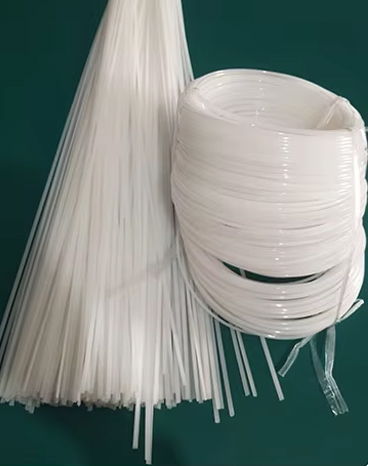
PVDF welding rods are key consumables for the manufacture and maintenance of PVDF equipment. They are used in all applications requiring reliable connections between PVDF equipment, especially in environments subject to severe corrosion, high purity, high temperatures, or long-term outdoor exposure. Their homogeneous, high-performance nature and reliable welding process extend the advantages of the PVDF parent material (chemical resistance, cleanliness, and weather resistance) to the joints, ensuring the lifespan and performance consistency of the entire system. They are widely used in industries such as the chemical, semiconductor, and environmental protection sectors, where material corrosion resistance and cleanliness are extremely demanding. Proper use requires strict control of temperature, environment, and operational details to maximize joint performance and equipment life.