I. What is POM Raw Material?
POM (Polyoxymethylene) is a high-performance engineering plastic, a linear polymer formed by the polymerization of formaldehyde. Its molecular structure is highly symmetrical (-CH₂O- repeating units), possessing metal-like rigidity and abrasion resistance.

Core Characteristics:
1. Excellent Mechanical Properties: High tensile strength (60-70MPa), high rigidity (elastic modulus 2.5-3.5GPa), low coefficient of friction, and good fatigue resistance.
2. Good Chemical Resistance: Resistant to organic solvents (such as hydrocarbons and oils), weak acids and bases, but not resistant to strong acids (such as concentrated sulfuric acid) and strong oxidants.
3. High Dimensional Stability: Extremely low hygroscopicity, minimally affected by ambient humidity.
4. Thermal Properties: Homopolymer POM has a melting point of approximately 175℃, copolymer POM approximately 165℃; long-term service temperature -40~100℃ (short-term up to 120℃).
Classification:
Homopolymer POM: Polymerized from pure formaldehyde, with high crystallinity (75-85%), superior mechanical properties but poor thermal stability (easily decomposes).
Copolymer POM: Copolymerized from formaldehyde and a small amount of dioxolane, with slightly lower crystallinity (70-75%), better thermal stability, and slightly stronger hydrolysis resistance.
II. How to Select High-Quality POM Raw Materials?
High-quality POM must meet application requirements (such as strength, temperature resistance, and abrasion resistance), and can be selected based on the following dimensions:
1. Define the intended use and performance indicators:
Select the type based on product requirements:
High rigidity/abrasion-resistant applications (e.g., gears, bearings): Prioritize homopolymer POM (higher strength).
Requirements for temperature resistance or processing stability (e.g., thick-walled parts): Select copolymer POM (good thermal stability).
2. Appearance and physical properties:
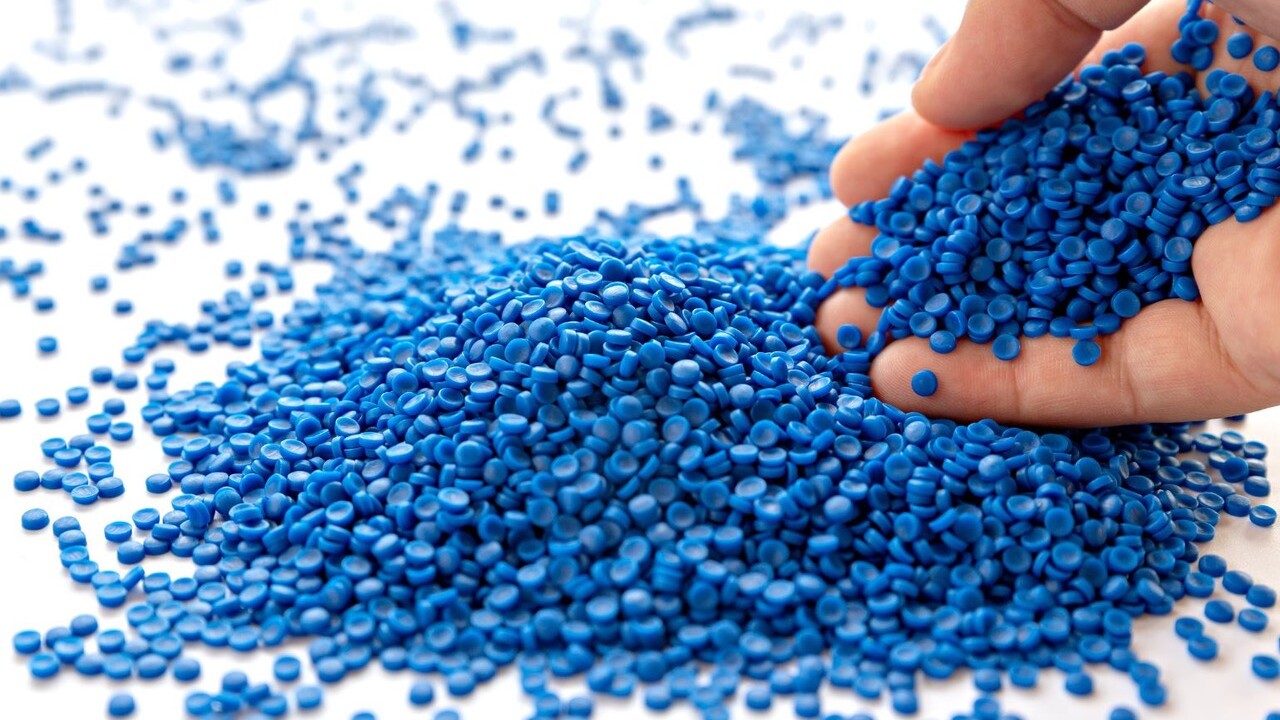
Appearance: Uniform particles, free of impurities (black spots, metal shavings), and consistent color (usually milky white or off-white).
Melt flow rate (MFR): Reflects molecular weight and processing fluidity (homogeneous POM MFR is typically 2-10 g/10 min, copolymer 5-20 g/10 min; needs to match product thickness, thin-walled parts require a higher MFR).
Density: Homopolymer POM approximately 1.42-1.43 g/cm³, copolymer approximately 1.41-1.42 g/cm³ (excessive deviation may indicate contamination with recycled materials).
3. Chemical and Mechanical Properties
Molecular Weight Distribution: Raw materials with a narrow molecular weight distribution (PDI≈2-3) exhibit stable processing properties and consistent shrinkage in finished products.
End Group Content: Low end carboxyl/hydroxyl group content (copolymer POM end carboxyl groups ≤10 eq/t) results in better thermal stability (less prone to decomposition).
Mechanical Testing: Tensile strength ≥60MPa, notched impact strength ≥6kJ/m² (adjustable according to requirements).
4. Suppliers and Qualifications: Select reliable factories and brands with sound quality systems (ISO 9001, IATF 16949).
Require testing reports (SGS, RoHS, REACH) confirming the absence of harmful impurities (such as heavy metals and chloride ions).
5. Sample Verification: Conduct small-batch trial production to check for decomposition, warping (internal stress), and dimensional deviations (mismatched shrinkage rate) in the products, and verify their actual performance.
III. How to Store POM Raw Materials?
Although POM has low hygroscopicity, improper storage over a long period can lead to performance degradation. The following precautions should be taken:
1. Environmental Control
Temperature: 20-30℃ (Avoid high temperatures; however, temperatures below 0℃ may cause embrittlement).
Humidity: Relative humidity ≤70%.
Light: Store away from light (UV radiation may cause oxidative degradation).
2. Packaging and Storage
Keep the original packaging (moisture-proof bag/aluminum foil bag). Unused raw materials should be sealed to prevent moisture absorption or contamination.
Avoid heavy pressure when stacking (to prevent particle breakage and affect flow).
3. Shelf Life
Unopened raw materials: 12-24 months (see supplier instructions for specific details); Once opened, it is recommended to use within 6 months. For long-term storage, re-dry (80℃ × 2h).
IV. How to Process POM into High-Quality Sheets and Rods?
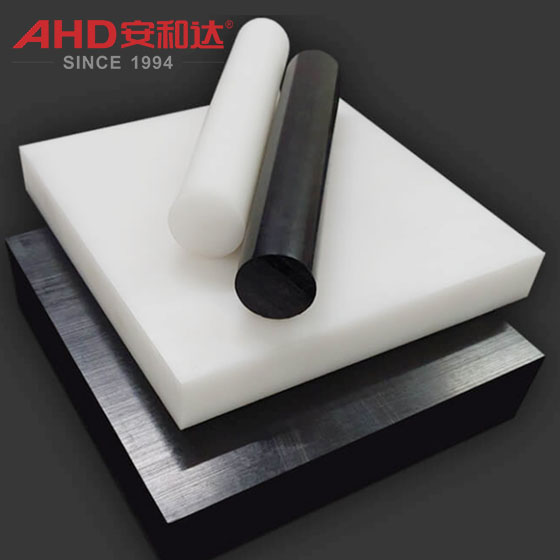
POM sheets/rods (Polyacetal Sheet/Polyacetal Rod) are typically produced through extrusion molding. The key is controlling process parameters to reduce internal stress and ensure dimensional accuracy and performance.
1. Raw Material Pretreatment
Drying: Although it has low hygroscopicity, it needs to be dried (80-100℃ × 2-4h) for long-term storage or in humid environments to prevent hydrolysis during processing (surface bubbles).
2. Extruder Parameter Settings
Barrel Temperature: Homopolymer POM: 180-210℃ (die head 200-210℃); Copolymer POM: 170-200℃ (die head 190-200℃). Excessive temperature can lead to decomposition (white smoke, pungent odor), while insufficient temperature results in poor plasticization (rough surface).
Screw Speed: Medium to low speed to avoid high shear heat generation (POM has poor thermal stability and is prone to decomposition).
Back Pressure: 0.5-2MPa (to improve melt uniformity and reduce bubbles).
3. Mold Design
Die: The gap should be slightly larger than the product thickness to compensate for the high melt expansion of POM (expansion rate 10-20%).
Cooling System: Multi-stage water cooling (water temperature 20-30℃) should be used for uniform cooling (to avoid localized overcooling leading to warping).
4. Traction and Shaping
The traction speed must match the extrusion speed (slightly faster than the extrusion speed to avoid product accumulation), ensuring uniform tension (to prevent stretching deformation).
The shaping die must be perpendicular to the extrusion direction to ensure dimensional accuracy.
5. Post-treatment
Annealing: After molding, anneal the product in an oven at 120-150℃ for 2-4 hours (to reduce internal stress and improve dimensional stability).
Surface Treatment: For higher gloss, polishing can be performed; for wear resistance, a coating (such as PTFE) can be applied.
High-quality POM raw materials require consideration of performance indicators, appearance inspection, and actual verification; attention should be paid to temperature, humidity, and light protection during storage; the core of processing plates/bars is to control the extrusion temperature, mold design, and post-processing to ensure dimensional accuracy and long-term stability.
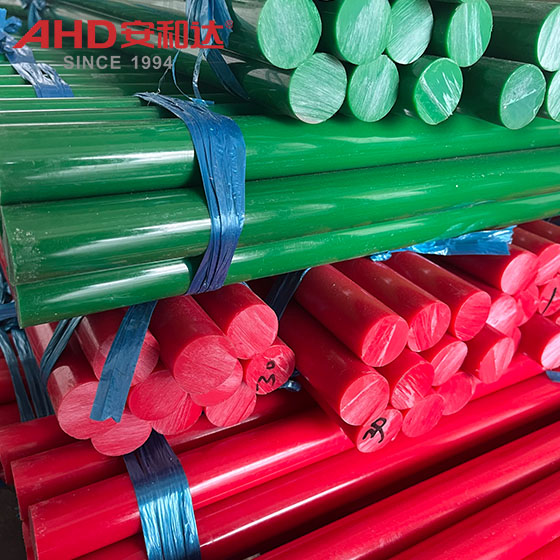
AHD POM Rod (Blue, Green, Red)