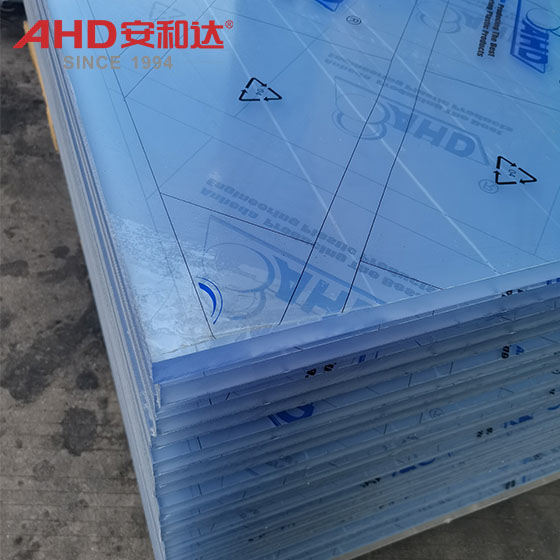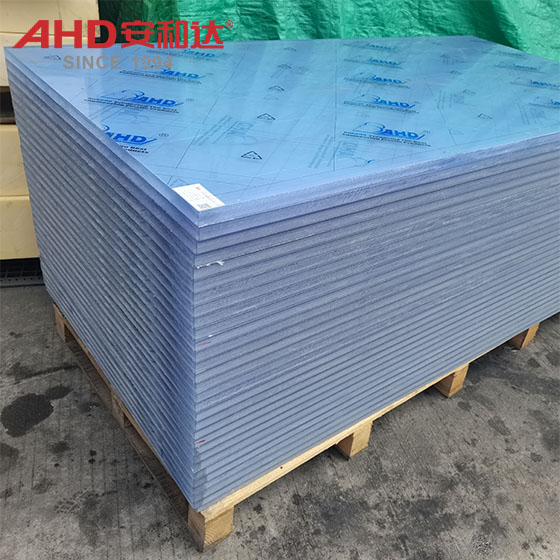
Polycarbonate (PC) is a core material for safety protective equipment, and its unique combination of properties (high transparency, superior impact resistance, lightweight, and resistance to extreme environments) makes it irreplaceable in applications such as riot shields, bank explosion-proof glass, and fire-fighting masks. The following provides a detailed analysis from four aspects: advantages, material characteristics, usage, and precautions.

AHD Polycarbonate Sheet
I. Core Advantages of PC Plastic Sheet as a Safety Protective Product
The safety protection value of PC stems from its "rigid and flexible" performance balance—it has transparency close to that of glass (ensuring visibility), toughness and impact resistance far exceeding that of metal (resisting external damage), while its lightweight design reduces the burden of use.
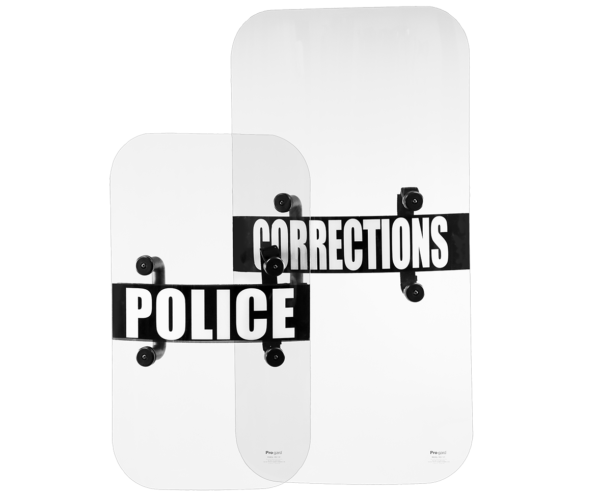
1. Riot Shield: Impact Resistant + Lightweight
Impact Resistance Outperforms Traditional Materials: PC's cantilever beam impact strength reaches 600-900 J/m (undamaged), more than 250 times that of ordinary glass, capable of withstanding impacts from blunt/sharp objects such as bricks, sticks, and knives. In contrast, metal shields are heavy, causing fatigue during prolonged handling; glass shields, when broken, can cause secondary injuries from flying shards.
Lightweight Design: PC's density is only 1.2g/cm³ (approximately half that of glass and one-seventh that of steel). A standard riot shield (4-6mm thick) weighs only 3-5kg, significantly reducing the handling load for law enforcement personnel (especially suitable for long patrols or emergency response).
Transparent, No Blind Spots: High light transmittance (89%) ensures that personnel behind the shield can clearly observe external dynamics, avoiding delays in judgment due to obstructed vision.
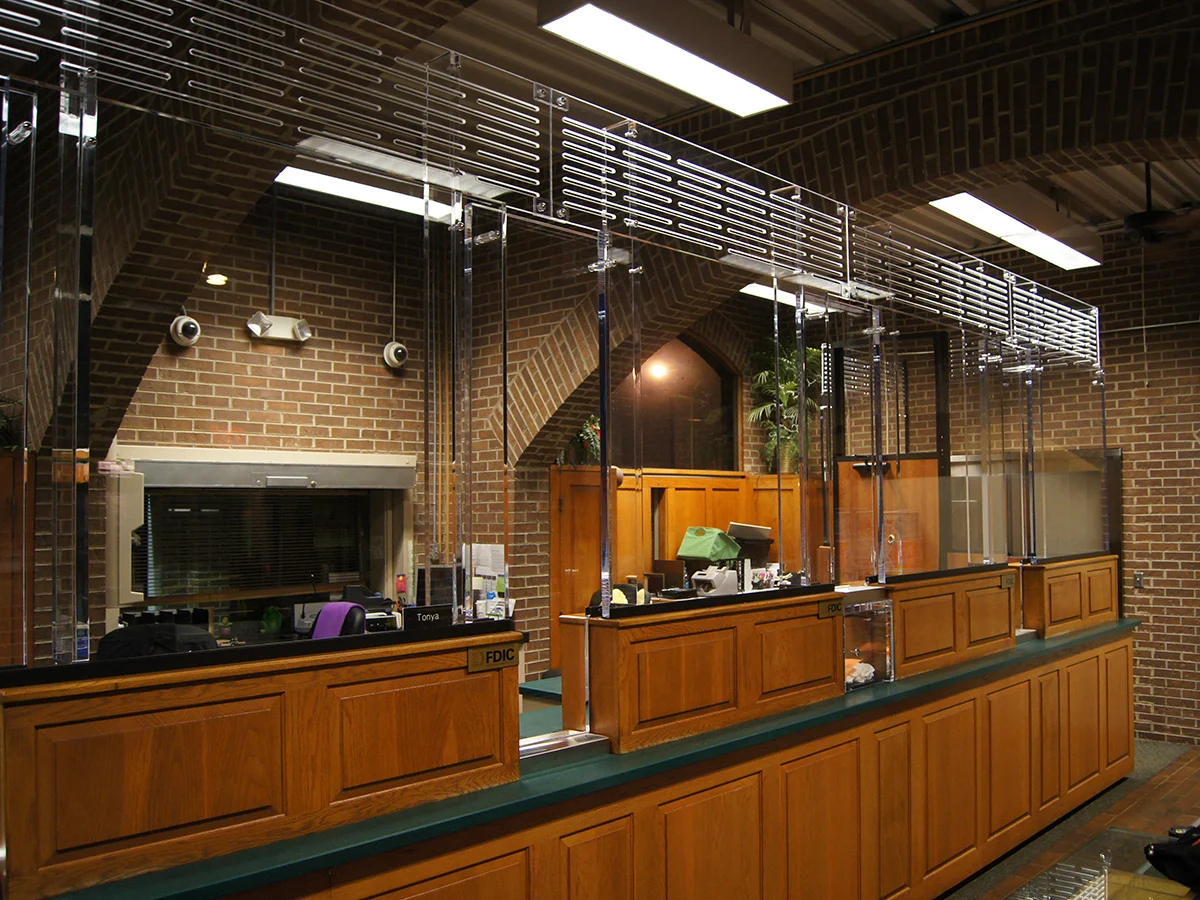
2. Explosion-proof Glass for Bank Counters (Multi-layer PC Composite): Bulletproof + Splash-proof
Multi-layer composite structure for enhanced protection: Typically uses a laminated structure of "PC + PVB (polyvinyl butyral) + PC" or "PC + acrylic + PC" (total thickness 20-50mm). The high toughness of PC absorbs the shockwave of an explosion and the kinetic energy of a bullet, while the PVB layer ensures that even if the outer PC layer breaks, the fragments remain bonded and do not scatter (similar to the principle of a car windshield).
Accepts explosion-proof performance standards: Meets bank security requirements, able to withstand handgun bullets and explosive shockwaves, buying time for bank tellers and customers to escape.
Balances transparency and privacy: Transparent PC composite glass does not interfere with daily business communication (such as communication between customers and tellers), while privacy can be protected through coatings (such as privacy films).
3. Firefighter Mask Visor: High Temperature Resistance + Smoke Corrosion Resistance
High Temperature Resistance and Thermal Stability: PC has a long-term operating temperature range of -60~120℃ and can withstand short-term temperatures of 130-150℃ (without deformation at short-term 200℃). It maintains structural integrity in the high-temperature environment of a fire (typically 300-800℃, but the temperature near the window is lower due to airflow), preventing the window from melting or deforming and obstructing vision.
Smoke and Chemical Corrosion Resistance: PC is resistant to weak acids and alkalis, resisting corrosion from common acidic gases (such as HCl) and oily fumes encountered in fires, preventing the window surface from becoming blurred or brittle.
Lightweight and Fit: The lightweight PC window can be used with a silicone mask to control the overall weight, reducing the load on the firefighter's head.
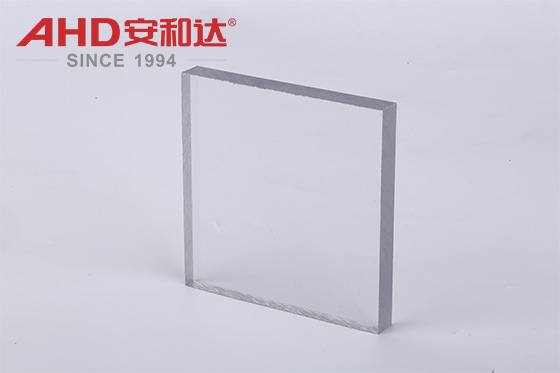
II. Characteristics and Appearance of PC Materials
PC's suitability for security protection scenarios is essentially determined by its "all-around" material properties and controllable appearance:
| Characteristics | Specific Manifestations | Value Associated with Security Protection |
| Ultra-high impact resistance | Cantilever beam impact strength: 600-900 J/m (unnotched); notched impact strength: 80-120 J/m (still far superior to ABS and PMMA) | Resistant to blunt/sharp impacts, explosive fragments, and bullet kinetic energy. |
| High transparency | Light transmittance 89% (close to glass), haze <1% (optical-grade PC), refractive index 1.58 (no visual distortion) | Ensuring clear visibility (a core requirement for riot shields, fire masks, and explosion-proof glass) |
| Temperature Resistance | Long-term use: -60~120℃; short-term use: 130~150℃; glass transition temperature: 145℃ | Suitable for high temperatures in fire scenes (firefighting masks) and outdoor temperature differences (riot shields). |
| Lightweight | Density 1.2g/cm³ (glass 2.5g/cm³, steel 7.8g/cm³) | Reduces grip/wearing load (riot shields, fire masks) |
| Dimensional stability | Linear expansion coefficient: 6.8 × 10⁻⁵/℃ (lower than ABS's 8-10 × 10⁻⁵/℃), water absorption rate: <0.2% | No deformation after long-term use (stable for explosion-proof glass and shield structures) |
| Flame Retardancy | Unmodified PC has an oxygen index of 25-28 (flammable), but with the addition of flame retardants, it can reach UL94 V-0 rating (self-extinguishing upon removal of flame). | Reduces the risk of combustion-supporting in fires (auxiliary requirements for fire masks and explosion-proof glass). |

AHD PC Sheet (light blue)
III. Use of PC in Security Equipment
The use of PCs in the security field is a niche, essential market. While the total volume is smaller than that of electronics and automobiles, demand is stable and continues to grow driven by policy:
1. Market Size and Main Application Areas
Global Market: According to Grand View Research, the global PC market for security applications was approximately $800-1 billion USD in 2023, accounting for 3%-5% of total PC consumption. It is mainly concentrated in China, the United States, and Europe (regions with high investment in law enforcement, finance, and fire protection).
Security Applications:
Riot shields, explosion-proof glass for banks/jewelry stores, fire masks/industrial protective masks
Others:
Prison security windows, airport security barriers, bulletproof vest inserts (PC composite materials), etc.
2. Demand Drivers
Mandatory Policy and Regulations: Increased investment in public safety in various countries is driving the standardization of riot control equipment and explosion-proof facilities in banks;
Enhanced Security Awareness: Businesses (such as banks and jewelry stores) are proactively upgrading their protection levels;
Technological Iteration: Mature PC modification technology is driving the development of lightweight and multifunctional products.

IV. Precautions for Use
While PC boasts excellent performance, its limitations and scenario-specific compatibility must be considered in safety protection applications; otherwise, the protective effect may be compromised:
1. Limitations of the Material Itself
Insufficient Resistance to Organic Solvents: Avoid contact with solvents such as acetone, xylene, and dichloromethane (which can cause stress cracking). Clean with a neutral detergent and a soft cloth.
Insufficient Outdoor Weather Resistance: Long-term UV exposure will cause yellowing and embrittlement (riot shields stored outdoors require a UV-resistant coating or periodic replacement).
Low Surface Hardness: Easily scratched by sharp objects (requires a hardening film or periodic polishing for repair).
2. Maintenance and Disposal Standards
Regular Inspection: Safety protective equipment should be inspected every six months. Discontinue use immediately if any damage affects usability or visibility.
Disposal Criteria: PC must be replaced when a penetrating crack appears on the surface, an impact dent depth >2mm, or light transmittance drops to <80% (impairing vision).
Storage Environment: Store in a dry, well-ventilated place, away from direct sunlight and heat sources.
Summary
With its core advantages of "high transmittance + ultra-impact resistance + lightweight," PC has become a "golden material" in the field of safety protection, especially irreplaceable in riot shields, explosion-proof glass, and fire masks. Although its usage share is not high, demand is inelastic and continues to grow with increasing safety awareness. When using it, attention should be paid to its limitations in weather resistance and chemical resistance. Maximize protective effectiveness through modification, composite structures, and standardized maintenance to ensure the reliability and effectiveness of the "last line of defense" for safety.