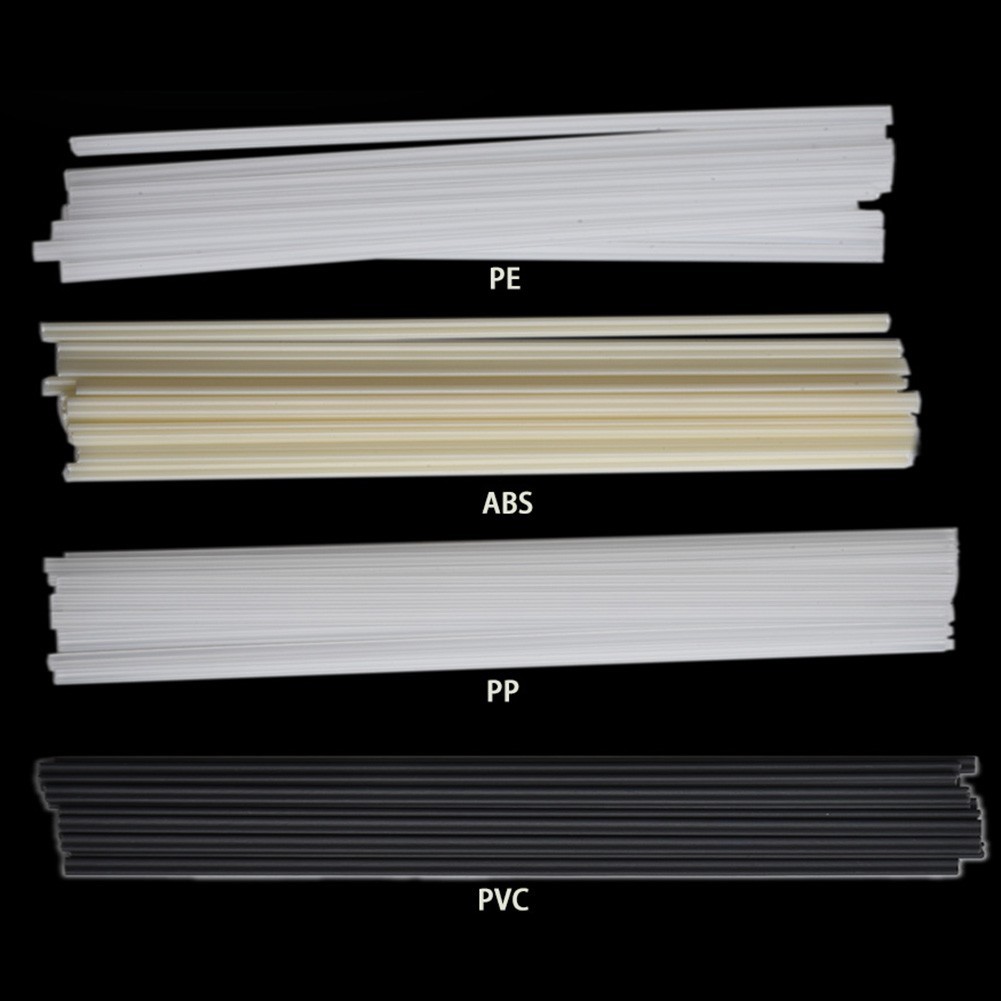
In the world of plastic welding, welding rods are far from uniform. Besides the most common round shape, you'll find unique designs such as triangles, double round, and even rectangles. These diverse shapes are no accident; each embodies wisdom that enhances welding quality and efficiency. Triangular edges facilitate rapid filling, double round shapes provide stable guidance, and different cross-sections directly affect heat conduction speed and handling feel. Understanding the intricacies behind these "Transformer-like" welding rods is the first step in mastering professional plastic welding techniques.
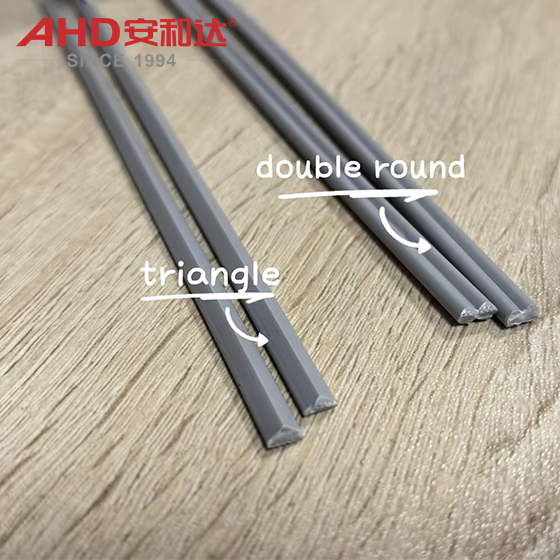
Common Shapes of Plastic Welding Rod
Round Shape:
Description: The most classic and common shape, with a solid circular cross-section.
Common Diameters: 3mm, 4mm, etc.
Triangular Shape:
Description: With a solid equilateral triangle cross-section.
Common Sizes: Side lengths 3*6mm, 4*6mm, etc.
Rectangular Shape:
Description: With a solid rectangular or square cross-section, sometimes called a "strip welding rod."
Common Sizes: Such as 4x2mm, 5x2mm, etc.
Double round shape (Figure-8 Shape):
Description: With a cross-section resembling the number "8," composed of two connected circles.
Common Sizes: Side lengths 3*6mm, etc.
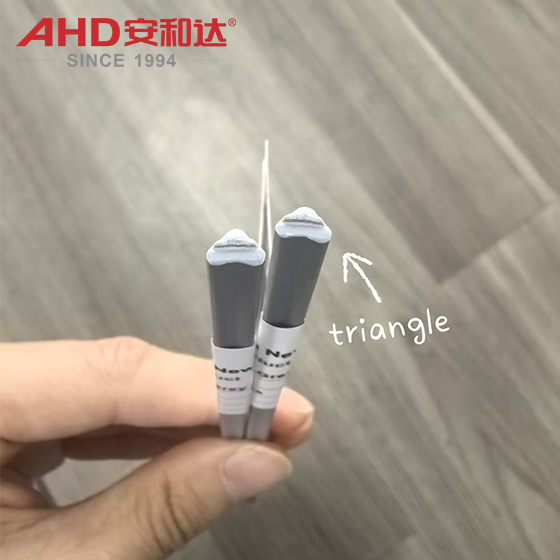
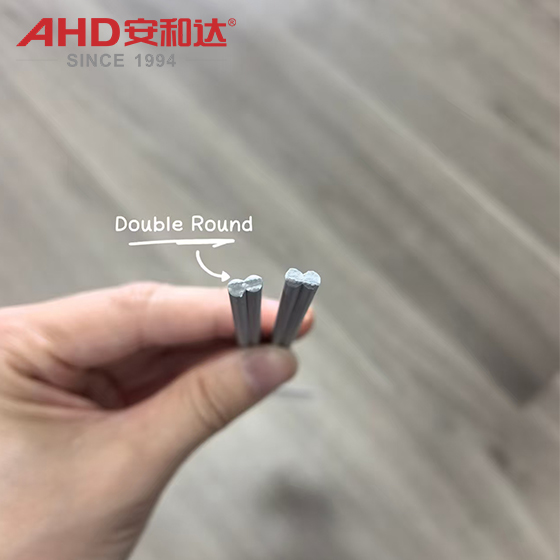
Welding PVC Rod
Why Different Shapes?
Different welding rod shapes are primarily designed to achieve an optimal balance between welding speed, deposition rate, and weld quality. The core principle revolves around specific surface area.
Specific surface area: refers to the surface area per unit volume of the welding rod.
Core principle: Under the same hot air power, a larger specific surface area results in faster heating and melting of the welding rod.
Shape Comparison Analysis:
Round Shape: Smallest specific surface area, heats up slowly, and melts slowly. However, their advantage lies in better control of the weld pool, making them suitable for precision welding, fillet welds, second/third layers of fillet grooves, and for beginners.
Triangular/Rectangular Shape: Possess an even larger specific surface area. Compared to round welding rods of the same cross-sectional area, they melt faster under hot air. This means that more material can be deposited in the same amount of time, significantly increasing welding speed. The sharp edges of triangular welding rods make it easier to cut in at the start of welding.
Double round Shape: An excellent design that balances speed and quality. Its specific surface area is larger than that of a circle, resulting in a faster melting speed. The groove in the middle helps the hot air heat the inside of the welding rod more evenly, while the guide wheel of the welding torch can be well locked in the groove, making the welding process more stable and straight.
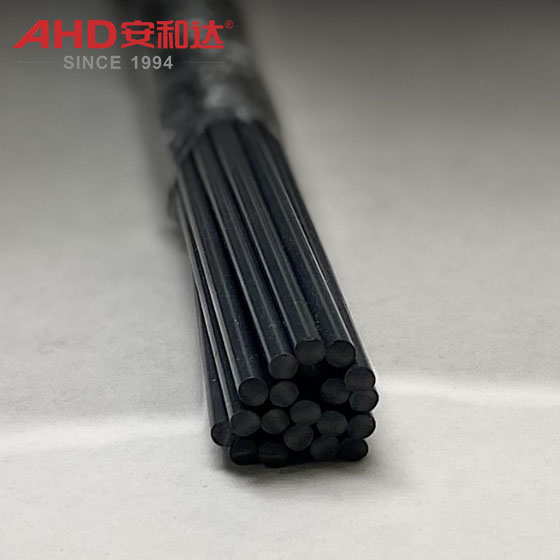
Differences in the use of different shaped welding rods
| Shape | Applicable Scenarios | Advantages | Disadvantages/Precautions |
| Round welding rods |
1. Fine welding, fillet welds, and small workpieces.
2. Cover layer (final layer) for bevel welding to achieve a smooth and aesthetically pleasing surface.
3. Practice for beginners.
|
Easy to control the weld pool, produces a smooth and attractive weld appearance, and offers stable operation. | Slowest welding speed, resulting in lower production efficiency. |
| Triangular welding rods |
1. Root pass and filler layer in bevel welding.
2. Applications requiring rapid filling of large gaps.
|
Fast melting speed, high filling efficiency, sharp corners facilitate initiation and root filling. | Weld surface is not as smooth as with round welding rods, may require grinding or capping. |
| Rectangular welding rods |
1. Large-area plate splicing or lap welding.
2. Applications requiring rapid formation of large weld seams.
|
Wide single-pass weld seam, large coverage area, extremely high filling efficiency. | Requires high operator skill; poor heat input control can easily lead to overheating. |
| Double Round welding rods |
1. High-speed welding of long, straight seams, such as plate splicing.
2. Automatic or semi-automatic welding equipment.
|
Ideal balance of speed and quality: fast melting, smooth weld bead, good torch guidance, and dense weld. | Cost is usually slightly higher than ordinary round welding rods. |
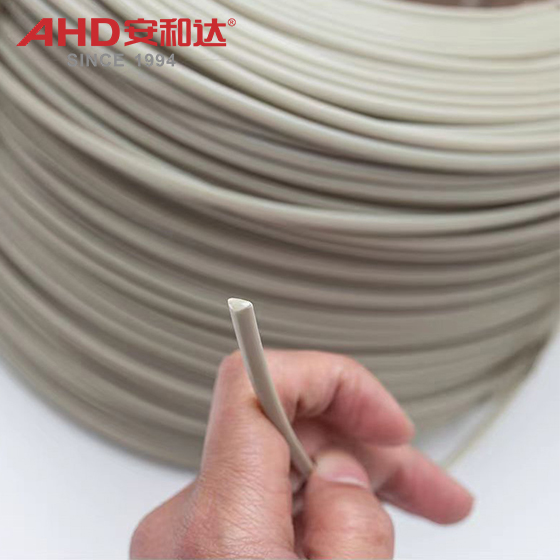
Summary of Selection and Usage Guidelines
Selection Based on Weld Type:
V-groove Multi-layer Welding: Typically, triangular electrodes are used for the root pass and filler pass, with a round electrode used for the final cover pass.
Flat Butt Welding/Lap Welding: Double round or rectangular welding rods are preferred for improved efficiency.
Fillet Welding/Repairing Small Holes: Small-diameter round welding rods offer better control.
Selection Based on Efficiency Requirements: When aiming for maximum welding speed, choose the shape with the largest surface area (e.g., rectangular, triangular, double round).
Matching the Welding Torch Nozzle: Most hot air welding torches come with interchangeable nozzles. Different nozzle designs guide and preheat specific welding rod shapes; always use a nozzle that matches the welding rod shape. This is crucial for ensuring both welding quality and speed.
Core Remains Unchanged: Regardless of shape, the three fundamental principles of material matching, surface cleanliness, and temperature control remain constant.
Simply put, you can think of round electrodes as "precision carving tools," while triangular/double round welding rods are "efficient filling spatulas." Professional welders typically use different shaped welding rods alternately in the same job to achieve the best results, depending on the thickness of the workpiece, the bevel shape, and the appearance requirements.
AHD Welding Rod