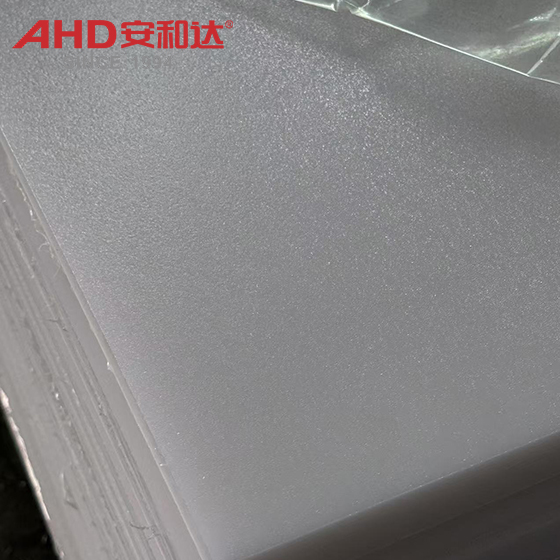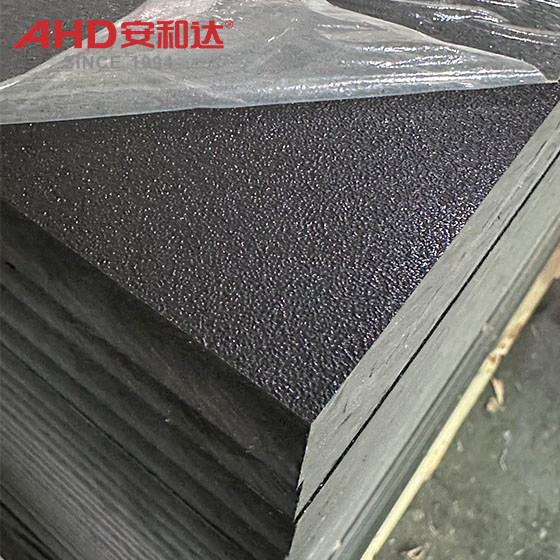
In the field of plastic sheet processing, HDPE Sheet hold a significant position due to their corrosion resistance and impact resistance, while frosted surface treatment further expands their application boundaries. Besides the mainstream extrusion embossing process, various refined processing techniques can also impart a uniform and delicate frosted texture to Polyethylene Sheet.
These processes not only adapt to different production volumes and customization needs but also precisely match the material properties of HDPE Plastic Sheet, enhancing their anti-slip and wear-resistant properties while preserving their original mechanical advantages to the greatest extent. This article will delve into these niche yet practical processes, unlocking more possibilities for frosted surface processing of HDPE sheets.
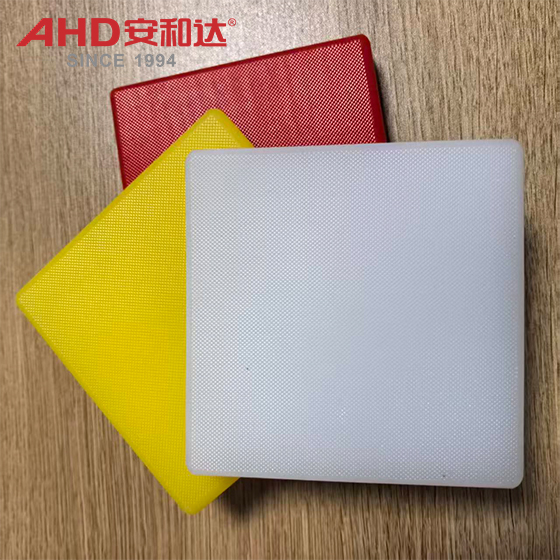
Other embossing techniques
Besides the integrated extrusion and embossing process, other processes for adding textures to PE sheet surfaces include hot embossing, molding, surface sandblasting/etching, and film transfer printing. Each has different applicable scenarios and characteristics:
1. Hot Embossing (Post-processing)
Applicable: Adding textures to the surface of pre-formed PE sheets (such as pre-cut finished sheets).
Process Steps:
Heat the PE sheet to its softening temperature (60-80℃, PE is not completely melted but still malleable); Apply pressure (0.5-1MPa) to the sheet surface using a preheated metal pattern mold (or embossing roller), holding the pressure for 10-30 seconds;Demold after cooling, and the texture is set.
Characteristics: Suitable for small batches and customized textures (such as complex patterns), but the efficiency is lower than online extrusion embossing, and the sheet thickness is prone to slight deformation.
2. Compression Molding Process (In-Mold Molding)
Applicable: Thick PE sheets (e.g., PE blocks ≥10mm thick), or products requiring double-sided textures.
Process Steps:
Pack PE granules/powder into a textured metal mold;
Heat the mold to 180-200℃, melting the PE and filling the mold cavity, simultaneously imprinting the texture from the mold's inner wall onto the PE surface;
After holding pressure and cooling, open the mold to obtain the textured PE sheet.
Features: High texture precision and strong three-dimensional effect (deep textures are possible), but production is intermittent, resulting in low efficiency and high cost. Suitable for high-end custom parts.
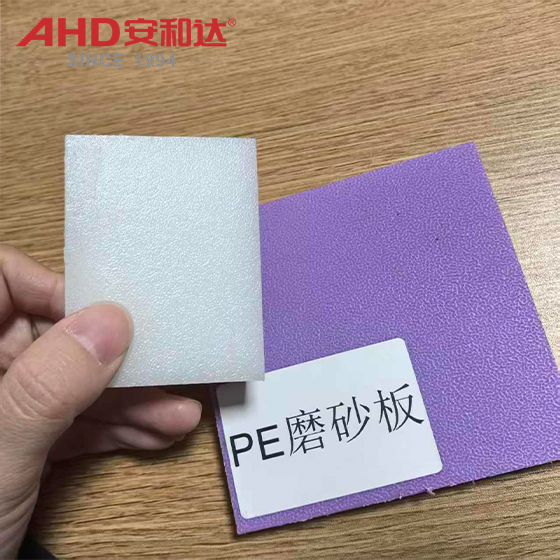
3. Surface Sandblasting/Etching Process (Physical/Chemical Etching)
Applicable Scenarios: Scenarios requiring fine textures such as a "matte finish" or minimal impact on board thickness.
Process Steps:
Sandblasting: High-pressure spray guns propel abrasive (or plastic abrasive) onto the PE board surface, creating a uniform, rough texture (similar to a frosted finish) through particle impact.
Chemical Etching: A weak oxidizing solution (such as chromic acid solution) is used to etch the PE surface, creating a fine, textured surface by controlling the etching time (resulting in a more delicate texture, but with higher environmental costs).
Characteristics: Uniform texture, no obvious indentations, but only suitable for shallow textures and cannot achieve complex patterns.
4. Lamination Transfer Process (Surface Composite)
Applicable: PE boards requiring complex patterns such as wood grain or stone grain, or those needing temporary texture additions.
Process Steps:
Apply a layer of hot melt adhesive/pressure-sensitive adhesive to the surface of the PE board;
Lay a textured decorative film (such as PVC textured film or PET transfer film) onto the board surface;
By heating (60-80℃) and rolling, the film adheres to the PE board, and the lamination is complete after cooling.
Features: Rich pattern options (customizable), but the texture is an "adhesive layer" and is prone to peeling off with long-term friction, suitable for decorative applications (rather than functional anti-slip).
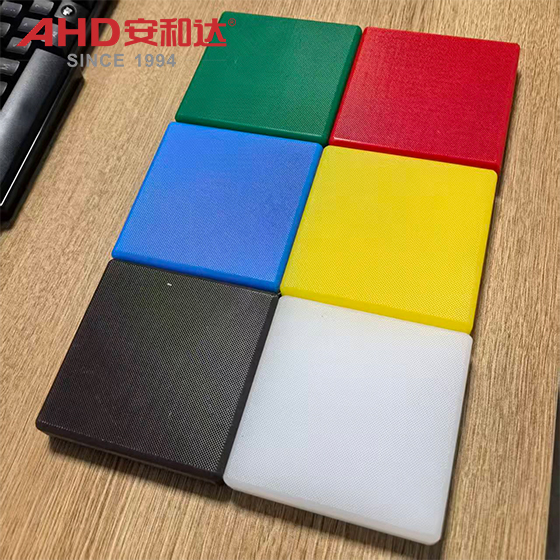
The most common process
However, the integrated extrusion + embossing process remains the mainstream and preferred solution for surface texturing of PE sheets such as HDPE frosted boards. This is because it perfectly balances the three core requirements of production efficiency, cost control, and product stability, offering significant advantages over the aforementioned processes:
1. Highest Production Efficiency
Extrusion and embossing are completed simultaneously, eliminating the need for additional secondary heating and positioning processes. This allows for continuous production lines, with daily capacity 3-5 times that of intermittent processes such as hot embossing and molding, making it particularly suitable for large-scale mass production.
2. Lowest Overall Cost
It eliminates the need for secondary processing equipment investment, manual operation, and energy consumption, and the scrap rate is significantly lower than other methods. Furthermore, the texture is directly imprinted onto the semi-molten PE body, eliminating the need for consumables such as glue and transfer film, greatly reducing the unit product cost.
3. More Stable Product Performance
The texture adheres tightly to the board, eliminating the risk of delamination or peeling (unlike lamination transfer printing, which is prone to film lifting); the temperature and pressure during the embossing process are controllable, preventing damage to the PE molecular chain structure and maximizing the preservation of the original corrosion resistance and impact resistance of the HDPE board. Furthermore, the surface texture is uniform and consistent, with minimal batch-to-batch variation.
4. Enhanced Process Adaptability
Compatible with HDPE boards of different thicknesses and formulations. Texture patterns can be quickly switched by changing the embossing roller, accommodating both standardized production and flexible customization needs.
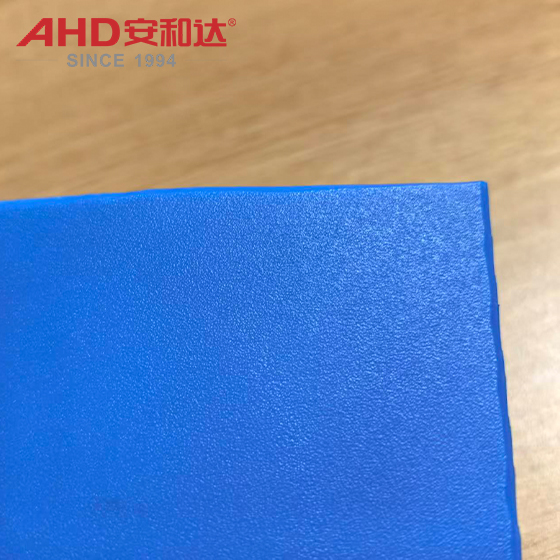
The main applications of frosted PE sheets are concentrated in scenarios requiring anti-slip, wear-resistant, and easy-to-clean properties. Common areas include:
Industrial applications: such as workshop workbenches (preventing tool slippage), equipment protective barriers (wear-resistant and scratch-resistant), and conveyor belt liners (anti-slip feeding);
Packaging and transportation: as pallet panels for heavy goods (anti-slip and prevents goods from shifting), and linings for turnover boxes (protecting products while preventing slippage);
Building and decoration: interior decorative walls/floors (matte texture + anti-slip), and anti-slip bathroom treads (waterproof and anti-slip);
Logistics and warehousing: shelving partitions (preventing small items from slipping), and cargo mats (wear-resistant and easy to clean);
Agriculture/Aquaculture: linings for aquaculture ponds (anti-slip and water-corrosion resistant), and anti-slip control panels for agricultural machinery.
Its anti-slip properties combined with the corrosion resistance of PE itself give it a significant advantage in humid and high-friction environments.
If you're looking for PE sheets with rough surfaces (frosted surface), AHD is here to help. Contact us now for a variety of textures, colors, and sizes of PE sheets.
With 31 years of experience in plastic sheet manufacturing and mature extrusion embossing technology, AHD can reliably produce PE sheets of various thicknesses, colors, and uniform, fine textures. While maintaining the original corrosion resistance and impact resistance of PE sheets, surface embossing enhances their anti-slip and wear resistance. AHD offers reliable quality and efficient delivery.