

The mixed use of polyurethane (PU) components with varying hardness is a common engineering practice aimed at achieving comprehensive performance that cannot be achieved with materials of a single hardness. The key is understanding the principles and following correct design methodologies.
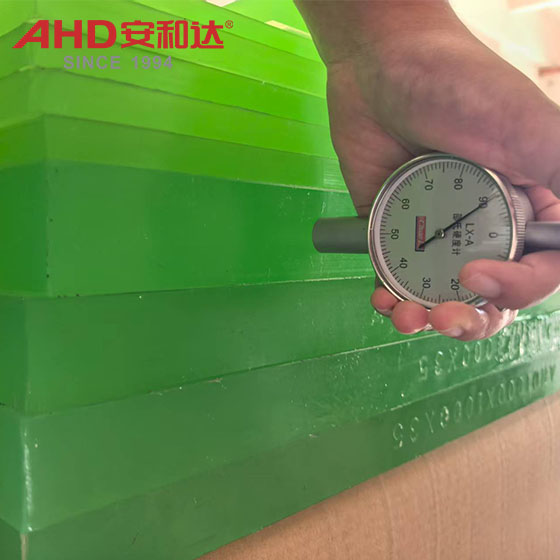
Potential Benefits of Mixed Use
Achieving Gradient Cushioning/Damping
For example, in the base of heavy equipment, a high-hardness PU (e.g., Shore A 80-90) layer provides stable support and resistance to deformation, while a low-hardness PU (e.g., Shore A 30-40) layer absorbs high-frequency micro-vibrations, creating a transition from hard to soft for superior cushioning.
Optimizing Friction and Abrasion Resistance
High-hardness PU is generally more abrasion-resistant but may have a higher coefficient of friction; low-hardness PU is softer, may have a lower coefficient of friction, and offers better adhesion. High-hardness materials can be used in areas requiring abrasion resistance (e.g., the outer layer of rollers), medium-hardness materials in drive areas requiring high friction (e.g., friction wheels), or low-hardness materials can be used on contact surfaces requiring sealing to enhance adhesion.
Cost and performance balance
Use lower-cost hardness formulations in non-critical load-bearing or wear-prone areas, and high-performance but more expensive formulations in critical areas.
Solving complex operating conditions
A component may simultaneously withstand different types of forces such as impact, wear, and torsion; a single hardness formulation is insufficient to meet all these requirements. Through modular design, different parts can each fulfill their specific function.
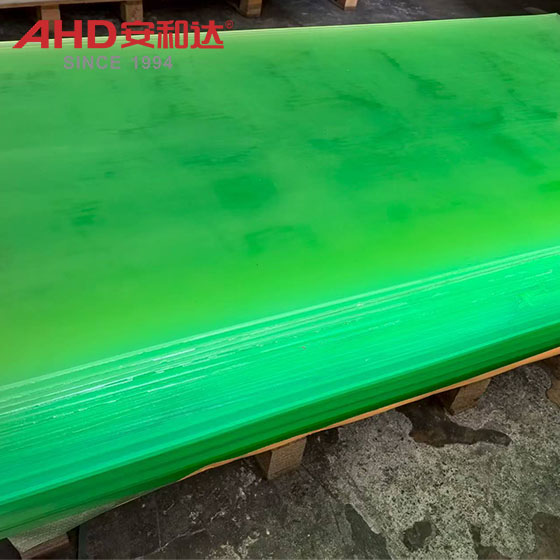 AHD PU Plastic Sheet
Key Considerations and Risks of Mixed Use
Adhesive Compatibility
This is the most important point. Different PU formulations may have different chemical molecular structures, surface energies, and curing rates. If the design requires bonding them together, adhesive testing is essential. Incompatibility can lead to interface separation and component failure. Specialized two-component adhesives are usually required, and special surface treatments (such as sanding or chemical treatment) may be necessary.
Stress Concentration Due to Hardness Differences
At the interface between soft and hard materials, the amount of deformation under stress differs, easily generating significant shear stress. If poorly designed (e.g., right-angled interfaces), tearing can easily begin at this point. The solution is to use a gradual transition design (e.g., stepped or beveled) to avoid abrupt changes in hardness.
Long-Term Dynamic Fatigue Performance
Under continuous vibration or cyclic loading, materials with different hardness levels exhibit different fatigue lives and heat generation characteristics. Soft materials may age faster due to excessive heat generation, or hard materials may crack prematurely due to excessive load. Overall dynamic performance needs to be evaluated.
Environmental Factors
Environmental factors such as temperature, oil contamination, and ozone have varying degrees of impact on PUs of different hardness. This may lead to asynchronous performance degradation during use, disrupting the original design balance.
Manufacturing Process Complexity
Manufacturing processes may require secondary molding (making one first, then casting or injecting another type onto it), post-bonding processing, or precision assembly, increasing manufacturing costs and the difficulty of process control.
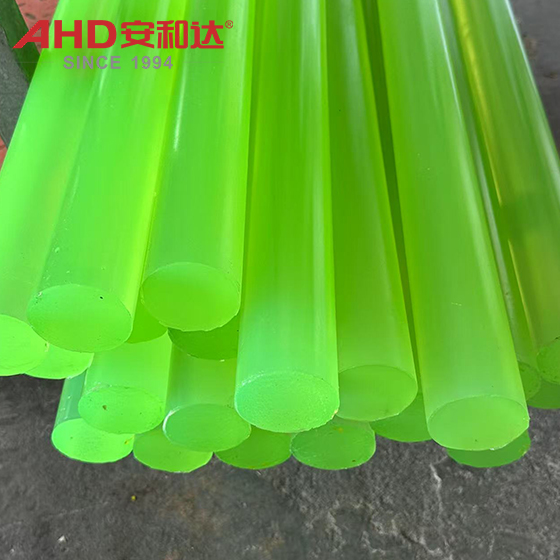
AHD PU Polyurethane Rod
A Guide to Safe Mixed Use
Define Design Goals: Clearly define the function of each area (e.g., load-bearing, cushioning, sealing, abrasion resistance) and then select the most suitable hardness. AHD offers PU Sheet and PU Rod of varying hardness, such as A90.
Consult Material Suppliers: This is the most effective method. Inform the supplier of your application scenario and intended use of the materials. Reputable PU material suppliers typically have proven, adhesive-compatible "material series" that can provide products with different hardnesses but the same chemical system, ensuring good adhesion. Never mix products from different brands or with unclear systems.
Conduct Prototyping Testing: Create samples and conduct a comprehensive evaluation, including bond strength testing, fatigue testing, and real-world simulation testing.
Optimize Interface Design: Avoid sharp corners, use smooth transition areas, and add mechanical interlocking structures (e.g., grooving, perforation) to aid adhesion.
Control Tolerances and Fits: For interference or clearance fits, consider the different compressive deformations of materials with different hardnesses.
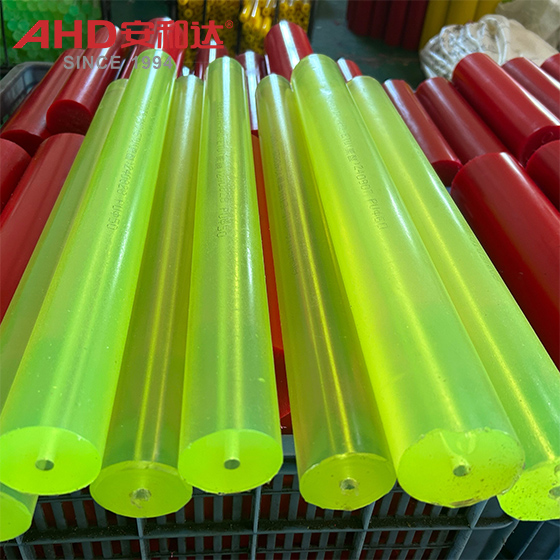
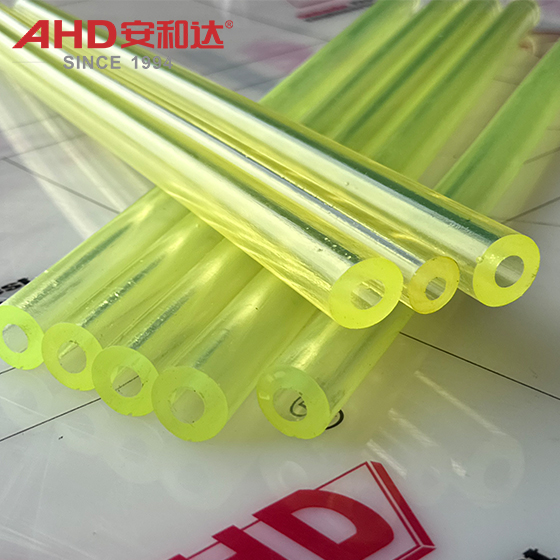
AHD PU Tube (PU Hollow Rod)
Application Examples
Buffer Pads/Shock Absorbers: Multi-layered composite material with increasing hardness from top to bottom for graded shock absorption.
Industrial Rollers: High-hardness, wear-resistant outer layer + low-hardness, high-elasticity inner core, combining load-bearing capacity, cushioning, and long service life.
Seals: Medium hardness is used in the main body to ensure strength, while low hardness is used in the lip to enhance sealing.
Mold Gaskets/Clamps: Different hardnesses are used in different areas to evenly distribute clamping force and protect precision workpieces.
Using a mixture of materials with different hardness is an advanced engineering technique.The key to success lies in selecting a bond-compatible range of materials from the same supplier and carefully designing the interfaces and structures based on mechanical analysis and practical testing. For critical applications, it is essential to conduct this work under the guidance of professionals.
