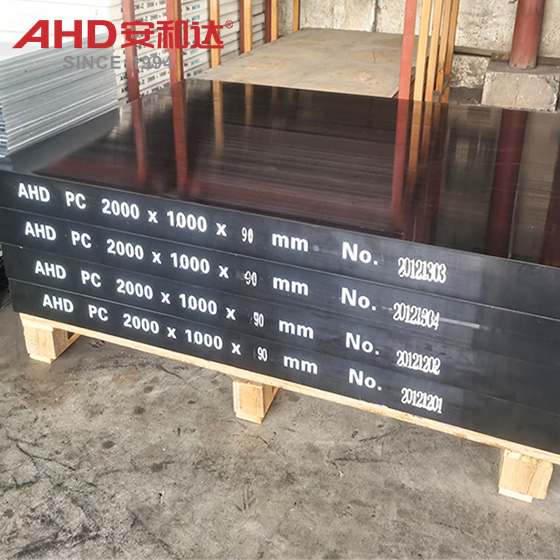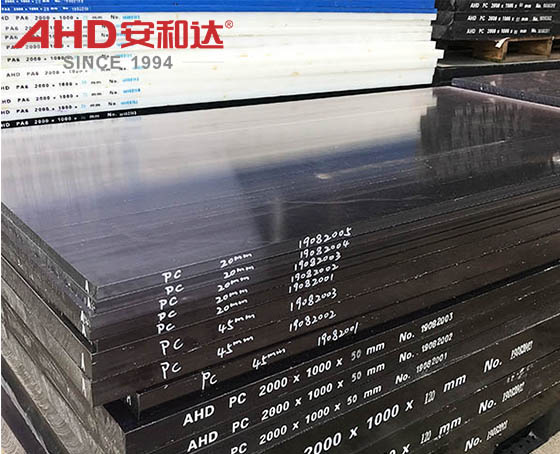
What is the true nature of PC?
Transparent PC is closer to the true nature or "original state" of PC.
From a chemical synthesis and materials science perspective, the pure polycarbonate polymer obtained through polymerization is colorless and transparent. Our initial understanding and utilization of PC was attracted by its excellent transparency, high strength, and toughness, using it to replace fragile glass (such as in blast shields, eyeglass lenses, and greenhouse panels). Therefore, transparent PC exhibits its most essential physical properties.

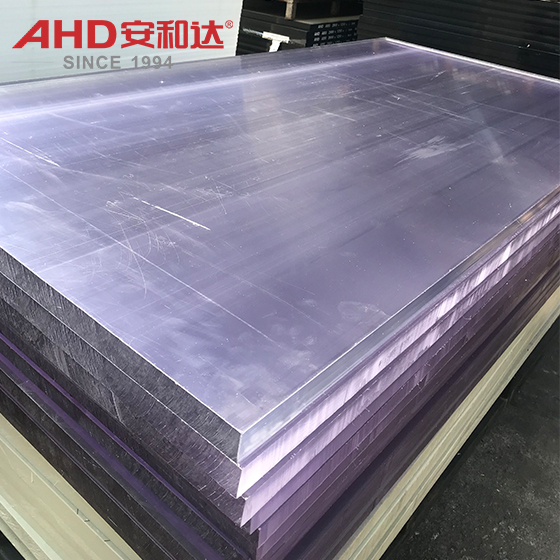 AHD Polycarbonate Sheet Clear
Why did opaque PCs emerge?
Opaque PCs were developed to meet diverse application needs, primarily addressing the shortcomings of transparent PCs and expanding their uses:
Aesthetic and Design Needs: Electronic products (computer casings, mobile phone frames), home appliances, automotive parts, and daily consumer goods require a wide range of colors to match brand logos, fashion trends, or achieve specific aesthetic designs. Transparency cannot meet all these needs.
Privacy and Light-Shielding Needs: Many applications do not require, and even avoid, transparency. For example, lamp housings need to emit soft, non-glaring light; machine casings need to conceal internal wiring; and certain packaging requires light-shielding to protect the contents.
Improved Weather Resistance (UV Protection): Opaque materials more effectively resist visible yellowing, which is crucial for components used outdoors for extended periods or requiring high color stability (such as automotive exterior parts and outdoor electrical boxes).
Cost Reduction: In some applications where strength requirements are less stringent, adding fillers such as titanium dioxide can increase volume and reduce raw material costs to some extent.
Structural support and light control: Opaque PC can be used for purely structural components, while transparent PC also serves the function of transmitting light.

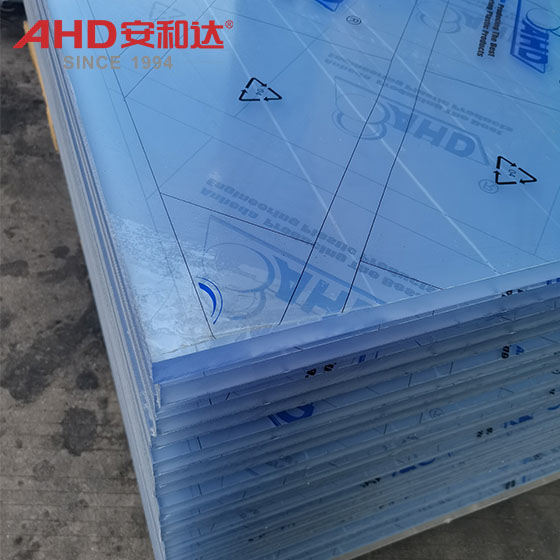
AHD PC Sheet Clear
What are the differences between transparent and opaque PC?
Simply put, the core difference lies in the additives.
Raw Materials and Basic Properties:
Whether transparent or opaque, PC's base material is polycarbonate resin. This resin granules are inherently colorless and transparent. Whether it's transparent PC or opaque PC in white, black, or other colors, they all originate from this transparent raw material.
The Role of Additives:
Transparent PC: During production, apart from necessary stabilizers, release agents, and a small amount of other additives, no additives that affect light are added. It maintains the inherent high transparency of the PC resin.
Opaque PC: Pigments and/or opaque agents are added during production. For example:
Coloring: Adding color powder (titanium dioxide for white, carbon black for black, other organic/inorganic pigments for different colors).
Opaque/Milk White: The most commonly used is titanium dioxide. It not only provides whiteness, but its strong scattering and reflecting abilities completely block light transmission, making the material completely opaque. Sometimes other fillers are also added.
Minor differences in performance:
Mechanical properties: The core strength, toughness, and impact resistance (bulletproof plastic properties) are basically the same. However, opaque PC (especially with a large amount of titanium dioxide added) may have a slight decrease in toughness, becoming slightly more brittle. This has little impact on most industries because the bonding between inorganic fillers and the plastic matrix is not perfect.
Weather resistance: Transparent PC, without UV protection, will yellow, fog, and become brittle with long-term exposure to ultraviolet light. The pigments in opaque PC (such as titanium dioxide) themselves have a certain degree of reflection and scattering effect on ultraviolet light, better protecting the internal PC resin. Therefore, its resistance to yellowing appears superior (the internal aging may still be occurring, but you cannot see it).
Processing performance: PC with added inorganic fillers may have slightly different melt flow characteristics.
AHD PC Plastic Sheet Black