

Improving the wear resistance of PU Sheet and PU Rod is crucial for extending their service life and ensuring stable equipment operation. In working environments with frequent friction, heavy impact, or the presence of particulate matter, wear is a major cause of component failure and increased maintenance costs. By enhancing wear resistance, not only can downtime be reduced and replacement frequency decreased, but their application range in demanding scenarios can also be expanded.
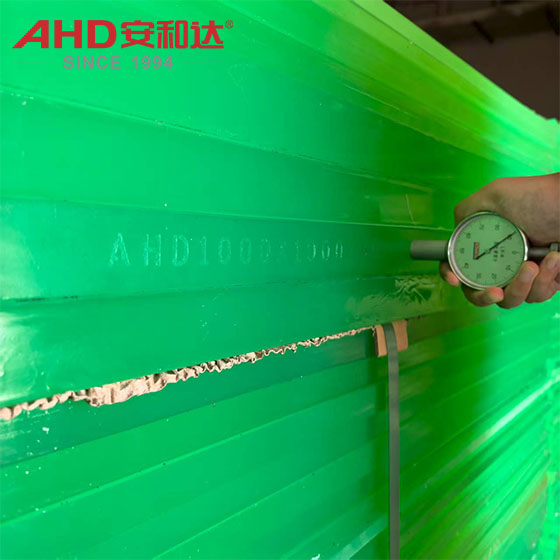
Why is improved wear resistance necessary?
Special attention needs to be paid to improving the wear resistance of PU sheet (Polyurethane Sheet) and rod in the following situations:
High-frequency friction and sliding scenarios: For example, in conveyor system guide rails, guide strips, and sliders, components continuously experience sliding friction with the product or machine surface, making wear the primary failure mode.
Heavy-load or high-impact environments: For example, in buffer pads, mining screens, and heavy equipment liners, surfaces repeatedly rub against materials while subjected to high pressure or impact, requiring high wear resistance to resist tearing and abrasion.
Contact with particulate matter or rough surfaces: When used in mud seals, mining wear-resistant linings, and engineering machinery parts, hard particles such as sand and dust can exacerbate surface wear and even cause cutting effects.
Need to replace metal or other vulnerable materials: When it is desired to replace nylon, rubber, or metal parts with PU to reduce weight and noise, its wear resistance must be close to or exceed that of the original material to ensure service life.
Unlubricated or Harsh Media Environments: In environments where lubricants cannot be used (e.g., food and medical equipment), or where materials come into contact with oil or chemical media, the material must maintain its performance through its own wear resistance and must not age prematurely due to the medium.
Long-Term Maintenance-Free Needs: For example, in high-frequency transmission components of automated production lines, frequent replacement can affect efficiency. Improving wear resistance can extend maintenance cycles and reduce downtime losses.
In these scenarios, improving wear resistance directly affects the stability of equipment operation, maintenance costs, and product lifespan, making it a key objective in the selection and improvement of PU materials.
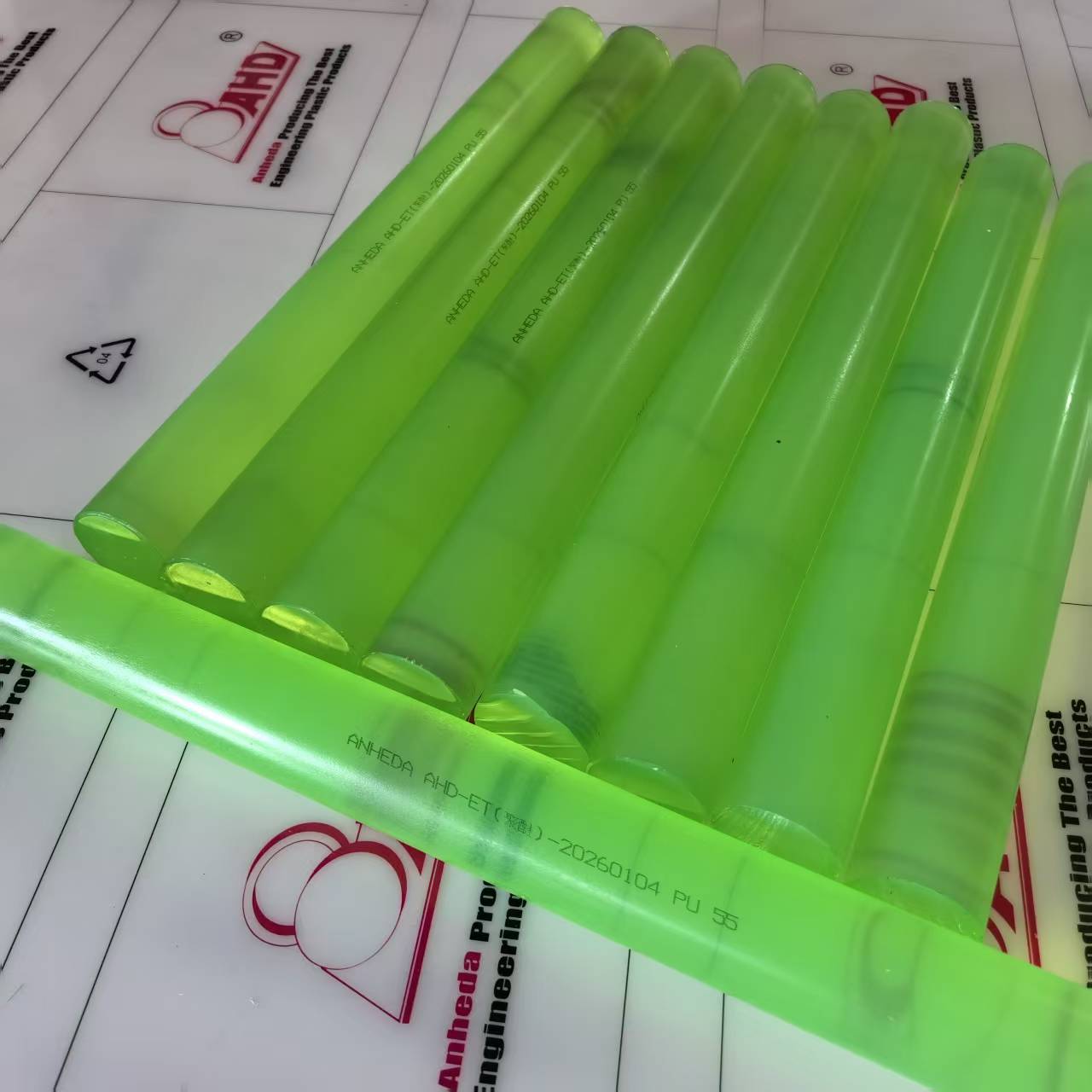
Improving the wear resistance of PU Plastic Sheet, rod, and pre-processed accessories is primarily achieved through two main approaches: material optimization and surface post-treatment.
I. PU Sheet/Rod Raw Materials (Improving from the Source)
Material Upgrade: Directly using industrial-grade high-wear-resistant polyurethane, whose wear resistance is typically 5-10 times that of ordinary rubber.
Composite Reinforcement: During sheet/rod molding, high-performance profiles can be directly produced by embedding wear-resistant layers (such as ultra-high molecular weight polyethylene layers) or surface composite coatings.
II. Pre-Processed PU Accessories (Post-Processing Improvement)
This is a more common scenario where the accessories are already manufactured and the internal material cannot be changed. However, surface wear resistance can be significantly improved through the following methods:
Surface Coating Technology:
Spraying Wear-Resistant Coatings: Such as polytetrafluoroethylene (PTFE) coatings and polyurethane elastic coatings, which can significantly reduce the coefficient of friction.
Impregnation Treatment: Enhancing surface hardness by impregnating the surface with wear-resistant fillers (such as nano-ceramic slurries).
Surface vulcanization: Through controlled secondary vulcanization, a denser, more cross-linked wear-resistant layer is formed on the surface of the parts.
Physical surface treatment:
Surface polishing/strengthening: Surface roughness is reduced through mechanical grinding, decreasing the number of friction initiation points.
Surface texture optimization: Micro-oil-retaining patterns are laser-engraved in non-critical contact areas to achieve self-lubrication.
III. Practical Recommendations
Preferred Coating Options: For pre-machined parts, PTFE coating is the most cost-effective choice, reducing the coefficient of friction by over 60% with minimal alteration to the part's dimensions.
Operating Condition Matching: If the part operates in wet friction or particulate-containing media, a coating capable of forming a robust protective film (such as a specific polyurethane elastic coating) should be selected.
Professional Treatment: It is recommended to contact polyurethane deep-processing manufacturers or surface treatment service providers, providing specific operating conditions (load, speed, media, etc.) for customized treatment.
Summary
Whether selecting high-performance grades from the raw material stage or applying surface coatings/curing to the finished product, both methods effectively improve wear resistance. Surface engineering modifications to pre-machined parts can typically extend their service life by 1-3 times, representing a mature and reliable solution.
