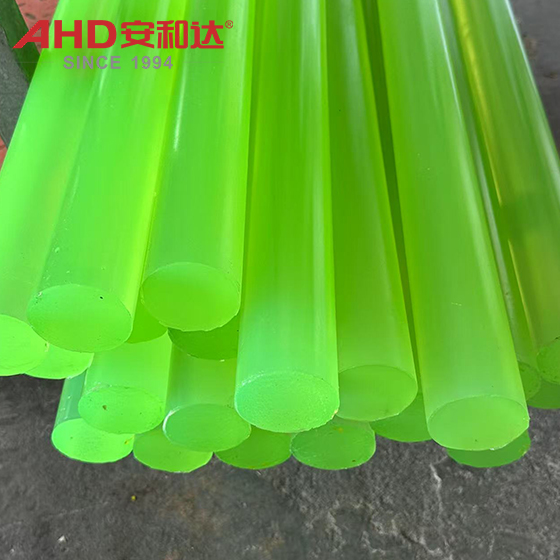
What is the Hardness of PU?
Simply put, the hardness of PU refers to its ability to resist indentation, scratching, or deformation by external objects. It is the most critical indicator of the softness/hardness of PU materials.
Core Understanding: The hardness of PU is not a single, absolute physical quantity, but rather a very broad performance spectrum. By adjusting the formula (mainly the ratio and structure of soft and hard segments), polyurethane products can be manufactured that range from being as soft as a sponge to as hard as rigid plastic. This "adjustability" is a huge advantage of PU materials.
Analogy: Very low hardness (Shore A 20-30): Similar to an eraser or jelly.
Medium hardness (Shore A 70-90): Similar to car tires, shoe soles, or keyboard keys.
Very high hardness (Shore D 70-80): Similar to rigid plastics or acrylic sheet.
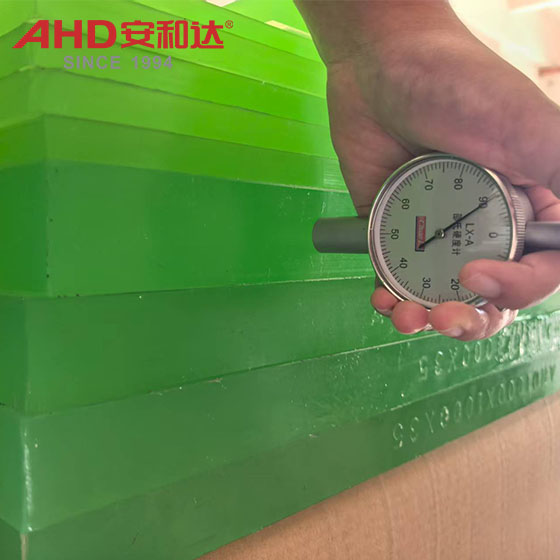
How to determine hardness?
In industry and trade, hardness is standardized and measured using a hardness tester. The most commonly used standard is Shore hardness.
Measuring Instrument: Shore hardness tester. It has an indenter that presses into the material surface under a specified spring pressure. The hardness value is calculated based on the depth of indentation.
Main Scales: Different scales are used depending on the hardness of the material being measured:
Shore A: Used to measure soft to medium hardness materials, such as soft foam, TPU elastomers, and rubber. This is the most common unit for PU hardness (e.g., A90).
Shore D: Used to measure harder materials, such as rigid plastics and rigid elastomers. When the Shore A hardness is greater than 90, Shore D is usually used for more accurate differentiation.
Shore C, O, OO: Used to measure extremely soft materials, such as sponges, gels, and soft foams. The lower the value, the softer the material.
Reading representation: Direct readings are "Shore AX" or "Shore DX", where X is a numerical value, typically between 0 and 100. For example:
Shore A 70: Medium to soft elastomer.
Shore A 90: Hard elastomer, a common hardness for many industrial products.
Shore D 50: Hard material.
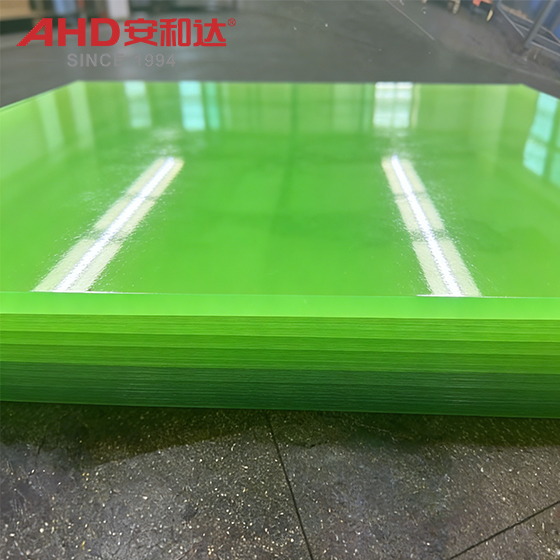
AHD PU Plastic Sheet
Different applications for different hardness
Polyurethane has an extremely wide hardness range, from very soft, gel-like to very hard, similar to hard plastics. Its applications vary drastically depending on the hardness. The following is a list of typical hardness values and their corresponding common applications, arranged from lowest to highest hardness.
1. Extremely Soft Range (Similar to Sponge, Gel)
Hardness Range: Shore 00 10 - 30, or Shore A 10 - 30
Material Feel: Extremely soft, deforms greatly upon pressure, and rebounds slowly.
Applications:
Slow-rebound memory foam: Pillows, mattresses, medical positioning pads.
High-elasticity sponge: Sofas, chairs, packaging padding.
Sealing and Cushioning: High-compressibility sealing strips, cushioning pads.
2. Soft Elastomer Range (Similar to Rubber, Soft Rubber)
Hardness Range: Shore A 40 - 60
Material Feel: Significantly soft, with good elasticity and compressibility.
Applications:
Footwear and Apparel: Insoles, athletic shoe midsoles, clothing accessories.
General-purpose Padding Materials: General-purpose anti-slip mats, cushioning mats, low-load casters.
Toys and Tools: Soft toys, rubberized tool handles, cushioning rollers.
3. Medium to Hard Elastomer Range (Similar to Tires, Hard Rubber)
This is the most widely used and core range for polyurethane elastomers, perfectly balancing toughness, elasticity, and abrasion resistance.
Hardness Range A: Shore A 70 - 80
Material Feel: Medium to hard, with good support and elasticity.
Applications:
Industrial Casters: Handcarts, warehouse equipment casters.
General Conveying Systems: Light to medium-duty conveyor belts, conveyor rollers.
General Components: Ordinary shoe outsoles, fitness equipment handles, industrial linings.
Hardness Range B: Shore A 85 - 95
Material Feel: Solid to the touch, highly abrasion resistant, and quick rebound.
Applications:
High-Performance Abrasion-Resistant Components: Heavy-duty rollers in mines and steel mills, mud pump linings.
High-Precision, High-Abrasion-Resistant Components: Printing rollers, paper rollers, high-performance timing belts.
Sports and Consumer Products: Ice skating wheels, skateboard wheels, high-quality mobile phone cases.
Key sealing components: oil seals and sealing rings for high-pressure and high-wear conditions.
4. Rigid Plastics/Solid Materials Range (Similar to Hard Plastics, Nylon)
Hardness Range: Shore A 95 and above to Shore D 50-80
Material Feel: Extremely hard, difficult to bend, produces a crisp sound when struck, and has very little deformation.
Applications:
Structural Components and Gears: Replaces engineering plastics such as nylon and POM in the manufacture of gears, bearings, sliders, and structural panels, offering both high strength and wear resistance.
Heavy-Duty Engineering Components: Liners, screens, and scrapers for heavy equipment.
High-Performance Sports Equipment: Rigid components for skis and ski boots.
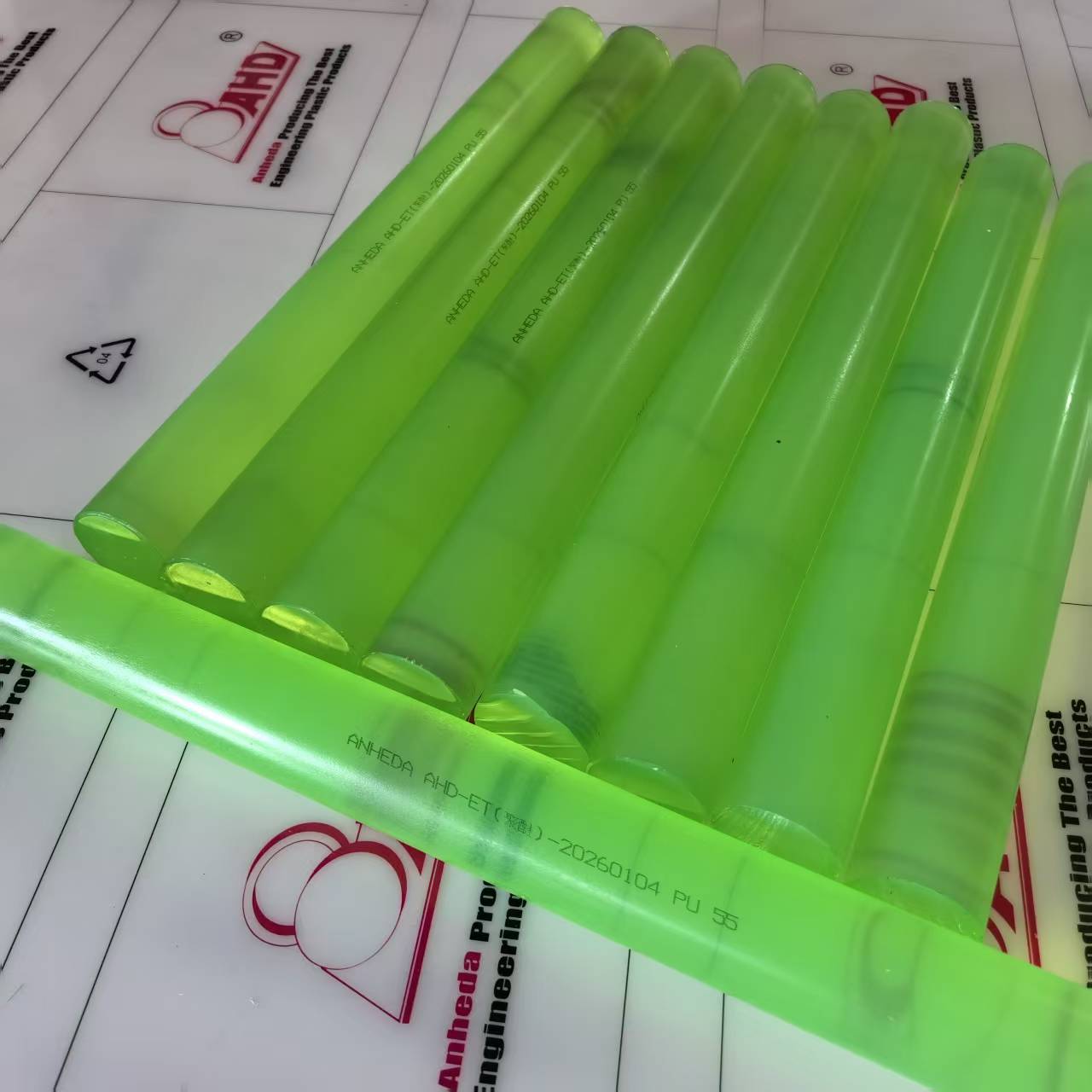
Summary and Selection Logic
Low Hardness: Core functions are cushioning, sealing, and a soft touch. When selecting, focus on compression deformation and rebound rate.
Medium-High Hardness: Core functions are load-bearing capacity, abrasion resistance, and impact resistance. When selecting, focus on abrasion wear, tear strength, tensile strength, and resilience. Shore A 85-95 is the golden range for "abrasion resistance."
High Hardness: Core functions are structural support, high rigidity, and dimensional stability. When selecting, focus on flexural modulus, impact strength, and dimensional accuracy.
Important Note: The above hardness and application correspondences are general guidelines. In actual selection, the specific working environment (such as load, impact, temperature, and contact chemical media) must be considered to determine the final choice. For example, even for rollers with the same Shore A 90 hardness, the optimal formulation (polyester or polyether) may be completely different in dry and muddy environments, or at normal and high temperatures.