

An automotive engineer wondered, "We're using POM from a major manufacturer, and we've included a safety margin in the torque calculations, so why are the gear teeth completely worn out after less than 200 hours of driving?"
I asked him a crucial question: "What was your engine speed? What was the ambient temperature?"
He replied, "The engine speed was quite high, and the ambient temperature was around 60 degrees Celsius."
Case solved: It wasn't that the material was inferior; rather, the material selection logic had fallen into a "static fallacy."
Many engineers, when selecting plastic gears, are still using the same logic as with metal gears, focusing solely on strength. But in the world of plastics, heat is the invisible killer.
Today, we'll thoroughly explain the material selection logic for plastic gears.
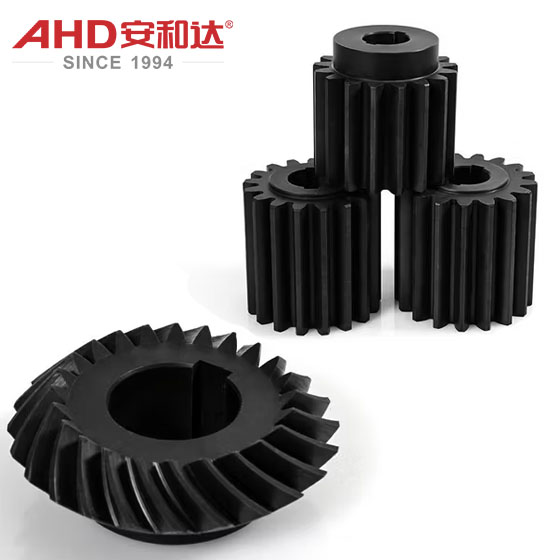
To choose the right material, you must first understand its failure points.
1. Fatigue-induced tooth breakage: Occurs at the tooth root. This is due to excessive stress exceeding the material's fatigue limit.
2. Tooth surface wear: The tooth becomes thinner. This indicates insufficient wear resistance.
3. Thermal melting failure: This is the problem encountered by the friend mentioned at the beginning. The tooth surface melts and peels off like chocolate.
Common Misconception: Metals are good conductors of heat, and the heat generated by friction dissipates quickly; plastics, on the other hand, are poor conductors of heat. When gears mesh at high speed, the frictional heat on the tooth surface cannot dissipate quickly enough, causing a sudden spike in local temperature. Once the glass transition temperature (Tg) or melting point of the material is exceeded, even the hardest POM will soften.
Even at an ambient temperature of 25 degrees Celsius, gears may operate at temperatures above 35 degrees Celsius, resulting in a significant decrease in mechanical properties.
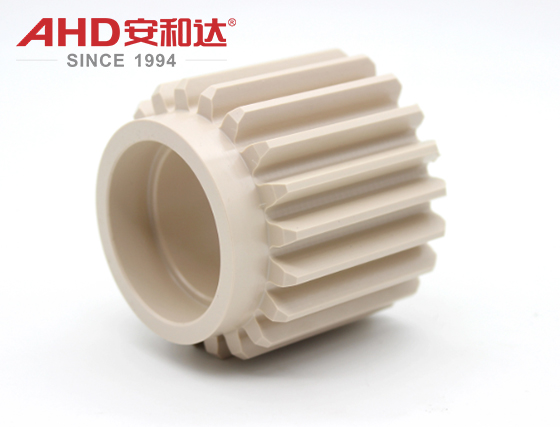
Three Key Factors for Material Selection
1. PV Value
P (Pressure): Gear surface contact pressure.
V (Velocity): Gear surface linear velocity.
The higher the PV value, the greater the heat generated.
Low PV value: Almost all engineering plastics are suitable.
Medium-high PV value: Materials with high crystallinity and good self-lubricating properties (such as POM, PA, PEEK) must be considered.
2. Environment and Dimensional Accuracy
High temperature and high humidity? Nylon (PA6/PA66) will expand after absorbing water, causing gears to seize and friction to increase dramatically. In this case, POM or PBT with low water absorption is the first choice.
Extremely high precision? Although POM absorbs less water, its high crystallization shrinkage rate makes it prone to internal shrinkage cavities during injection molding, affecting gear dynamic balance. In this case, amorphous PEI or fiber-reinforced materials may be more suitable, or POM Rod may be used for CNC engraving of parts.
The third criterion: Noise Requirements (NVH)
Hard-on collision (POM vs. POM): Easily generates high-frequency noise (squeak).
A balance of rigidity and flexibility (POM vs. PA): Utilizing the superior damping properties of nylon, it can effectively absorb vibrations and reduce noise.
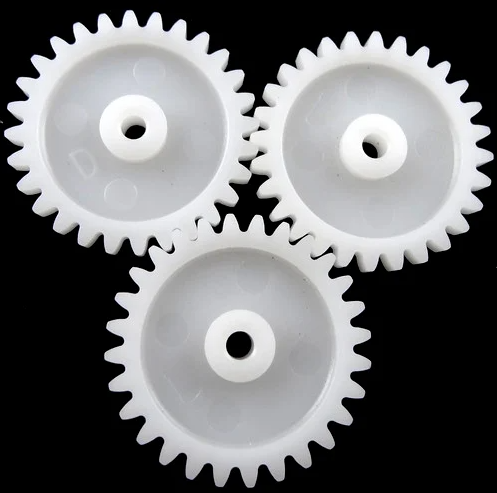
The "Hero List" of Mainstream Materials
The King of Plastic Gears: POM (Polyoxymethylene)
Key Strengths: Extremely high fatigue strength, excellent self-lubricating properties, and chemical resistance.
Fatal Weaknesses: Poor thermal stability: Easily decomposes above 200°C.
Shrinkage Cavities Thick-walled gears are prone to developing voids in the center, leading to reduced strength.
Friction Noise: Prone to screeching noise when two materials rub against each other.
Suitable Applications: Printers, transmission rods, and most conventional gears.
The Tough Guy for High Temperatures and High Loads: PA (Nylon 66/46/12)
Key Strengths: Excellent toughness (impact resistance), and superior heat resistance compared to POM (especially PA46).
Fatal Weaknesses: Moisture absorption! Moisture absorption! Moisture absorption! Strength decreases and dimensions increase after absorbing water.
Avoidance Guide: If used in humid environments, choose PA12 (low water absorption) or modified semi-aromatic nylon.
Suitable Applications: High-temperature components under car hoods, power tools (high impact).
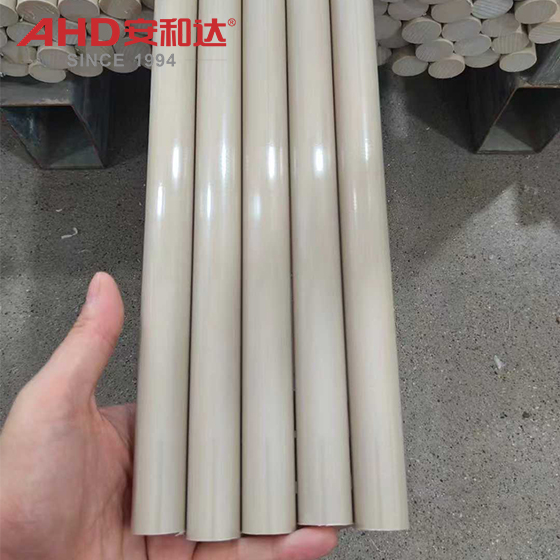
Rising Star: PK (Polyketone)
Key Strength: Even better wear resistance than POM! And when rubbing against each other with the same material, it's much quieter than POM. Extremely strong chemical resistance.
Opportunity: When your POM gears wear out too quickly or are too noisy, try switching to PK; it often has a surprising effect.
Special Forces: PEEK & PI
Key Strength: Long-term temperature resistance above 250°C, strength approaching that of aluminum alloy.
Disadvantage: Expensive.
Suitable Applications: Replacement for metal gears in aerospace or extremely lightweight racing car engines.
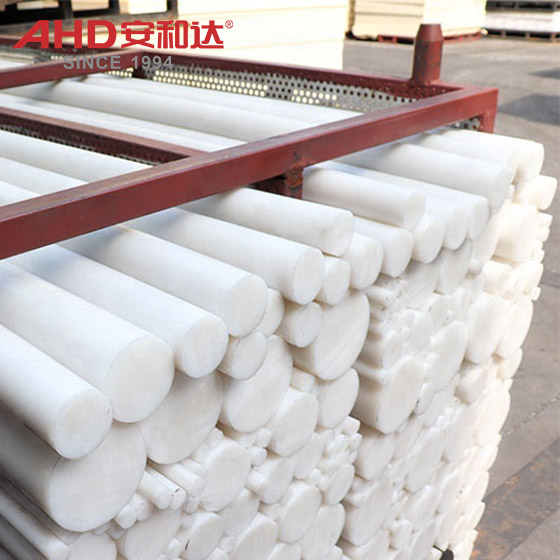
Polyoxymethylene Rod (Polyacetal Rod)
Recommendations:
Pairing Principle: Avoid rubbing the same materials together. The optimal pairing is usually: POM (gear A) + PA (gear B). This differentiated crystalline structure significantly reduces the coefficient of friction and noise.
The Cost of Fiberglass: To increase strength, many people like to add glass fiber (GF). However, remember that glass fiber is like sandpaper. Gears with GF will wear down their meshing parts excessively. If you must use it, the meshing parts must be harder (e.g., metal), or a special resin-rich surface treatment must be used.
Thermal Conductivity Modification: If the PV value is high, consider adding PTFE or graphite modifications. This not only reduces friction but also improves thermal conductivity.
PA6 Nylon Rod
