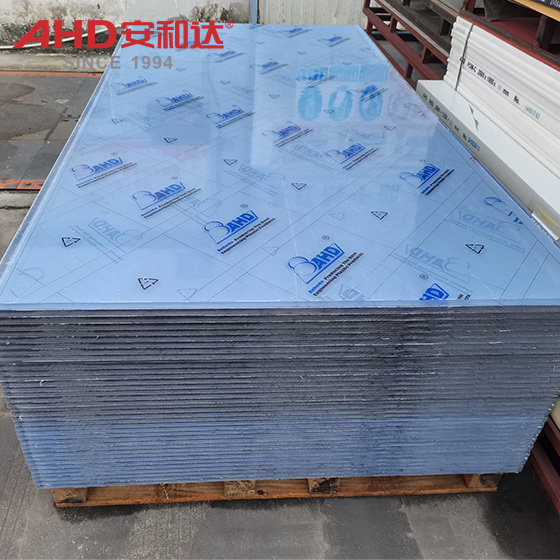
Solving the Processing Challenges of Polycarbonate (PC) Materials
Recently, customers reported that polycarbonate (PC) materials are prone to cracking during drilling, severely impacting product quality and production efficiency. AHD technical engineers have summarized a scientific and effective solution.
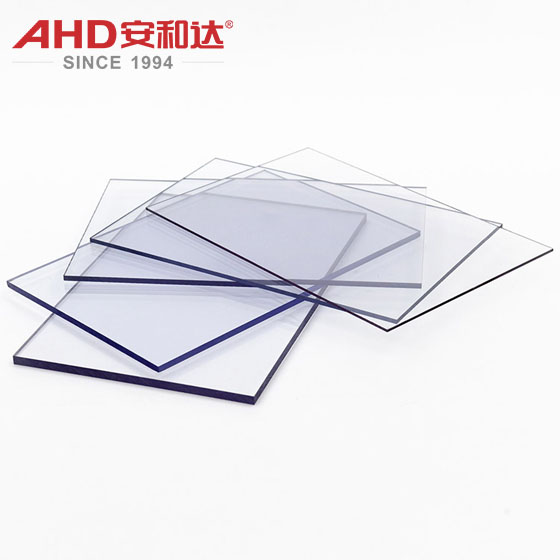
PC materials are widely used due to their high strength, transparency, and heat resistance; however, cracking is a frequent problem during machining, especially in drilling operations. Engineers pointed out three main reasons.
First, PC materials are sensitive to chemicals; the acidic or alkaline components in traditional cutting fluids can induce stress cracking, so such liquids should be avoided during processing.
Second, if residual stress within the PC is not fully released before machining, the mechanical action during drilling can easily lead to cracks, usually stemming from improper material forming or storage.
Finally, improper drill bit condition and speed control are key factors; using insufficiently sharp drill bits or excessively high drilling speeds can damage the material structure due to heat accumulation and forced compression.

AHD PC Sheet (Polycarbonate Sheet)
To address these issues, engineers have proposed a practical crack prevention measure.
During drilling, the drilling speed should be strictly controlled and adjusted to an appropriate range to avoid thermal stress caused by excessively fast operation.
Simultaneously, it is crucial to avoid using any liquids that may cause chemical reactions, including acidic or alkaline cutting fluids, tapping oils, and alcohol. Even for wiping steps, neutral materials should be used. Using water as a coolant during drilling is recommended for safe cooling and minimizing the heat effect.
After machining, to completely release stress, it is suggested to immerse the workpiece in warm water at 45-55°C for 24 hours, or perform annealing according to material specifications. This significantly improves the long-term stability of the material.

AHD PC Plastic Sheet
These solutions have been validated in use by multiple customers, effectively reducing cracking rates in PC processing and improving production efficiency and product reliability. Based on current industry trends, with continuous advancements in materials science and processing technology, the application prospects of high-performance plastics such as PC will be even broader. In the future, through continuous process optimization, related industries are expected to overcome more processing challenges, driving innovation and sustainable development.