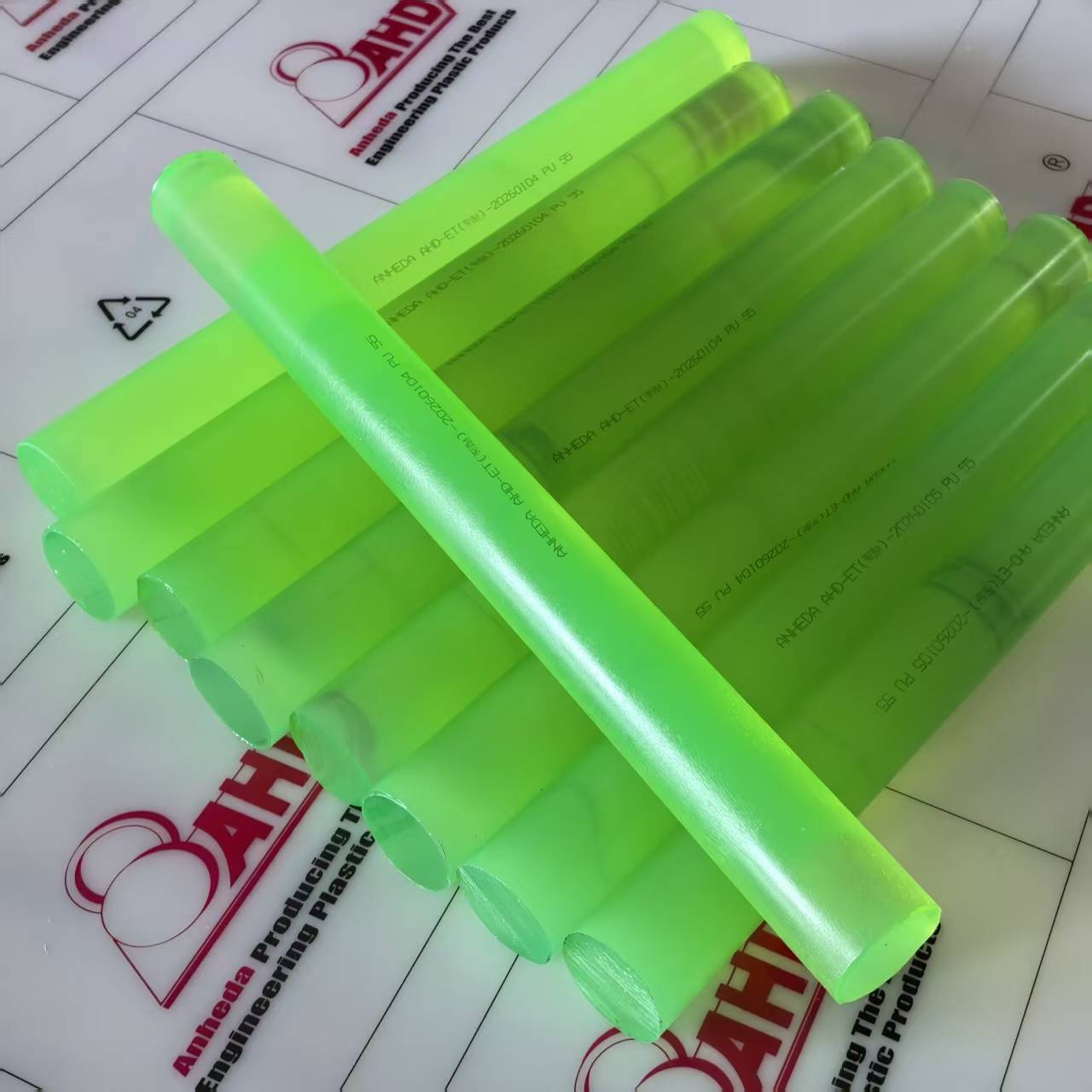
PU (polyether) rods are not entirely the same product as TPU rods, but they both belong to the polyurethane (PU) family and have certain connections and differences. The following details their classification, similarities, differences, properties, and application scenarios:
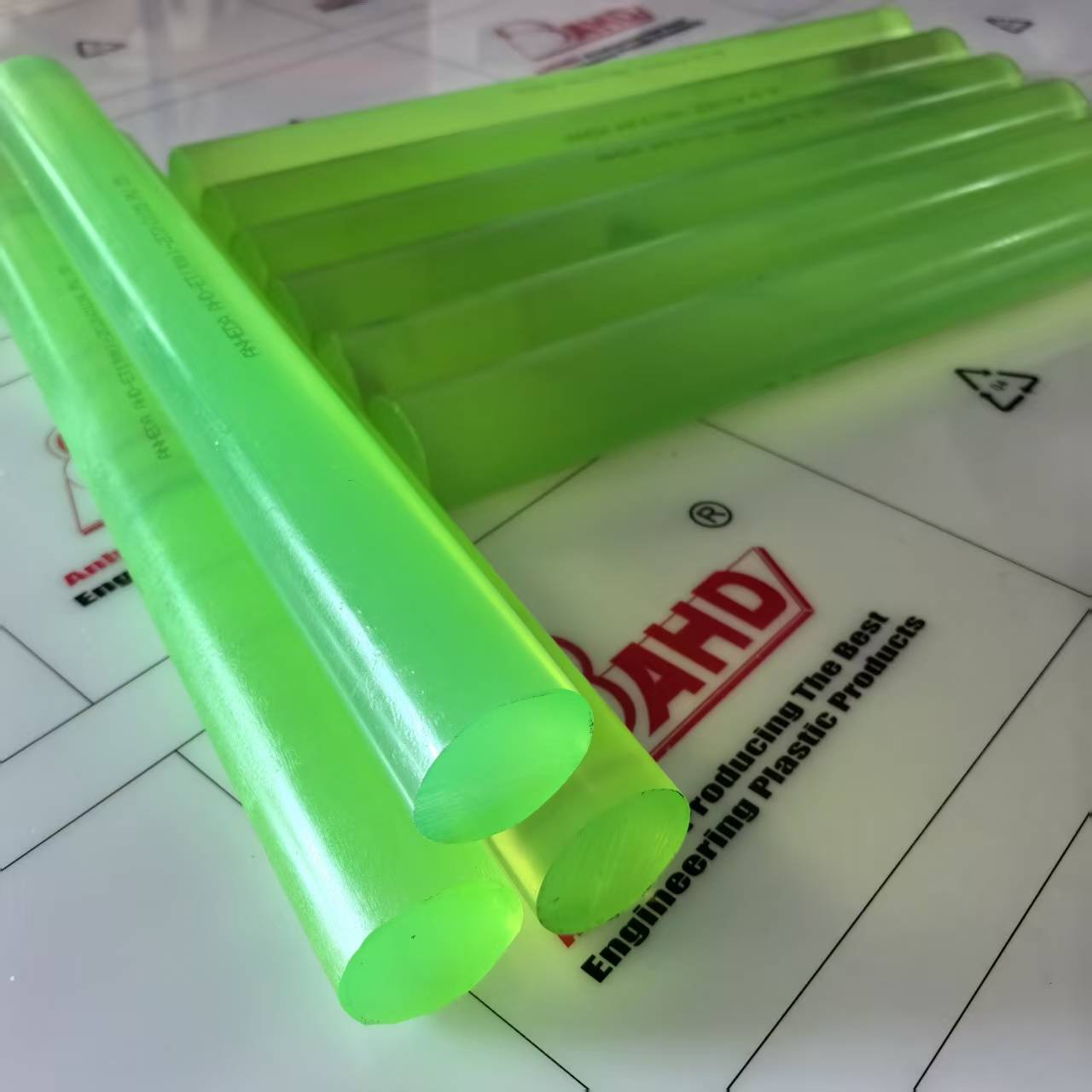
Ⅰ. Basic Concepts
PU (Polyurethane): A general term for a class of high-molecular-weight polymers containing urethane groups (-NHCOO-). Various types can be derived by adjusting the types and structures of raw materials (such as polyols, isocyanates, and chain extenders), such as cast PU (CPU), thermoplastic PU (TPU), and compound PU (MPU).
PU (polyether) usually refers to polyurethane with polyether polyols as the soft segment (distinguished from polyester PU), emphasizing the polyether structure of the soft segment (such as polyethylene glycol and polypropylene glycol). This type of PU has good hydrolysis resistance and excellent low-temperature flexibility. Polyether ester PU often refers to Casting PU Polyurethane Rod.
TPU (Thermoplastic Polyurethane Elastomer): A subclass of PU, belonging to thermoplastic elastomers (TPE). Its molecular structure is a linear block copolymer (hard segment: diisocyanate + short-chain chain extender; soft segment: long-chain polyol (polyether/polyester type)). It can be processed by heating and melting (injection molding, extrusion, etc.) without crosslinking and is shaped after cooling.
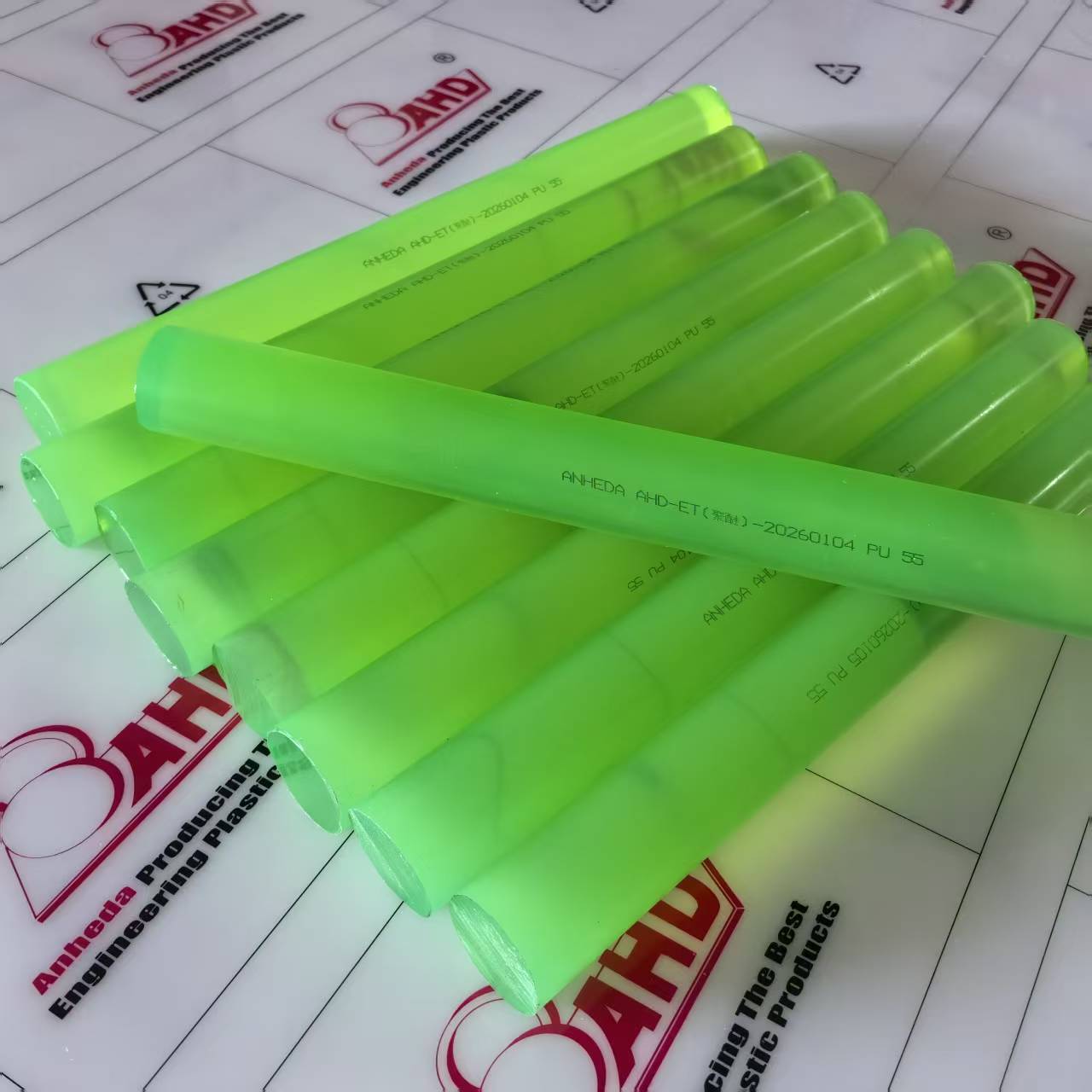
Ⅱ. Similarities
Chemical Nature: Both are based on polyurethane as the basic framework, containing urethane groups (-NHCOO-), and share common core properties (such as abrasion resistance, oil resistance, and elasticity).
Raw Material Overlap: Both can use polyether polyols or polyester polyols as the soft segment (TPU commonly uses polyether or polyester types, while PU (polyether) specifically refers to polyether type).
Basic Properties: Both possess good abrasion resistance, oil resistance, and a certain degree of elasticity, making them suitable for cushioning and shock absorption applications.
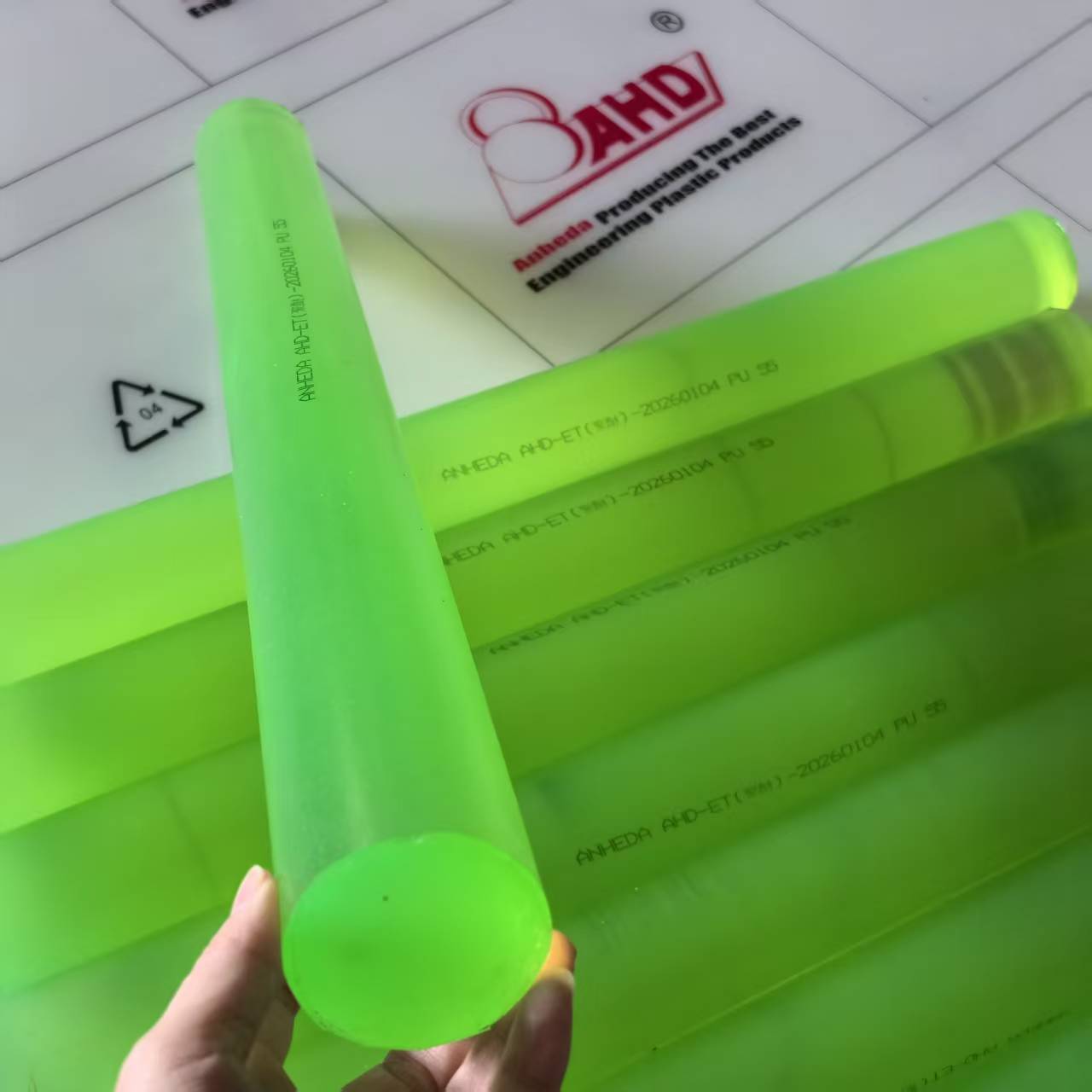
Ⅲ. Differences
| PU (cast polyether polyurethane) | TPU (Thermoplastic Polyurethane) | |
| Chemical Structure | Mostly thermosetting (crosslinked structure), some are semi-thermoplastic; soft segments are polyether polyols. | Linear block copolymers (non-crosslinked), hard segments (rigid) + soft segments (flexible). |
| Processing methods | Typically, it is produced by casting or molding (requiring a curing reaction); difficult to recycle. | Thermoplastic processing (injection molding, extrusion, blow molding); can be repeatedly melted and molded. |
| Mechanical Properties | Wide hardness range (Shore A 20~Shore D 80), emphasizing high load-bearing capacity or soft cushioning; moderate tensile strength (typically <50 MPa). | Wideer hardness range (Shore A 60~Shore D 80), high elasticity (elongation at break 300%~800%), high tensile strength (20~60 MPa, some >100 MPa). |
| Temperature Resistance | Long-term operating temperature approximately -40~80℃ (polyether type has better low-temperature resistance, remaining flexible even at -50℃). | Long-term operating temperature -50~120℃ (polyether type TPU has better low-temperature resistance, polyester type has slightly higher temperature resistance). |
| Chemical Resistance | Polyether-based TPU exhibits better hydrolysis resistance than polyester-based TPU, but its resistance to strong acids and alkalis is generally lower. | Polyether-based TPU is resistant to hydrolysis and microorganisms; polyester-based TPU is more resistant to oils and solvents. |
| Transparency | Mostly opaque or semi-transparent (due to cross-linking or fillers). | Can be made into highly transparent products (such as films and sheets). |
| Environmental friendliness | Thermosetting PU is difficult to recycle and may contain unreacted monomers. | Thermoplastic, recyclable. |
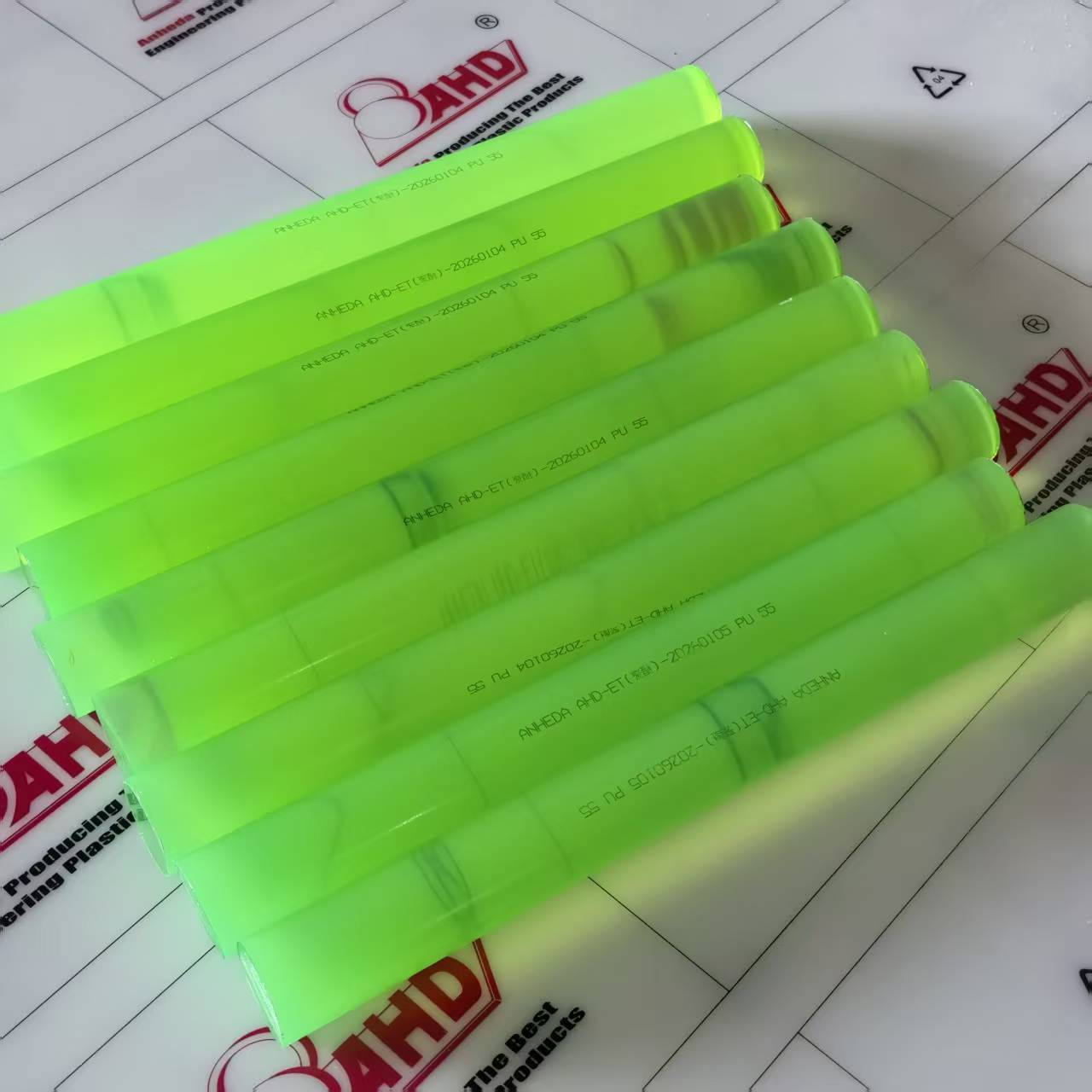
Ⅳ. Characteristics and Typical Applications
⒈ PU (Polyether) Rods
Core Characteristics:
⑴. The polyether-type soft segments provide excellent hydrolysis resistance (not easily degraded in humid environments) and low-temperature flexibility (still flexible at -50℃);
⑵. Thermosetting cross-linked structure gives it high resilience and resistance to compression set;
⑶. Adjustable hardness (from soft foam to rigid plastic), outstanding abrasion resistance.
Typical Applications:
Industrial Applications: Seals (e.g., mining machinery seals), wear-resistant liners, cushioning pads, conveyor belt roller coatings;
Civilian Applications: Gym equipment grips, shoe midsoles (high resilience), medical protective gear (e.g., orthopedic braces);
Special Applications: Low-temperature environment resistant components (e.g., polar equipment parts).
⒉ TPU Rods
Core Characteristics:
⑴. Easy thermoplastic processing, suitable for complex shapes;
⑵. Combining high elasticity (similar to rubber) with high strength (close to plastic), strong tear resistance;
⑶. Polyether-type TPU has good hydrolysis resistance and weather resistance, while polyester-type TPU has better oil and solvent resistance;
⑷. Can be colored, some grades are transparent.
Typical Applications:
Consumer Electronics: Mobile phone cases, watch straps, headphone cable sheaths (high elasticity + flexural strength);
Footwear Materials: Sports shoe cushioning, soles (high resilience + abrasion resistance);
Industrial: Hydraulic hoses, pneumatic hoses (high pressure resistance + oil resistance), films (waterproof and breathable membranes);
Medical: Infusion tubing, surgical gown coatings (biocompatible grades);
Automotive: Interior parts (such as soft-touch dashboard coatings), seals (oil resistance + weather resistance).
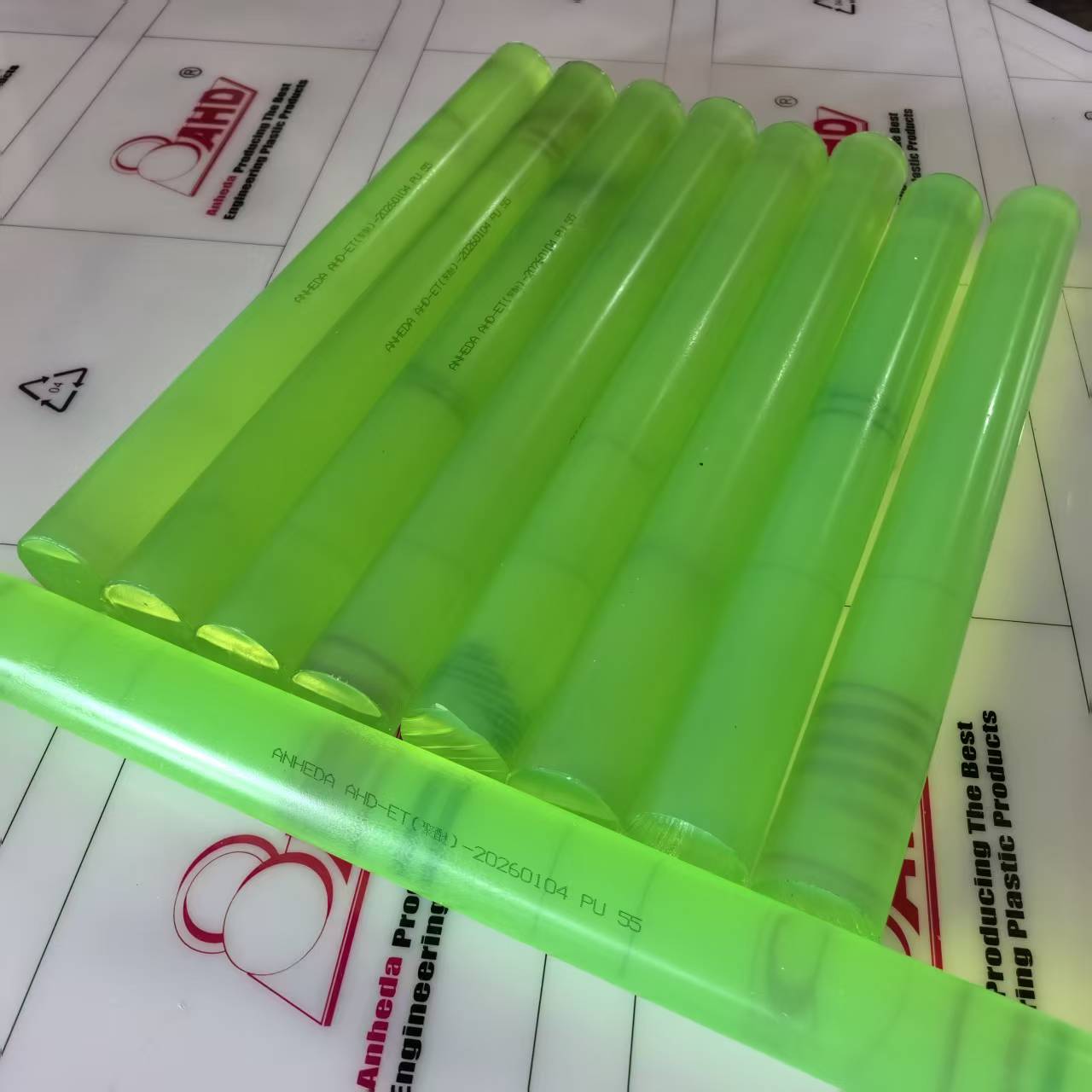
PU (polyether) rods, along with TPU and rods, belong to the polyurethane family. However, PU is a broad concept (including thermosetting (casting)/thermoplastic), while TPU is a thermoplastic subclass of PU. They differ in structure, processing, and performance:
PU (polyether) is more suitable for applications requiring high load-bearing capacity, low-temperature resistance, or customized hardness; while TPU, with its thermoplasticity and comprehensive properties, is widely used in fields requiring high elasticity and ease of processing.
The choice should be based on specific needs (such as temperature resistance, chemical resistance, and processing method) to match the type.