

You might be wondering what the difference is between flame-retardant ABS sheets and regular ABS sheets? What exactly are flame-retardant ABS sheets? AHD will provide you with detailed answers below.
The core difference between flame-retardant ABS sheets and ordinary ABS sheets lies in the improvement of flame-retardant performance and the resulting adjustment of overall performance. Both use acrylonitrile-butadiene-styrene copolymer (ABS) as the base material, but flame-retardant sheets achieve a breakthrough in fire-resistant properties by adding flame retardants (such as bromine-based, phosphorus-based, and inorganic flame retardants).
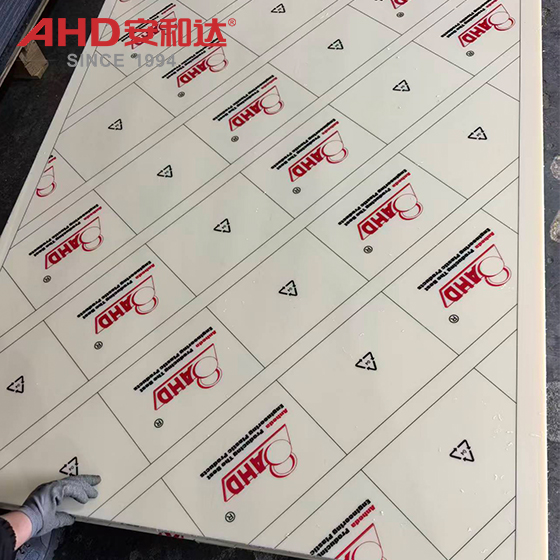
AHD ABS Sheet With Protected Film
Ordinary ABS sheets have a Limiting Oxygen Index (LOI) of only 18-20% (extremely flammable, continuing to burn after contact with a flame source) and no self-extinguishing ability; while flame-retardant ABS sheets, by adding flame retardants, can increase the LOI to 25-32% (requiring a higher oxygen concentration to sustain combustion) and pass the UL 94 vertical burning test (the industry's authoritative flame-retardant standard):
Ordinary ABS sheets: cannot reach the UL 94 V-0 rating (continues to smolder after burning, drippings easily ignite cotton);
Flame-retardant ABS sheets: can reach the UL 94 V-0 rating (at a thickness of 1.6mm, burning time ≤10 seconds, immediately self-extinguishing after removal of the flame, no drippings igniting cotton), and some high-performance products can even meet the UL 94 5VA rating (a higher level of fire resistance).
This difference is the most fundamental distinction between the two, directly determining their applicability in scenarios with high fire safety requirements.
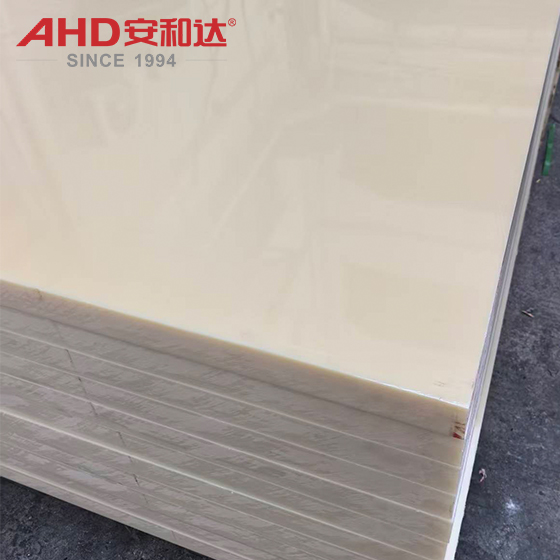
Even after flame retardant properties are added, the original performance can still basically be maintained.
The physical properties of flame-retardant ABS sheets change slightly after the addition of flame retardants, but they still retain the excellent characteristics of ABS:
Density: Flame-retardant ABS sheets have a slightly higher density than ordinary ABS sheets due to the addition of inorganic flame retardants (the exact density depends on the type and amount of flame retardant).
Mechanical Properties:
Tensile Strength: Ordinary ABS sheets have a tensile strength of approximately 35-55 MPa, while flame-retardant ABS sheets have a lower tensile strength (30-50 MPa) due to the potential weakening of intermolecular forces caused by the flame retardant.
Impact Strength: Ordinary ABS sheets have a slightly higher impact strength due to the presence of the butadiene rubber phase, while flame-retardant ABS sheets may have a slightly lower impact strength due to compatibility issues between the flame retardant and the matrix.
Flexural Strength: Compared to ordinary ABS sheets, flame-retardant ABS sheets show a slight decrease, but still meet the requirements of most structural components.
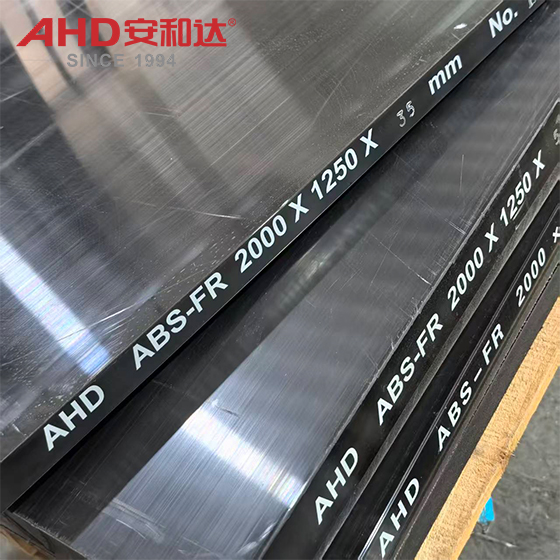
Excellent Properties of ABS Flame-Retardant Sheets
1. Excellent Flame-Retardant Performance: By adding highly efficient flame retardants, ABS flame-retardant sheets can achieve high fire resistance ratings, typically meeting UL94 V-0 (burning time ≤10 seconds at 3mm thickness, no dripping ignition of cotton). Halogen-free flame-retardant versions also reduce the release of toxic gases, better meeting environmental protection requirements.
2. Good Comprehensive Mechanical Properties: Impact Resistance: Inheriting the high toughness of ABS, it maintains good impact resistance even at low temperatures and is not easily brittle.
Rigidity and Strength: Tensile strength approximately 35-50 MPa, flexural strength approximately 60-80 MPa, capable of withstanding certain loads, suitable for structural components.
Surface Hardness: Rockwell hardness R60-80, easy to process and scratch-resistant.
3. Temperature and Weather Resistance: Heat distortion temperature (HDT) approximately 70-90℃ (0.45MPa), can withstand short-term high temperatures up to 85℃, long-term use is recommended not to exceed 70℃. Ordinary ABS flame-retardant sheets generally have poor weather resistance (susceptible to UV aging), but this can be improved by adding UV stabilizers, making them suitable for indoor or semi-outdoor applications.
4. Processability: They can be processed through thermoforming, cutting, drilling, engraving, and bonding, similar to wood and metal, making them suitable for customized designs.
The surface can be printed, sprayed, or electroplated to enhance aesthetics.
5. Electrical Insulation: With high volume resistivity and a dielectric strength of 15-20 kV/mm, they are excellent insulating materials suitable for electrical applications.
6. Chemical Resistance: Resistant to weak acids, weak alkalis, and oils, but susceptible to corrosion from strong solvents (such as ketones and esters); contact should be avoided.

ABS flame-retardant sheets, due to their characteristics of "flame retardancy + easy processing + balanced comprehensive performance," are widely used in the following fields:
1. Electronics and Electrical Appliances Industry:
Housings and Structural Components: such as power adapter housings, socket/switch panels, LED lamp holders, battery boxes.
Internal Insulation Components: circuit board supports, transformer frames, connectors, etc., utilizing their electrical insulation and flame retardancy.
Consumer Electronics: Protective cases for mobile phones/tablets (requiring lightweight and drop protection), fire-resistant components for small appliances (such as coffee makers, hair dryers).
2. Construction and Decoration:
Indoor Fireproof Materials: Fireproof partitions and ceiling panels used in public spaces such as shopping malls, hotels, and subways.
Decorative Panels: Fireproof background walls, display cases, advertising light boxes, signage (can be printed with patterns, combining aesthetics and safety).
3. Automotive Industry:
Interior Components: Dashboards, door panels, center armrests, air conditioning vents (must meet automotive interior flame-retardant standards).
Functional Components: Housings for automotive electronic devices, fuse boxes, etc.
4. Industrial Equipment and Instruments
Control Boxes and Cabinets: Control panels and electrical control box housings for industrial automation equipment (dustproof, fireproof, easy to mold).
Laboratory Equipment: Protective covers and instrument housings for laboratory equipment (resistant to weak corrosion + flame retardant).
5. Other Fields
Models and Figurines: Due to their ease of processing and painting, they are used for architectural models and anime figurines (high transparency or colored flame retardant sheets are available).
Packaging Materials: Fireproof cushioning linings for high-end electronic products.

AHD, with its professional technology and years of experience in plastic sheet and rod production, provides the market with high-quality and affordable ABS flame retardant sheets, one of our outstanding products that has stood the test of time and the market.
ABS flame retardant sheets balance "flame retardancy" and "practicality" through modification, making them a mid-to-high-end plastic material that combines safety and function, especially excelling in fields with specific fire protection requirements and flexible processing needs. When selecting, pay attention to the flame retardant rating (e.g., UL94 V-0), environmental requirements (halogen-free/halogenated), and temperature resistance requirements (long-term operating temperature) based on the specific scenario. Feel free to contact us for professional advice and services.
