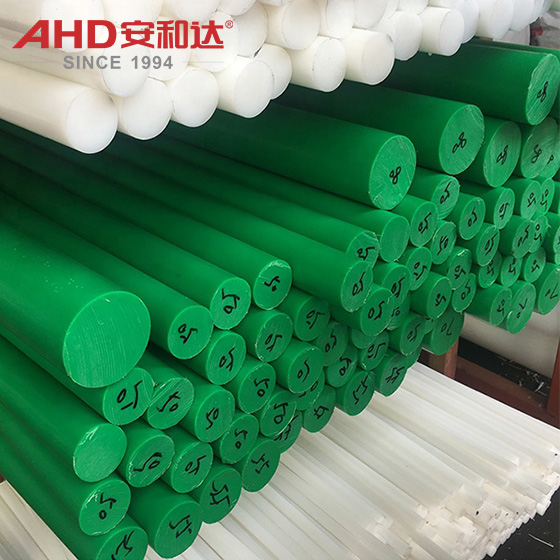
PP (polypropylene) rods and HDPE (high-density polyethylene) rods are both polyolefin thermoplastics, widely used in industrial fields due to their lightweight, corrosion resistance, and ease of processing. Let's learn more about them below.
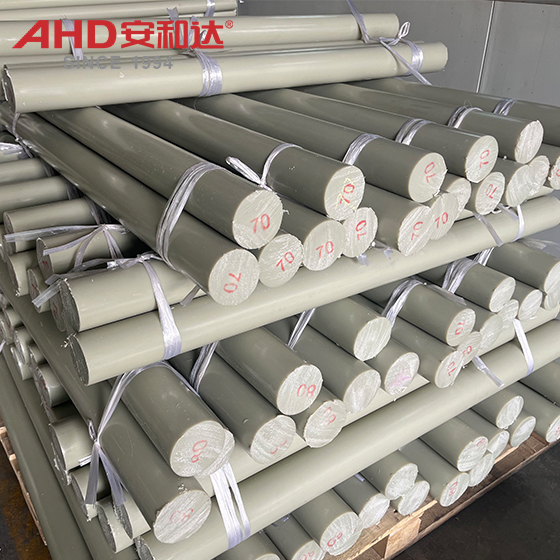
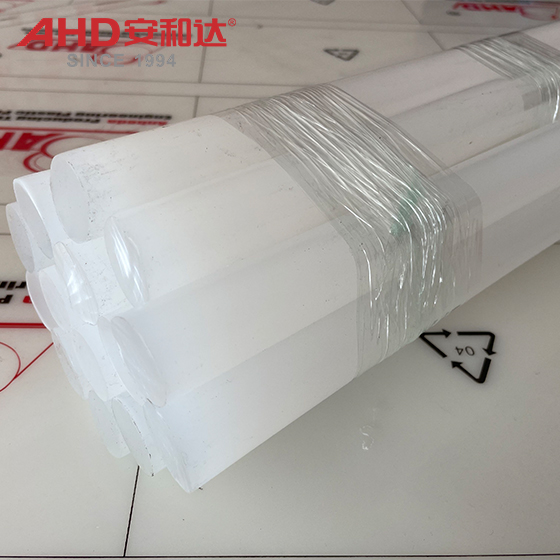 AHD PP Rod Natural
What are they?
PP Rod (Polypropylene Rod): Semi-crystalline, High-Rigidity Thermoplastic
PP rods are semi-crystalline polymers polymerized from propylene monomers through an addition polymerization reaction. As an important type of polyolefin plastic, PP rods inherit the basic characteristics of polypropylene while optimizing toughness and processing performance through formulation adjustments.
HDPE Rod (High Density Polyethylene Rod): High-Crystallinity, High-Toughness Thermoplastic
HDPE rods are rod-shaped high-density polyethylene polymerized from ethylene monomers. The core advantages of HDPE rods lie in their high toughness and low-temperature resistance, making them a representative material of "toughness first" among polyolefins.
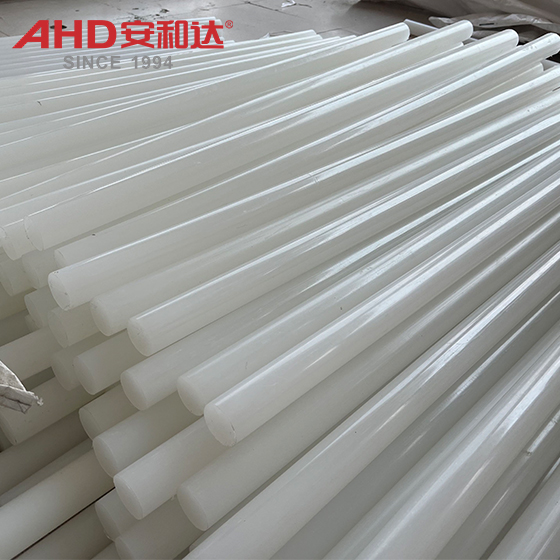
AHD PP Rod
Typical Applications of PP Rod
PP rods are best suited for applications requiring high rigidity, high temperature resistance, and surface hardness, where the operating environment temperature is not lower than 0℃:
Chemical Equipment: Resistant to most non-polar solvents (such as alcohols and oils) and some acids and alkalis (such as dilute sulfuric acid and hydrochloric acid), used in pump and valve components, pipe flanges, and corrosion-resistant containers.
Food and Medical: Meets food-grade standards (FDA certified), used for wear-resistant parts in food processing machinery (such as guide rails and scrapers) and medical device housings.
High-Temperature Environments: Long-term operating temperature up to 100℃ (short-term 120℃), superior to HDPE (long-term 80℃), suitable for heat-resistant structural components in HVAC equipment.
Electrical Insulation: High volume resistivity, used for low-voltage electrical insulation supports and coil frames.
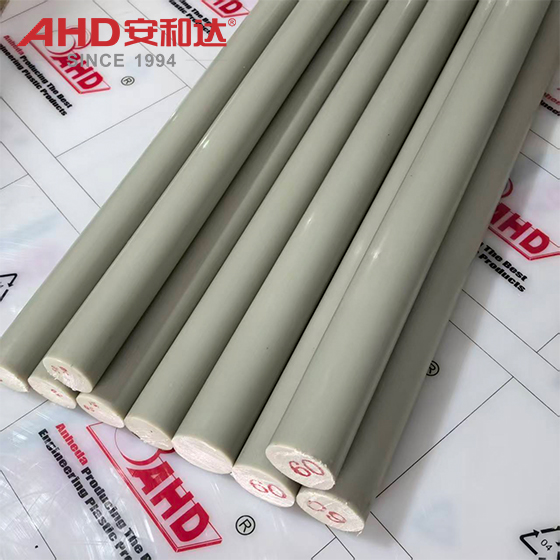
Typical Applications of HDPE Rods
HDPE rods are better suited for applications requiring low-temperature resistance, high toughness, and impact resistance, especially in low-temperature or dynamic load environments:
Low-Temperature Engineering: Embrittlement temperature as low as -70℃ (PP approximately -10℃), used for refrigeration equipment components and outdoor structural components in cold regions (such as fences and buoys).
Impact Resistance Applications: Notched impact strength is significantly higher than PP (especially at low temperatures), used for impact-sensitive protective covers, cushioning pads, and conveyor rollers.
Water Conservancy and Municipal Engineering: Good resistance to stress cracking (not easily cracked under long-term hydrostatic pressure), used for buried water supply pipes, water tank linings, and sewage treatment plant linings.
Outdoor Facilities: Weather resistance is superior to PP, used for billboard supports and landscape components.
Similarities:
Basic Properties: Both are polyolefin plastics, non-toxic and odorless (meeting food contact standards), low density, lightweight and easy to handle.
Chemical Resistance: Resistant to most non-polar solvents (such as hydrocarbons and oils), and dilute acids and alkalis (such as dilute sulfuric acid and sodium hydroxide), suitable for chemical corrosion protection applications.
Processing Performance: Both can be injection molded and extruded, easy to cut and weld (hot air welding or adhesives).
Electrical Insulation: High volume resistivity, suitable for low-voltage electrical insulation applications.
Differences
| PP Rod(Polypropylene) | HDPE Rod(High Density Polyethylene) | |
| Density and Crystallinity | Lower density (0.90-0.91 g/cm³), moderate crystallinity (50-60%). | Higher density (0.94-0.96 g/cm³), high crystallinity (70-80%). |
| Temperature Resistance | Higher melting point (160-170℃), long-term operating temperature -20~100℃. | Lower melting point (120-130℃), long-term operating temperature -50~90℃. |
| Stiffness and Toughness | High stiffness (elastic modulus 1.1-1.6 GPa), but poor toughness at low temperatures (prone to brittle fracture). | Lower stiffness (elastic modulus 0.8-1.5 GPa), but excellent toughness (especially at low temperatures). |
| Impact Resistance | Notched impact strength at room temperature is approximately 5-10 kJ/m² (decreases significantly at low temperatures). | Notched impact strength at room temperature is approximately 15-40 kJ/m² (maintains toughness even at low temperatures). |
| Chemical Resistance Details | Resistant to aromatics and halogenated hydrocarbons (easily swells), but slightly better resistance to oxidizing acids (such as concentrated nitric acid). | Resistant to aromatics and halogenated hydrocarbons even more (easily swells), but superior resistance to stress cracking. |
| Weather Resistance | Prone to photo-oxidative aging (requires UV stabilizer), prone to embrittlement with prolonged outdoor use. | Slightly better weather resistance (fewer branches, higher antioxidant efficiency), longer outdoor lifespan. |
| Surface Characteristics | Hard surface, easily scratched, good printing/coating adhesion. | Soft surface, low coefficient of friction (more abrasion resistant), but pretreatment is required for printing. |
Summary
PP rods are recommended when the requirements are high temperature (>80℃), high rigidity, resistance to some chemical reagents, and an operating temperature not lower than 0℃ (e.g., chemical equipment, food machinery).
HDPE rods are recommended when the requirements are low temperature resistance (above -50℃), high toughness, impact resistance, or long-term resistance to stress cracking (e.g., hydraulic structures) (e.g., low-temperature components, outdoor facilities).
The core difference between the two lies in the balance between rigidity and toughness, temperature range, and low-temperature performance. The choice must be made comprehensively based on the specific operating conditions, temperature, load type (static/dynamic), and chemical environment.
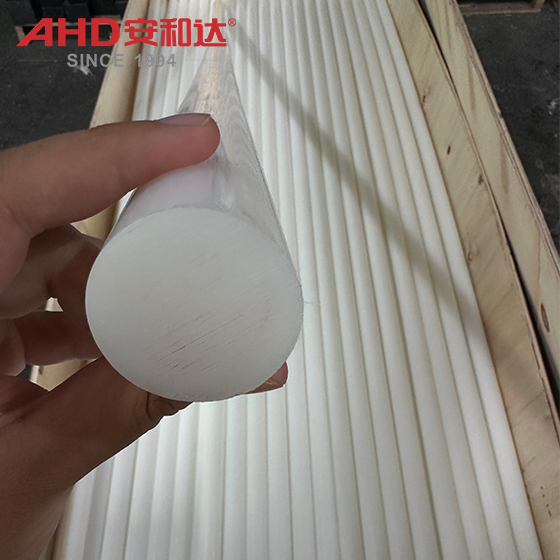
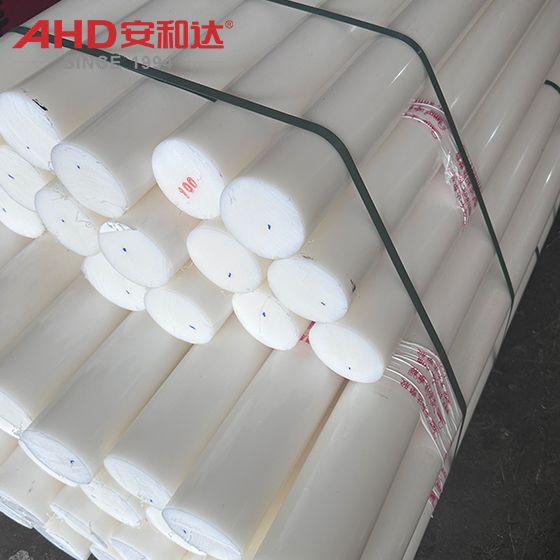
AHD HDPE Rod