

Material selection is crucial in the design of plastic sheet and rod products. Polyoxymethylene (POM), polyamide 66 (PA66), and polycarbonate (PC) are the three major engineering plastics, each with its own characteristics. This article provides a core comparison and selection recommendation.
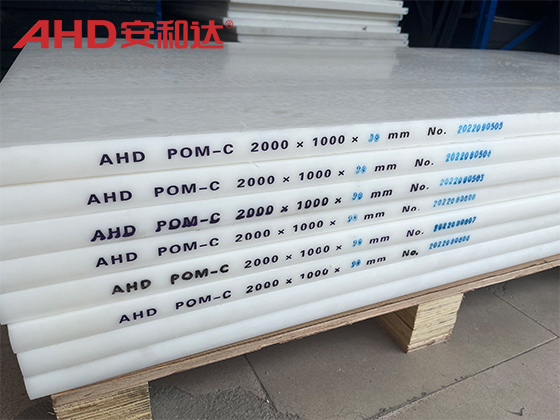 AHD POM Sheet(Polyoxymethylene Sheet)
Ⅰ. Core Features Comparison
| POM | PA66 | PC | |
| Mechanical Properties | High rigidity, fatigue resistance, low coefficient of friction (0.04) | High tensile strength (80-90MPa), excellent wear resistance | Optimal impact toughness (80-100kJ/m²) |
| Thermal Properties | Heat distortion temperature: 110℃, long-term temperature: 80-100℃ | Unmodified: 60-80℃, Glass fiber reinforced: 180-200℃ | Heat distortion temperature: 135-150℃, Long-term temperature: 120℃ |
| Dimensional stability | Excellent (moisture absorption only 0.2-0.5%) | Poor (saturated moisture absorption rate 8%, large dimensional changes) | Good (moisture absorption 0.1-0.3%) |
| Transparency | Opaque | Opaque | High transparency (88-92%) |
| Chemical Resistance | Resistant to oils, weak acids and alkalis, but not resistant to strong oxidizing agents. | Resistant to greases, weak acids and alkalis, but not resistant to strong acids. | Resistant to weak acids, alkalis and salts, but not resistant to organic solvents. |
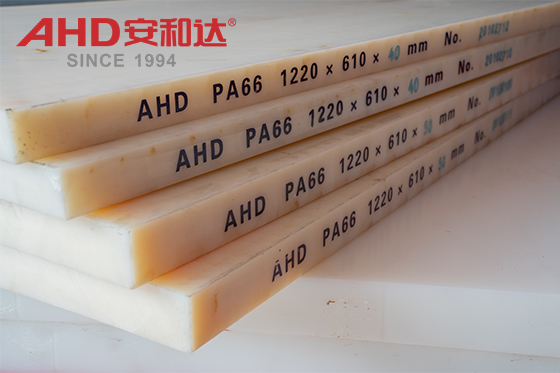
Ⅱ. Application Scenarios Guide
1. Mechanical Transmission Components (Gears, Bearings, Cams)
POM is the preferred choice: low friction, high rigidity, dimensional stability, suitable for precision transmission.
PA66 is an alternative: better wear resistance, requires moisture protection, suitable for medium to high loads.
PC should be used with caution: poor wear resistance, only suitable for light loads and low speeds.
2. Structural Support Components
PC is the preferred choice for transparent protection: transparent engineering plastic with good impact toughness.
POM is the preferred choice for precision structures: replaces metal for weight reduction, dimensional stability.
PA66 reinforcement is the preferred choice for high strength and heat resistance: used around automotive engines, oil and temperature resistant.
3. Special Environments
Humid Environments: choose POM, avoid PA66.
High Temperature Environments: for long-term 120℃, choose PC; for short-term 180℃, choose reinforced PA66.
Chemical Environments: for oils, choose POM/PA66; for organic solvents, avoid PC.
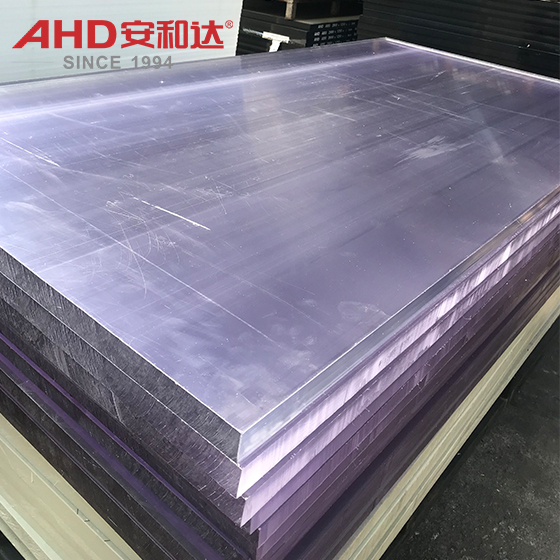
 AHD PC Sheet (Polycarbonate Sheet)
Ⅲ. Selection Decision Process
Define Core Requirements: Load type, operating temperature, environmental conditions, dimensional accuracy, transparency, cost budget
Key Screening:
Need transparency? → PC
Humid environment? → POM
High temperature long-term? → PC or reinforced PA66
High abrasion resistance? → POM or PA66
Precision dimensions? → POM or PC
Detailed Comparison: Comprehensive evaluation of performance, cost, and processability
Validation and Optimization: Small-batch trial, continuous improvement
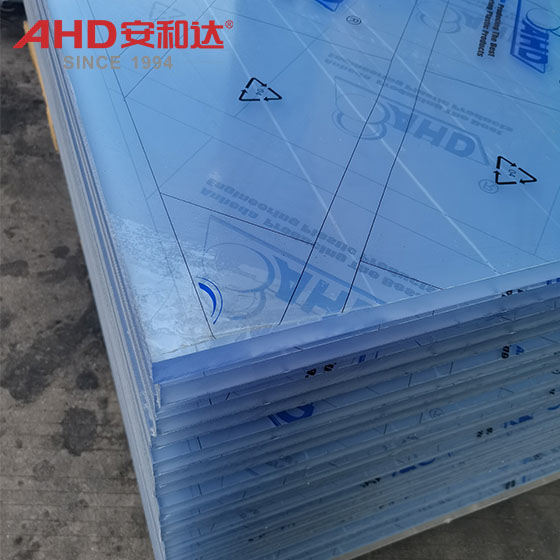
AHD Light Blue PC Plastic Sheet
Ⅳ. Selection Summary
1. Core Positioning
POM: Precision machinery's first choice, king of dimensional stability
PA66: Strength and wear resistance champion, large potential for heat modification
PC: Transparent protection expert, impact toughness champion
2. Selection Principles
Demand-oriented: Clearly define core needs and prioritize them
Balanced consideration: Comprehensive consideration of performance, cost, and processability
Verification-based: Confirm performance through small-batch trials
Continuous optimization: Track new materials and technologies
3. Value Creation
Scientific selection can:
Improve product performance and match the best materials
Control manufacturing costs and optimize cost structure
Expand application markets and form technological advantages
Enhance competitive barriers and enhance brand value
Mastering the selection methodology, combined with practical verification and continuous optimization, is key for plastic sheet and rod companies to maintain competitiveness.
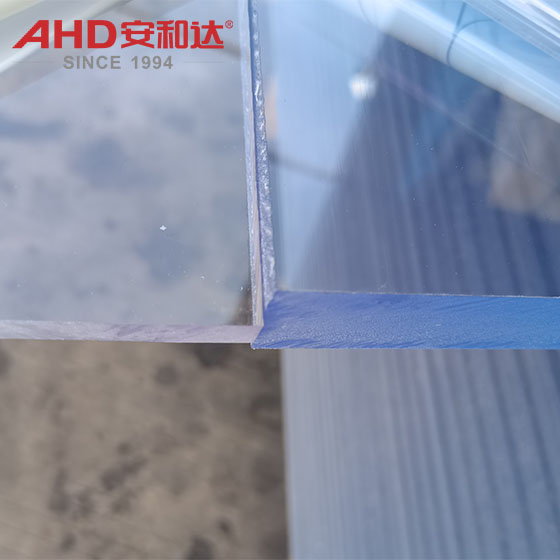
AHD Light Blue Polycarbonate Sheet