To address the material matching issue for different parts of a robot, it's necessary to consider the core functional requirements of each part (such as joint wear resistance, lightweight shell, and low friction in the transmission system), combined with the material's performance characteristics (such as the high strength of PEEK and the ease of processing of PC/ABS) and commercialization costs, to achieve an optimal balance between performance, weight, and cost. Today, let's explore with AHD which materials are suitable for different parts of a robot.

I. Joints: The "Core Battlefield" of High Wear Resistance, Low Friction, and Lightweight Design
Joints are the "hubs" of robot movement, needing to withstand high-frequency reciprocating motion, continuous loads, and frictional wear. The core requirements are: high wear resistance, low coefficient of friction, lightweight design, and dimensional stability.
1. Preferred Material: PEEK (Polyetheretherketone)
Performance Matching: PEEK is a "hexagonal warrior" among engineering plastics, possessing high strength (tensile strength ≈ 100 MPa), low coefficient of friction (0.15-0.25), high temperature resistance (long-term operating temperature ≈ 250℃), and low moisture absorption (water absorption rate < 0.1%), perfectly meeting the wear resistance and stability requirements of joints.

2. Supplementary Material: Carbon Fiber Reinforced PEEK (CF/PEEK)
Performance Upgrade: For high-load joints (such as hip and knee joints), using carbon fiber reinforced PEEK (carbon fiber content ≈ 30%) can improve strength (tensile strength ≈ 120MPa) and rigidity (modulus ≈ 10GPa) while maintaining the wear resistance of PEEK.
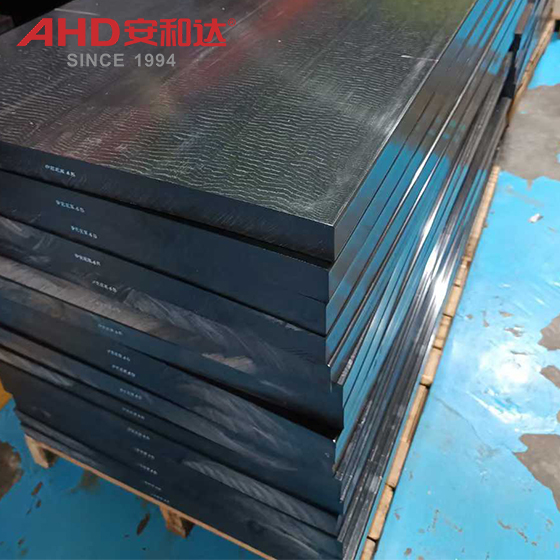
AHD PEEK Carbon Filled Sheet
3. Cost Balance: POM (Polyoxymethylene)
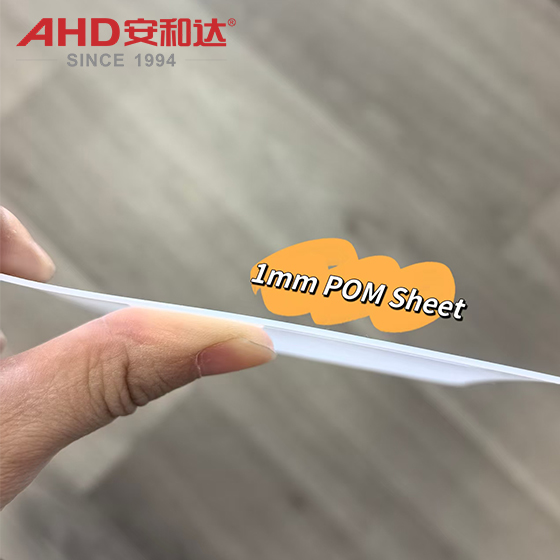
Applicable Scenarios: For low-load, non-core joints (such as wrist and finger joints), POM (polyoxymethylene) can be selected. POM has high rigidity (tensile strength ≈ 60MPa), low coefficient of friction (0.1-0.2), and easy processing characteristics, and its cost is only 1/5 of PEEK, making it suitable for mass production.
II. Shell: A Balanced Solution for Lightweight Design, Protection, and Aesthetics
The shell is the robot's "outer garment," requiring three key functions: lightweight (reducing overall weight), protection (impact resistance and corrosion resistance), and aesthetics (beautiful and in line with design language).
1. Preferred Material: PC/ABS Alloy
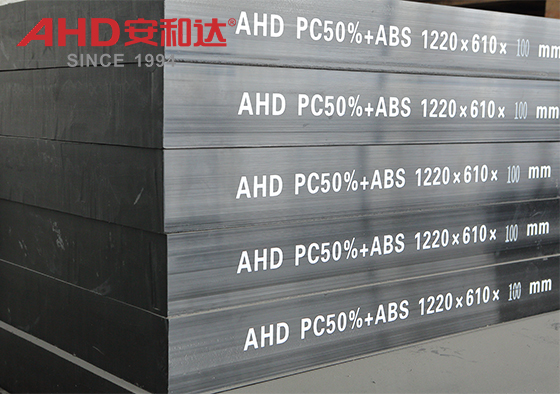
Performance Matching: PC/ABS alloy (polycarbonate + acrylonitrile-butadiene-styrene) is the "king of cost-effectiveness," combining the high impact strength of PC (notched impact strength ≈ 60kJ/m²) with the ease of processing of ABS (short injection molding cycle). It also has a low density (≈1.1g/cm³), making it suitable for creating shells with complex shapes (such as the torso and limbs).
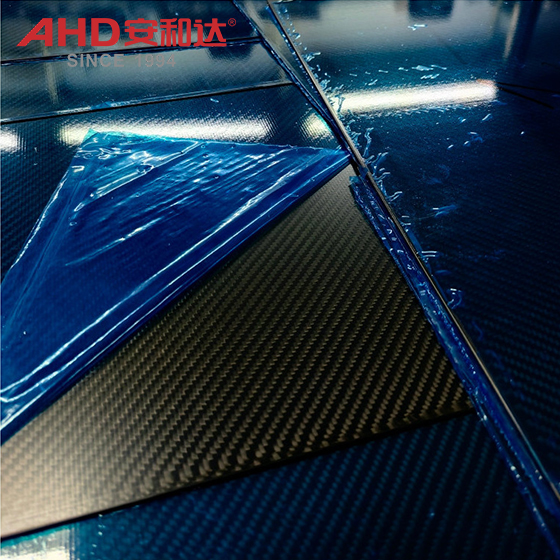
2. High-End Option: Carbon Fiber Reinforced Polymer (CFRP)
Performance Upgrade: For high-end robots (such as humanoid robots and medical robots), even greater lightweighting is required, making carbon fiber reinforced polymer (CFRP) a viable option. CFRP has only half the density of aluminum alloy but five times the strength, enabling a "lightweight yet strong" shell design.
3. Enhanced Protection: PPS (Polyphenylene Sulfide).
Applicable Scenarios: For robots operating in harsh environments (such as chemical and underwater robots), the outer shell needs to be corrosion-resistant and high-temperature resistant. PPS (Polyphenylene Sulfide) can be selected. PPS has better chemical corrosion resistance (resistance to acids, alkalis, and organic solvents) than stainless steel, and its long-term operating temperature is approximately 200℃, making it suitable for manufacturing protective shells (such as the arm shells of chemical robots).

AHD Polyphenylene Sulfide Sheet
III. Transmission System: The "Core of Power Transmission"—Low Friction, High Rigidity, and Fatigue Resistance
The transmission system is the "power link" of a robot, requiring efficient power transmission (low friction), high rigidity (to avoid deformation), and fatigue resistance (for long-term stable operation). The core requirements are: low coefficient of friction, high rigidity, and fatigue resistance.
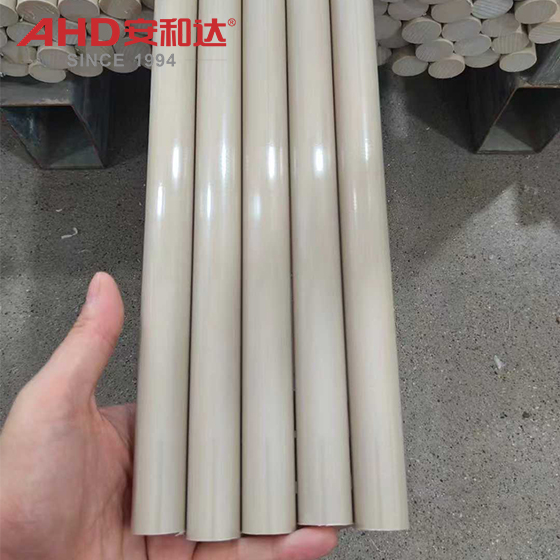
1. Preferred Material: PEEK (Polyetheretherketone)
Performance Matching: PEEK's low coefficient of friction (0.15-0.25) and high rigidity (modulus ≈ 3.6 GPa) make it an "ideal material" for transmission systems. For example, PEEK gears have 50% lower friction loss than metal gears and also possess fatigue resistance, making them suitable for manufacturing precision transmission components.
2. Supplementary Material: POM (Polyoxymethylene)
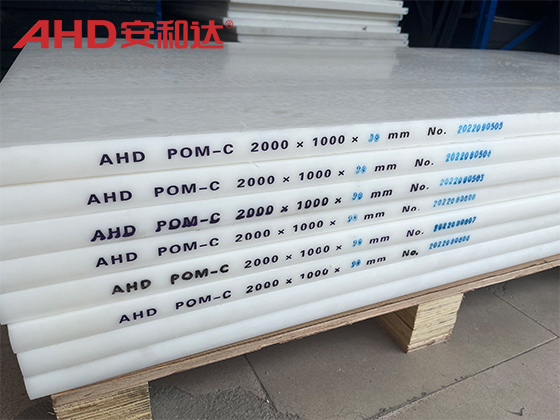
Applicable Scenarios: For low-load transmission systems (such as joint transmissions in collaborative robots), POM (polyoxymethylene) can be selected. POM's low coefficient of friction (0.1-0.2) and high rigidity (tensile strength ≈ 60MPa) make it suitable for manufacturing gears, bearings, and other components, at only 1/5 the cost of PEEK, making it suitable for mass production.
3. High-end Option: PEEK Cycloidal Reducer
Performance Upgrade: For high-load transmission systems (such as the hip joints of industrial robots), PEEK cycloidal reducers can be used. PEEK cycloidal reducers combine the high precision of cycloidal transmission with the lightweight nature of PEEK, while also possessing high rigidity, making them suitable for manufacturing high-load, high-impact transmission components (such as reducers for hip and knee joints).

V. Future Trends: The "Integration" of Materials and Intelligence
With the development of the robotics industry, intelligent materials will become a core direction for the future:
Self-healing materials: such as polyurethane-based composites, which can automatically fill scratches and extend robot lifespan;
Conductive materials: such as carbon nanotube-filled PA, which can embed sensors to achieve "skin-level" tactile feedback;
Bio-based materials: such as bio-based PEEK, which reduces carbon emissions.
The matching of materials for different parts of a robot must be based on functional requirements, taking into account the performance characteristics of the materials and commercialization costs to achieve the optimal balance of "performance-weight-cost". In the future, with the development of smart materials and 3D printing technology, robot materials will become lighter, more intelligent, and more environmentally friendly, laying the foundation for the commercialization and popularization of robots.
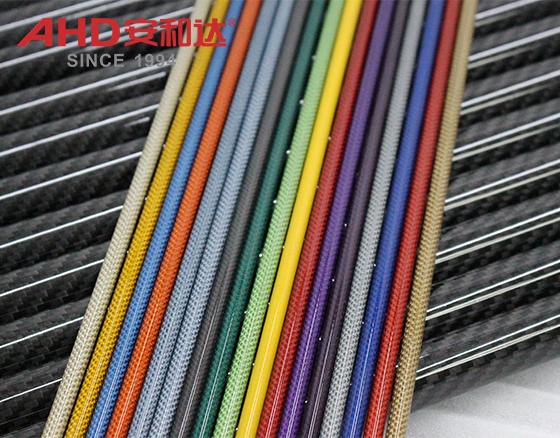
Colorful Carbonfiber Tube