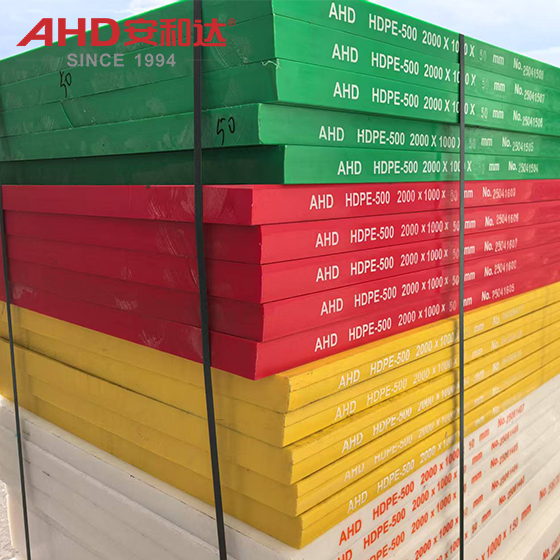
When purchasing plastic sheets and rods, are you struggling with how to choose the molding process for plastic sheet production? Are you worried about low single-mold production capacity of compression molding, long mold opening cycle of injection molding, fearing that recycled materials will be passed off as new materials, and opaque supplier pricing? AHD has been deeply involved in plastic sheet manufacturing methods for 32 years, using professional data to help you understand the applicable scenarios and advantages and disadvantages of injection, extrusion, and compression molding, so you can make accurate selections and avoid pitfalls.
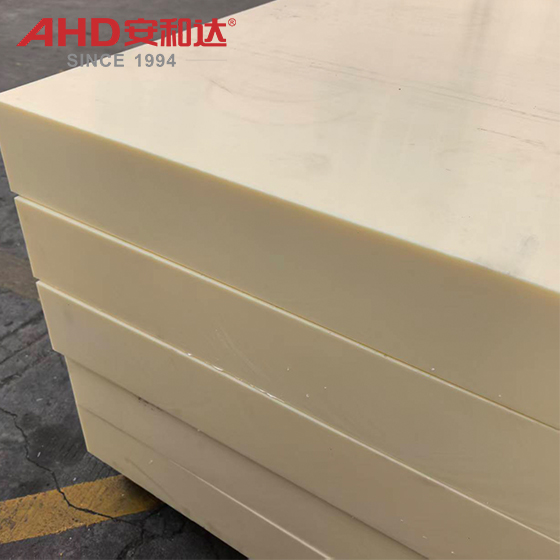
I. Injection Molding: The Preferred Choice for High-Precision Mass Production
Injection molding is a process where molten plastic is injected under high pressure into a closed mold, and then quickly demolded after cooling. It is the mainstream solution for high-precision plastic rod molding.
Core Advantages:
Extremely high precision, suitable for complex structures and precision parts.
High degree of automation, suitable for high-volume plastic rod production.
Wide material compatibility, covering most engineering plastics such as ABS, PC, POM, and PA.
Main Limitations:
Complex mold design, long mold opening cycle (4–8 weeks), high initial investment.
Unsuitable for producing large plastic sheets and ultra-thick products, prone to internal stress.
High unit cost and low cost-effectiveness for small-batch production.
Applicable Scenarios:
Precision plastic parts and complex plastic parts in the electronics and automotive industries.
Mass production of standardized engineering plastic sheets and rods (millions or more).
Industrial parts with stringent requirements for dimensional stability and surface finish.
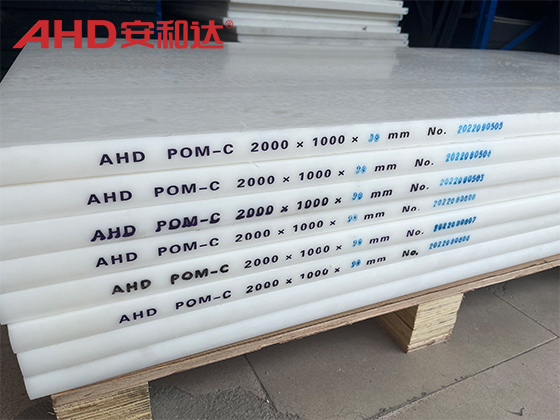
II. Plastic Sheet Extrusion Process: The King of Continuous, High-Efficiency Long Products
Extrusion molding uses a screw to continuously push molten plastic through a die, where it cools and forms sheets or rods with a fixed cross-section. It is the core process for extrusion molding applications for plastic sheets.
Core Advantages:
Continuous production, extremely high efficiency, and unit cost decreases significantly with increasing output.
Capable of producing ultra-long and ultra-large plastic sheets and rods, with no theoretical upper limit on length.
Highly versatile equipment, quick changeover, suitable for mass production of standard specifications.
Products have uniform density, low internal stress, and meet industry standards.
Main Limitations:
Fixed cross-sectional shape, difficult to produce complex irregular shapes.
Uneven internal cooling of ultra-thick sheets can easily lead to shrinkage cavities and performance fluctuations.
Strict requirements on the melt flow index of raw materials; unsuitable for some high-viscosity materials.
Applicable Scenarios: Mass production of standard-sized plastic sheets (such as PP Sheet, HDPE Sheet, and PC Sheet) and long rods.
The construction, packaging, and chemical industries require sheet materials with high requirements for length and flatness.
This necessitates large-volume orders with a plastic sheet manufacturing process that offers fast lead time.
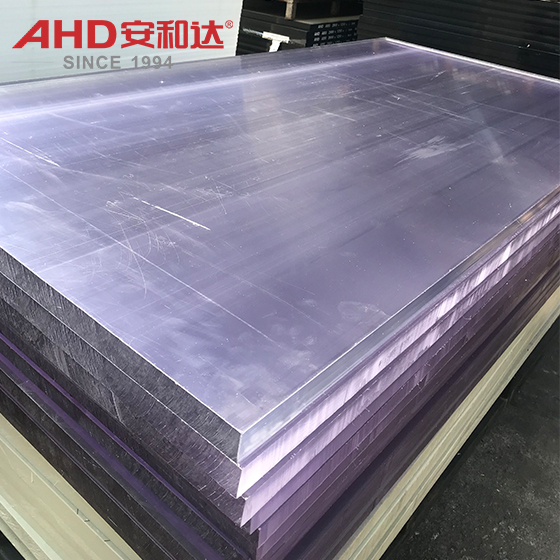 AHD Polycarbonate Sheet
III. Compression Molding for Plastic Sheets: Experts in Thick Sheet Customization and Special Materials
Compression molding involves placing a solid plastic preform into a heated mold and curing it under high pressure and temperature. It is a key selection option when using compression molding for plastic plate manufacturing.
Core Advantages:
Simple mold structure, low cost, short development cycle (1–2 weeks), suitable for small-batch customization.
Capable of producing ultra-thick sheets and large non-standard parts, with no internal stress and uniform performance.
Suitable for special materials that are difficult to process by extrusion/injection molding, such as PTFE, UHMWPE, and thermosetting plastics.
Complies with GB/T 40169-2021 and other ultra high molecular weight polyethylene sheet standards.
Main Limitations:
Low single-mold capacity, long cycle time (10–60 minutes/piece), not suitable for mass production.
Surface finish is lower than injection molding, requiring subsequent grinding.
Low automation level, high labor costs.
Applicable Scenarios: Thick-walled plastic sheets, non-standard customized parts, and small-batch sample production.
Special molding requirements for high-performance engineering plastics such as PTFE Sheet and PPS Sheet.
Components in the aerospace, medical, and chemical industries that require extremely high material purity and performance consistency.
Comparison of the three core processes
| Injection molding | extrusion molding | compression molding | |
| Production Efficiency | High | Extremely High (Continuous Production) | Low |
| Mold Cost | High (Complex and Precision) | Medium (Shaping Die) | Low (Simple Structure) |
| Suitable for bulk orders | Large-volume orders (millions of units) | Large-volume orders (standard products) | Small-volume orders / Custom orders |
| Complexity | Extremely High (Complex 3D Structure) | Low (Fixed Cross-Section) | Medium (Simple Irregular Shape) |
| Representative materials | PC, POM, PA, ABS | PP, PE, PVC, PC, POM, ABS and Most engineering plastic | PTFE, UHMWPE, thermosetting plastics |
Selection Conclusion:
For high precision, complex structures, and large-volume production: Injection molding is the preferred choice.
For long dimensions, high efficiency, and standardized products: Extrusion molding is the preferred choice.
For thick plates, special materials, and small-batch customization: Compression molding is the preferred choice.

AHD: 32 Years of Professional Selection, Guaranteed Quality and Delivery
As a plastic sheet and rod manufacturer with 32 years of experience, AHD is proficient in engineering plastic rod forming processes and a full range of plastic sheet rod molding processes for industrial use. We can provide the optimal process solution based on your material, size, precision, and batch requirements.
Our full range of engineering plastic sheets and rods boasts a high performance compliance rate; we refuse to use recycled materials or inferior materials.
Factory direct supply, transparent pricing, no hidden mold opening fees or wastage fees, and stable delivery times.
We offer free samples, selection advice, and performance test reports, providing a one-stop solution to your procurement pain points.
Still struggling to determine which molding process is best for plastic sheets? Contact AHD now for an accurate quote, making your plastic sheet and rod procurement more efficient, cost-effective, and worry-free!