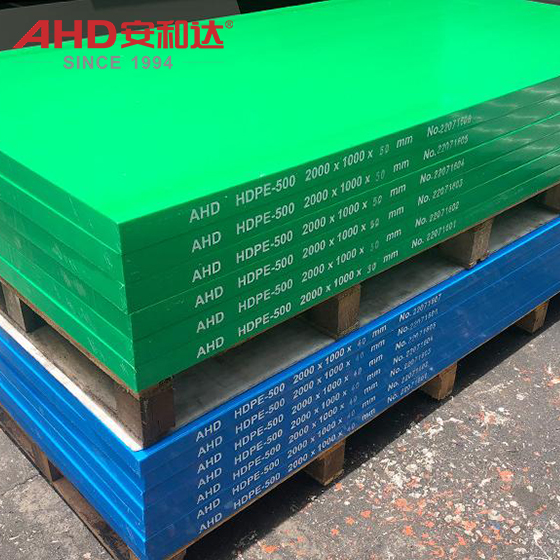
Procuring low-cost, general-purpose structural materials often presents challenges such as substandard material performance, recycled materials being passed off as 100% new materials, opaque pricing, and delayed delivery. AHD offers professional selection solutions to help you balance strength, toughness, and cost when choosing between PP, ABS, and HDPE sheets for structural parts, thereby reducing secondary processing losses.
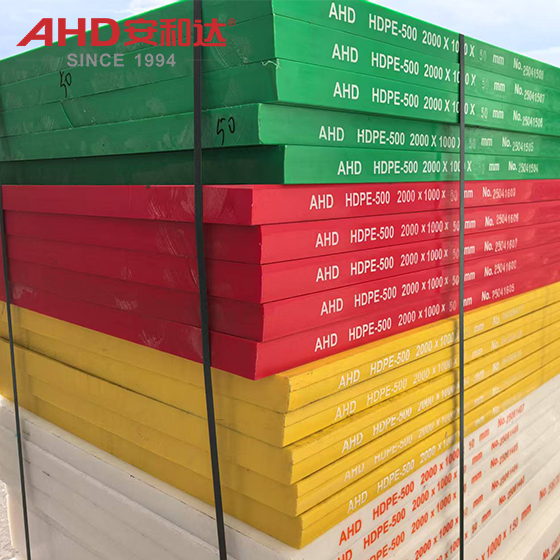
Comparison of performance data between PP, ABS, and HDPE
| Properties | PP | ABS | HDPE |
| Tensile Strength (MPa) | 30-40 | 40-55 | 20-30 |
| Notched impact strength | 5–8 (room temperature), brittle at low temperatures | 15–25 (stiffness-toughness balance) | 15–20 (≥15 at -20℃) |
| Elongation at break (%) | 100-600 | 10-50 | 100-1000 |
| Density (g/cm³) | 0.90-0.91 | 1.04–1.06 | 0.94-0.97 |
| Heat distortion temperature (°C) | 100-120 | 70-105 | 80-90 |
| Cost | last of these three | first of these three | second of these three |
PP is the cheapest plastic for structural parts, followed by HDPE, with ABS being the most expensive. The material cost per kg for PP, ABS, and HDPE is very affordable, with a significant cost advantage when purchasing in bulk.
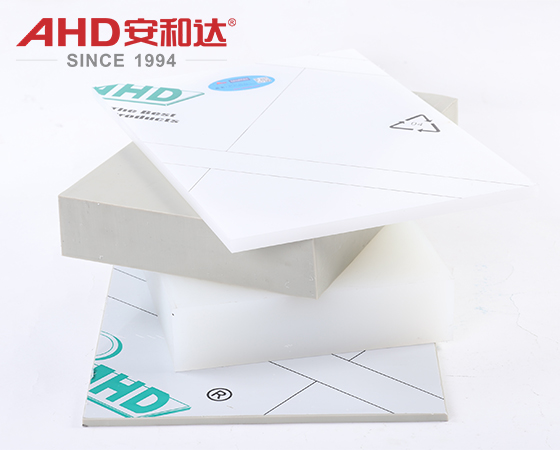
Strength-Toughness Trade-off: Optimal Choice for Different Scenarios
1. PP: Lightweight and Low-Cost, Excellent Toughness at Room Temperature (Suitable for Light-Load Structural Components)
PP has the lowest density and price. It exhibits excellent toughness and elongation at room temperature, is resistant to chemical corrosion, and meets the requirement of low-cost structural plastic with good toughness.
Advantages: The first choice for cost-effective plastic materials for mass production. Molding shrinkage is 1.5%, and processing loss is low. Suitable for food contact applications, light-load turnover boxes, and internal components of household appliances.
Disadvantages: Impact strength drops sharply at low temperatures (<0℃), and rigidity is insufficient, making it unsuitable for heavy-load and outdoor low-temperature scenarios.
2. ABS: Balanced Stiffness and Toughness, Strong Overall Performance (Suitable for Precision Structural Components)
ABS combines high strength and high toughness, has good dimensional stability (shrinkage rate 0.4%–0.7%), is easy to electroplate and paint, and is a versatile material for general structural components.
Advantages: Best plastic for general structural parts, suitable for electronic housings, automotive interiors, and precision instrument brackets, meeting both appearance and strength requirements. 3. HDPE: High toughness and impact resistance, cold-resistant and durable (suitable for heavy-duty/low-temperature applications).
3. HDPE boasts outstanding impact toughness and cold resistance, maintaining high impact resistance even at -20℃. It is resistant to acid and alkali corrosion, making it suitable for harsh environments.
Advantages: Budget plastic selection for industrial components, suitable for heavy-duty turnover boxes, chemical containers, outdoor structural components, and meets pallet standards.
Disadvantages: Lower rigidity and heat resistance than PP/ABS, lower surface hardness, and easily scratched.
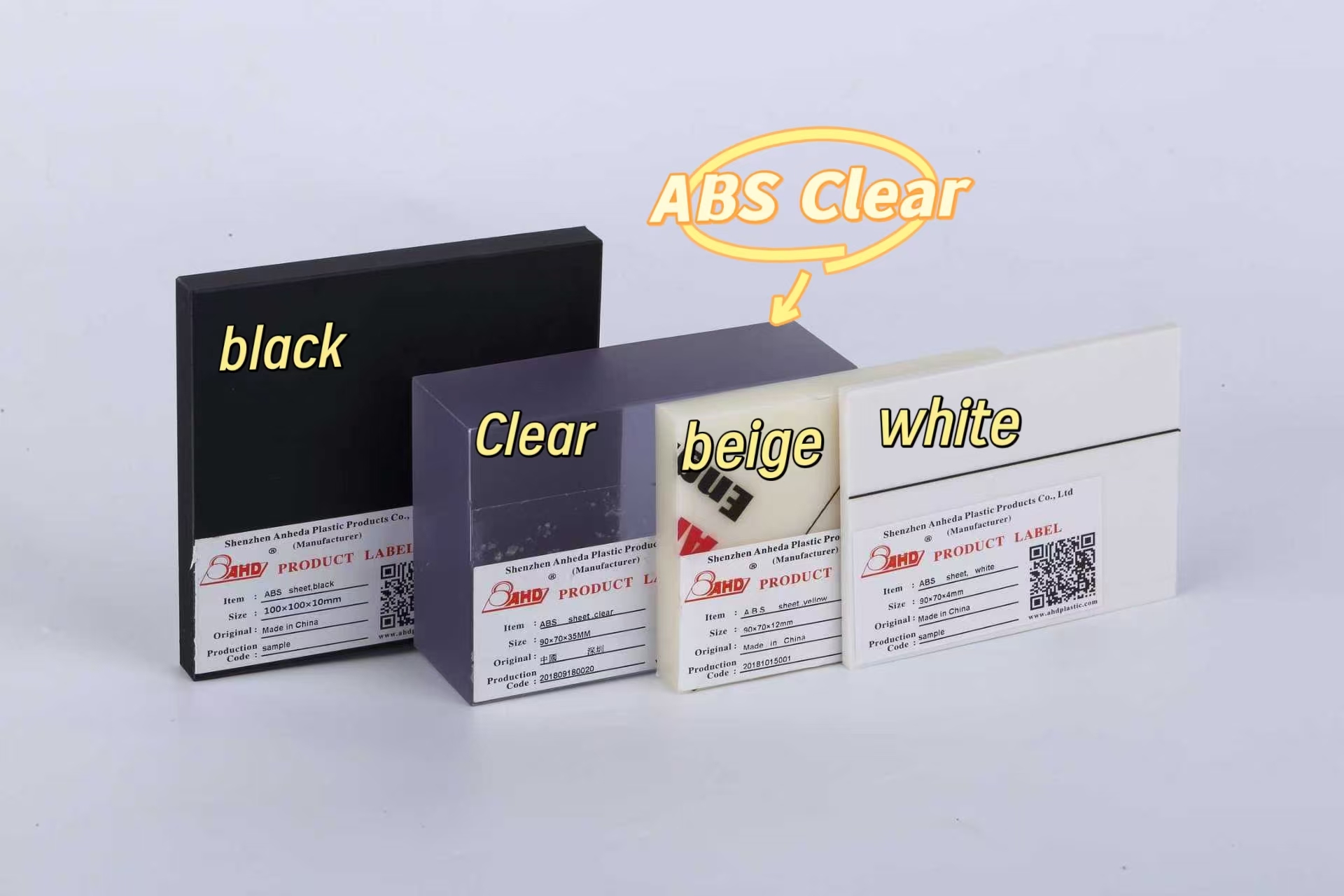
Trade-offs in Secondary Processing Costs: Key Selection for Minimizing Losses
1. Comparison of Processing Compatibility
PP: Easy to weld and cut, processing temperature 160–180℃, but prone to warping; suitable for simple cutting and hot bending; low secondary processing cost.
ABS: Easy to injection mold, electroplat, and spray; high dimensional accuracy; suitable for complex structural parts; high added value from secondary processing; however, mold opening and electroplating costs are relatively high.
HDPE: Excellent weldability and impact resistance; suitable for splicing large structural parts; low processing loss; however, surface treatment is difficult.
2. Cost Optimization Recommendations
Light load, room temperature, simple structure: Choose PP to maximize the advantages of cost-effective plastic materials for mass production and reduce raw material and processing costs.
Precision, high appearance requirements: Choose ABS to balance performance and processability, reducing rework losses.
Heavy load, low temperature, corrosion resistance: Choose HDPE to improve durability and reduce long-term maintenance costs.
Industry-Specific Solutions + AHD Factory Advantages
1. Industry-Specific Selection Recommendations
Electronics & Electrical Appliances: ABS → Balanced rigidity and toughness + easy processing; PP → Low cost + insulation.
Automotive & Parts: PP → Lightweight + Low cost; HDPE → Corrosion resistant + Impact resistant.
Industrial & Warehousing: HDPE → Heavy load + Cold resistance; PP → Low cost + Easy cleaning.
Food & Medical: PP → Food grade + Temperature resistant; HDPE → Non-toxic + Corrosion resistant.
2. AHD Core Advantages (32 Years of Plastic Sheet & Rod Manufacturing)
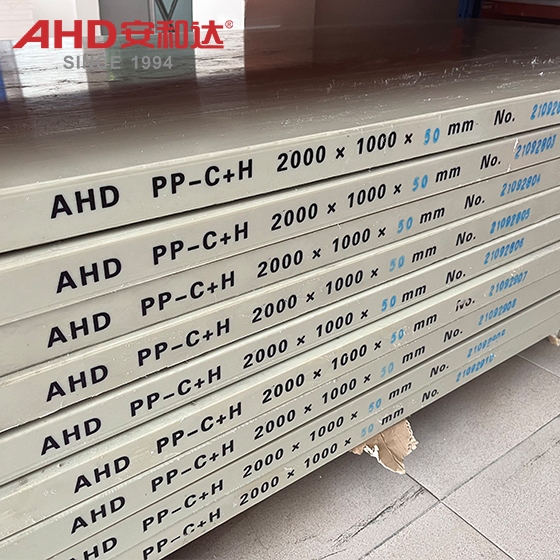
Full Range Supply: AHD PP Sheet/ABS Sheet/HDPE Sheet, complete specifications, supports customized thickness, size, color, and modification.
Quality Assurance: Produced from 100% new materials, high performance compliance rate, rejects recycled materials.
Transparent Costs: Direct factory supply, no middlemen, timely delivery, guaranteed supply plan.
Professional Services: We provide material selection advice, performance test reports, sample forms, and samples to help you choose the right materials accurately.
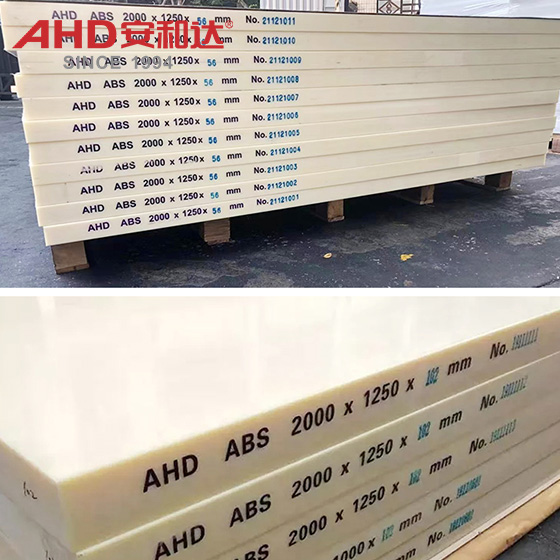
Choosing the right low-cost plastic structural materials, balancing strength, toughness, and secondary processing costs, is key to controlling the overall cost of structural components. AHD, a professional plastic sheet and rod manufacturer with 32 years of experience, offers a full range of PP, ABS, and HDPE sheets and customization services. Our brand-new, 100% new materials help you avoid material pitfalls; mass production reduces procurement costs; and our large inventory meets your fast delivery needs.
Contact AHD now to get free samples, sample orders, selection advice, and performance test reports to make your plastic material selection for cost-effective components more accurate and efficient!