

Transparent ESD Materials: A Complete Guide to ESD PVC, ESC PMMA, ESD PC & ESD ABS
In electronic manufacturing, cleanrooms, and lab environments, static electricity is a hidden threat—damaging sensitive components, attracting dust, and compromising product quality. For applications that require both visibility and electrostatic protection, transparent ESD materials have become indispensable. But with options like ESD PVC, ESC PMMA, ESD PC, and ESD ABS, how do you choose the right one for your needs? This guide breaks down their key features, applications, and solutions to the most common pain points buyers face when selecting transparent anti-static plastic sheets and rods.
What Are Transparent ESD Materials?
Transparent ESD (Electrostatic Dissipative) materials are specialized plastics designed to control static electricity while maintaining high light transmission. Unlike regular transparent plastics, they have a surface resistance between Ω10^6–10^9Ω the safe range for static control, preventing electrostatic discharge (ESD) that harms sensitive electronics. Common types include ESD PVC, ESC PMMA (also known as anti-static acrylic), ESD PC (clear polycarbonate ESD), and ESD ABS—each with unique properties tailored to specific industrial needs.
Whether you’re looking for ESD safe clear plastic boards for electronic assembly lines, static control transparent plastic rods for lab equipment, or clear anti-static plastic sheets for semiconductor packaging, understanding the differences between these materials is critical to avoiding costly mistakes.
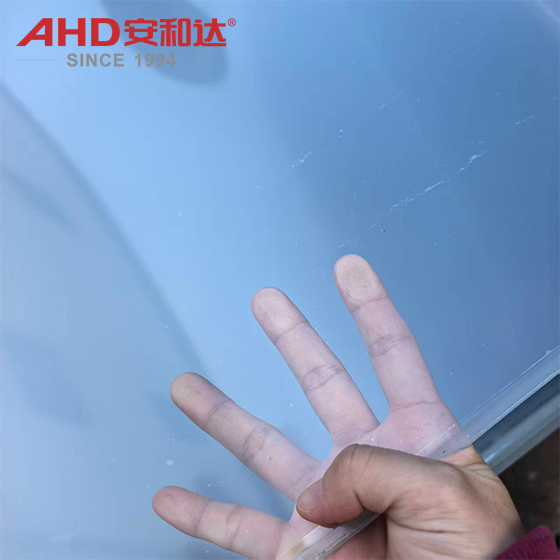
AHD Anti-Static Acrylic Plastic Sheet
Key Types of Transparent ESD Materials: ESD PVC vs ESC PMMA vs ESD PC vs ESD ABS
Not all transparent ESD materials are created equal. Below is a detailed breakdown of each type, their performance, and ideal applications—helping you match the right material to your project.
1. ESD PVC (Electrostatic Dissipative PVC)
ESD PVC is one of the most cost-effective transparent ESD materials, making it a popular choice for budget-conscious buyers. It offers reliable static dissipation with a surface resistance of Ω10^6–10^9Ω ohms and good transparency, though slightly lower than PMMA or PC. ESD PVC is easy to cut, bend, and fabricate, making it ideal for non-high-temperature applications.
Ideal Applications: Electronic assembly line covers, PCB packaging, static control workstations, and general industrial enclosures. It’s especially well-suited for environments where cost is a priority and temperatures stay below 60°C (140°F).
Common Pain Points Solved: ESD PVC addresses the need for affordable static control without sacrificing transparency. Unlike low-quality ESD materials that lose performance after wiping or exposure to humidity, high-quality ESD PVC maintains stable resistivity for long-term use, reducing maintenance costs.
2. ESC PMMA (Anti-Static Acrylic)
ESC PMMA—also called anti-static acrylic—is the go-to choice for applications requiringhigh transparency (up to 92% light transmission, similar to regular acrylic) and static control. It features permanent anti-static properties (no temporary coatings that wear off) and a surface resistance of Ω10^7–10^9Ω ohms, making it perfect for environments where visibility is critical.
Ideal Applications: Semiconductor wafer carriers, lab equipment windows, display cases for sensitive electronics, and cleanroom partitions. It’s also used in medical device enclosures where clarity and ESD safety are non-negotiable.
Common Pain Points Solved: Many buyers struggle to find transparent materials that don’t sacrifice ESD performance for clarity—ESC PMMA eliminates this trade-off. Its permanent anti-static layer means no frequent re-coating, saving time and reducing long-term costs. It also resists dust accumulation, a major issue in cleanroom and semiconductor environments.
3. ESD PC (Clear Polycarbonate ESD)
ESD PC is the most durable option in the transparent ESD family, offering exceptional impact resistance (250x stronger than glass) and high-temperature tolerance (up to 120°C / 248°F). It maintains a surface resistance of Ω10^6–10^9Ω ohms and good transparency (up to 88% light transmission), making it ideal for harsh or high-stress environments.
Ideal Applications: Medical device enclosures, industrial machine guards, electronic test fixtures, and applications where impact resistance or high temperatures are a concern. It’s also used in aerospace and automotive electronics where durability is critical.
Common Pain Points Solved: Regular ESD materials often crack during cutting or bending, but ESD PC’s flexibility and impact resistance make it easy to fabricate without damage. Its high-temperature resistance also expands its use case beyond what ESD PVC or PMMA can handle, solving the problem of material failure in hot environments.
4. ESD ABS (Static Dissipative ABS)
ESD ABS combines the strength and rigidity of standard ABS with electrostatic dissipative properties, offering a surface resistance of Ω10^6–10^9Ω ohms. It has moderate transparency (lower than PMMA or PC) but excels in impact resistance and chemical resistance, making it a versatile choice for structural components.
Ideal Applications: Static control workstations, electronic device housings, tool holders, and industrial bins for sensitive components. It’s often used in applications where structural integrity is as important as ESD safety.
Common Pain Points Solved: Buyers often need a material that can handle heavy use without losing ESD performance—ESD ABS’s durability and chemical resistance make it perfect for high-traffic industrial settings. It also bonds well with adhesives and can be painted, offering flexibility in design.
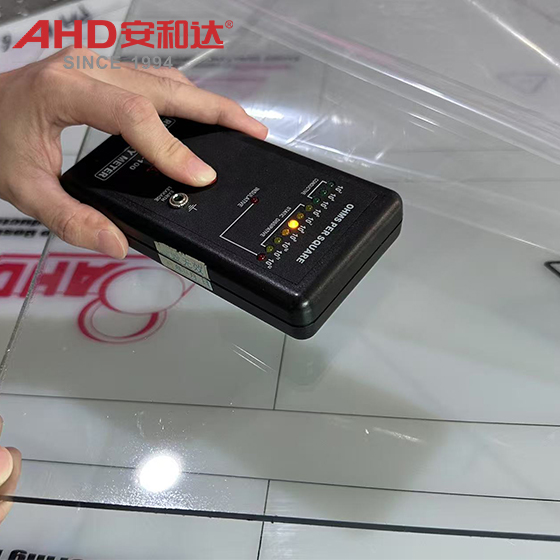
AHD Antistatic Polycarbonate Sheet
How to Choose the Right Transparent ESD Material (Buyer’s Guide)
With four main types to choose from, selecting the right transparent ESD material can be overwhelming. Here’s a step-by-step guide to help you make an informed decision—addressing the most common buyer confusing points:
Step 1: Define Your Application Requirements
Transparency Needs: If you need maximum clarity (e.g., lab windows), choose ESC PMMA. For moderate clarity, ESD PC or ESD PVC works well.
Temperature Range: For high temperatures (above 60°C), ESD PC is the best choice. ESD PVC and ESC PMMA are better for low-to-moderate temperatures.
Impact Resistance: If your application involves heavy use or potential impact (e.g., machine guards), ESD PC or ESD ABS are ideal.
Budget: ESD PVC is the most cost-effective, followed by ESD ABS, ESC PMMA, and ESD PC (the most premium option).
Step 2: Verify ESD Performance
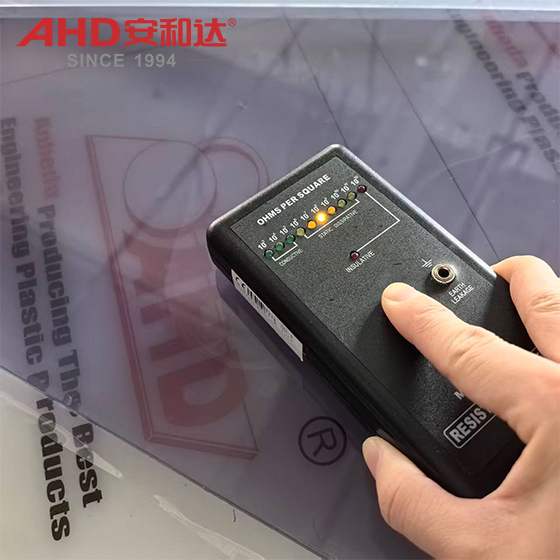
Avoid the common pitfall of buying materials with exaggerated ESD performance. Look for materials with a surface resistance of Ω10^6–10^9Ω ohms —this ensures they meet industry standards and will protect your components. Low-quality materials may have inconsistent resistivity, leading to static damage and costly rework.
Step 3: Consider Fabrication and Customization
Many buyers struggle with ESD materials that are difficult to cut, bend, or customize. ESD PVC and ESC PMMA are the easiest to fabricate, while ESD PC and ESD ABS require specialized tools (but offer greater durability). Choose a supplier that offers custom sizes, thicknesses, and fabrication services to avoid compatibility issues with your equipment.
Common Buyer Pain Points & Solutions
Pain Point 1: Transparency and ESD Performance Can’t Coexist
Buyers often have to choose between clear plastics (no ESD protection) or ESD plastics (opaque). This is a major issue for applications that require visibility (e.g., semiconductor processing, lab equipment).
Solution: Opt for ESC PMMA (maximum clarity) or ESD PC (high clarity + durability). These materials are engineered to maintain both transparency and ESD performance, eliminating the trade-off.
Pain Point 2: High Cost of Poor Quality
Choosing the cheapest ESD material may seem like a cost-saving measure, but it often leads to higher long-term costs. Poorly performing materials cause static damage to sensitive components, leading to rework, scrap, and lost revenue.
Solution: Invest in high-quality, certified ESD materials. While they may have a higher upfront cost, they reduce the risk of static damage and lower maintenance costs—saving you money in the long run. Look for suppliers with ISO certification and a track record of delivering consistent performance.
Pain Point 3: Difficulty Finding Custom Sizes
Many standard ESD materials come in fixed sizes, which can lead to waste or compatibility issues with your specific equipment or project.
Solution: Work with a supplier that offers custom cutting, bending, and fabrication. This ensures you get the exact size and shape you need, reducing waste and ensuring a perfect fit for your application.
Why Choose Our Transparent ESD Materials?
At AHD, we offer high-quality transparent ESD materials—including ESD PVC, ESC PMMA, ESD PC, and ESD ABS—designed to solve the most common buyer pain points.
- with consistent surface resistance of Ω10^6–10^9Ω
- Available in custom sizes, thicknesses, and configurations
Whether you need ESD PVC, ESC PMMA, ESD ABS, or ESD PC, we have the solution. Contact us today to get a custom quote and learn more about the materials and the market.