

Prone to leakage in humid environments, performance degradation at high temperatures, and difficulty balancing cost and reliability are core pain points in selecting electronic insulation materials. Bakelite sheets have slightly higher moisture absorption, leading to a decrease in insulation resistance under high humidity; FR4 sheets offer dimensional stability, moisture, and heat resistance, but at a higher cost. FR4 fiberglass sheets have become mainstream due to their balanced performance, but how do you choose the most cost-effective option between FR4 and Bakelite? The following in-depth comparison of electrical performance, flame retardancy, cost, and application scenarios helps you make the selection.
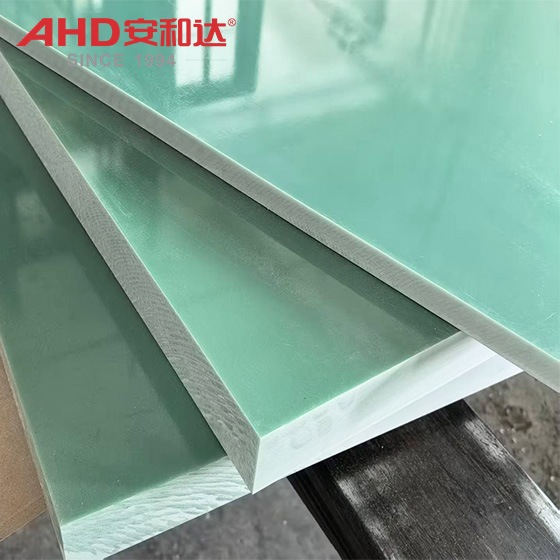 AHD FR4 Glass Fiber Sheet
Ⅰ. Comparison of Basic Attributes and Core Electrical Performance of FR4 and Bakelite
1.1 Material Definition and Industry Standards
FR4 Glass Fiber Sheet: Epoxy glass fiber laminate. "FR" represents flame retardancy, meeting the UL94 V-0 flame retardant standard, and is a mainstream electronic insulation material according to IPC-4101 specifications.
Bakelite Sheet (Phenolic Resin Board): Phenolic laminated paperboard/fabric board, commonly known as bakelite, is a phenolic resin composite material that conforms to the industry standard GB/T 1303.1-2015.
1.2 Comparison
| Performance | FR4 Glass Fiber Sheet | Bakelite Sheet | Performance Differences |
| Volume Insulation Resistance | 10¹²-10¹⁵Ω·cm | 10⁹-10¹¹Ω·cm | FR4 insulation is 100-1000 times higher, providing stronger leakage protection. |
| Dielectric Strength (Breakdown Voltage) | 30-40kV/mm | 15-25kV/mm | FR4 has stronger high-voltage withstand capability, suitable for high-voltage equipment. |
| Dielectric Constant (Dk, 1MHz) | 4.2-4.7 | 4.5-5.5 | FR4 is more stable; FR4 vs. Bakelite offers superior signal integrity for PCBs. |
| Loss Factor (Df) | 0.015-0.025 | 0.03-0.05 | Bakelite has high signal loss at high frequencies and is not suitable for high-speed circuits. |
| Moisture Absorption (24h) | ≤0.1% | 0.5%-1.0% | The moisture resistance of FR4 vs. Bakelite differs significantly. |
| Glass Transition Temperature (Tg) | 130-140℃ (standard) | 90-110℃ | FR4 has stronger high-temperature resistance and better thermal stability in high humidity. |
| Flame retardant rating: | UL94 V-0 | UL94 V-1/V-2 | FR4 offers superior flame retardancy and self-extinguishes immediately upon removal of flame. |
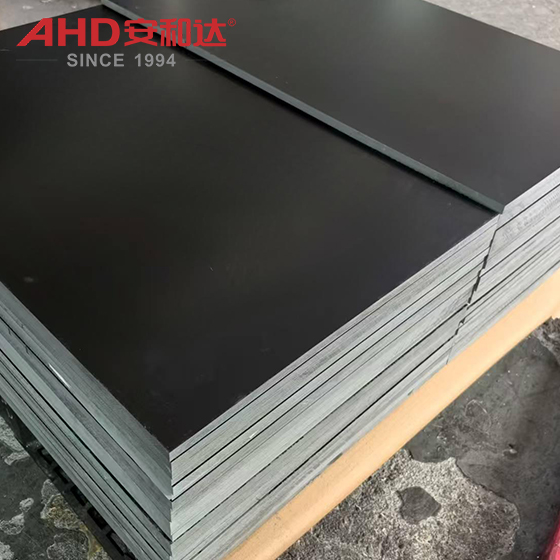
AHD Black FR4 Fiberglass Sheet
1.3 Insulation Stability: Performance in Humid and High-Temperature Environments
Bakelite sheets have high water absorption, leading to decreased insulation resistance in humid environments and a tendency for electrical leakage. Long-term use also increases the risk of aging and cracking.
FR4 Sheet, on the other hand, have low water absorption and high thermal conductivity (Tg). Their insulation performance degrades minimally under high temperature and humidity conditions. FR4 demonstrates a clear advantage in insulation stability compared to Bakelite, ensuring long-term circuit safety.
Ⅱ. Flame Retardant: UL94 Standard and Safety Reliability
2.1 FR4 Flame Retardant Advantages
FR4 contains brominated epoxy resin, is UL94 V-0 flame retardant, self-extinguishing within 30 seconds of flame contact, does not drip or propagate flame, and meets mandatory safety requirements for electronic equipment. Suitable for high-voltage equipment, industrial control, automotive electronics, and other applications with stringent flame retardant requirements.
2.2 Bakelite Insulation Properties Flame Retardant Limitations
Bakelite is mostly UL94 V-1/V-2 grade, with weaker flame retardancy than FR4. It easily produces toxic fumes when burning and is prone to embrittlement and a sharp drop in mechanical strength at high temperatures. Only suitable for low-voltage, normal-temperature, non-critical insulation applications, such as ordinary switches and low-end electrical appliance housings.
2.3 Flame Retardant Selection Conclusion
Flame retardant rating FR4 vs Bakelite (UL94): FR4 has a higher flame retardant rating and stronger safety, making it the first choice for electronic insulation; Bakelite is only suitable for scenarios with very low budgets and non-core safety requirements.
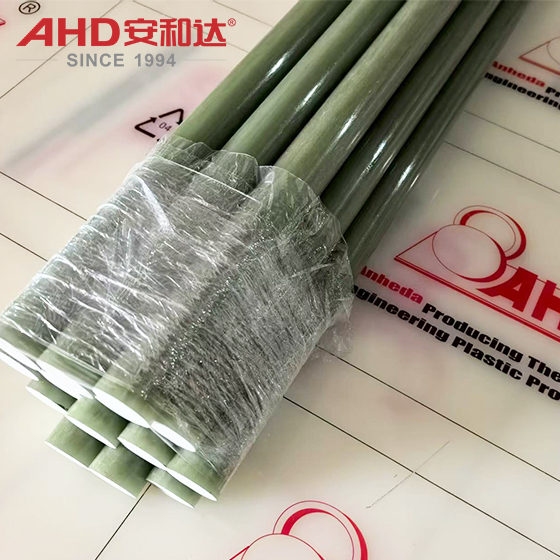
AHD FR4 Fiberglass Rod (FR4 Rod)
Ⅲ. Balancing Bakelite vs FR4 Cost and Performance
3.1 Material Price Comparison
FR4 Glass Fiber Sheet: High cost, thickness 1-50mm, unit price decreases with larger batch sizes.
Bakelite Sheet: Low cost, 30%-50% cheaper than FR4, but with significant performance drawbacks.
3.2 Life Cycle Cost (LCC)
Bakelite: Low initial purchase cost, but rapid electrical performance degradation over time, prone to failure in humid/high-temperature environments, high equipment maintenance and replacement costs, and higher long-term total costs.
FR4: Higher initial cost, but superior long-term durability compared to Bakelite, stable long-term performance, low failure rate, low maintenance, and outstanding cost-effective insulating material properties.
3.3 Mass Production and Processing Costs
FR4 vs Bakelite for mass production cost: FR4 has mature technology, high processing yield, and high precision in cutting, drilling, and milling; Bakelite is relatively more prone to chipping and cracking, and has a high processing loss rate.
 AHD Bakelite Plastic Sheet
Ⅳ. Application Scenarios: When to Choose FR4? When to Choose Bakelite?
4.1 Scenarios Where FR4 Glass Fiber Sheet is Preferred:
PCB Manufacturing: Mid-to-high frequency circuit boards, multilayer PCBs, industrial control motherboards; FR4 dielectric strength and signal stability are well-matched.
High-Voltage Electrical Equipment: Insulating gaskets, arc-damping plates, high-voltage switch components; suitable for high-voltage insulation requirements.
Humid/High-Temperature Environments: Outdoor electronics, new energy equipment, industrial equipment in humid and hot regions; FR4 vs. Bakelite thermal stability in high humidity is more reliable.
Precision Electronics and High-Frequency Scenarios: Communication equipment, automotive electronics, medical instruments; ensuring signal integrity.
Flame-Retardant Safety Scenarios: Rail transit, avionics, energy storage equipment; meeting the UL94 V-0 mandatory flame-retardant standard.
4.2 Scenarios Where Bakelite Sheet is Optional:
Low-Voltage General Electrical Appliances: Low-end switches, small appliance housings, non-critical insulating gaskets; extremely low budget, dry environment.
Disposable/Short-Term Use Products: Toys, simple electronic components, with low requirements for insulating materials for electronics.
Non-Load-Bearing Insulating Components: Low-frequency, normal-temperature, dry environments, without high-temperature, high-humidity, or high-voltage risks.
4.3 Core Selection Principles
Cost balance between FR4 and Bakelite: Select FR4 for core equipment, critical insulation, and harsh environments to ensure reliability; select Bakelite for non-core, low-voltage, and dry scenarios to control initial costs.
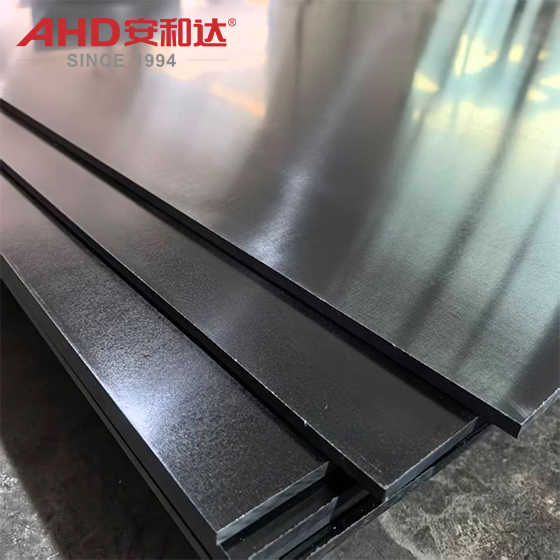
AHD Black Bakelite Plate
Ⅴ. AHD Manufacturer Advantages: 32 Years of Focus, Providing High-Performance Insulating Sheet and Rod Solutions
AHD boasts 32 years of experience in manufacturing insulating engineering plastic sheets and rods, supplying high-quality FR4 Glass Fiber Sheets and Bakelite Sheets, with product performance meeting standards.
AHD Core Advantages
Stable Quality: FR4 complies with UL94 V-0, ensuring precise and controllable electrical properties; Bakelite strictly adheres to national standards, guaranteeing stable performance.
Customized Services: Customizable thickness (0.5-100mm), size, and ESD protection models are available, providing ESD-safe FR4 and Bakelite materials.
Factory Direct Supply: No middlemen; Bakelite is more cost-effective than FR4, offering even better value for bulk purchases.
Professional Selection: Our engineering team provides selection advice and performance test reports, helping you balance FR4 material cost vs. performance value.
Guaranteed Delivery Time: We maintain a large inventory; bulk orders are delivered within 7-15 days, adapting to mass production needs.
Ⅵ. Summary: Insulation vs. Flame Retardant Material Selection – Balancing Performance and Cost
Key Differences between FR4 and Bakelite: FR4 excels in insulation resistance, dielectric properties, moisture and heat resistance, flame retardancy, and durability, making it the mainstream choice for insulating materials in electronics. Bakelite is only slightly cheaper, but its performance is less robust, limiting its applicability.
Final Selection Recommendation: For long-term reliability, safety, flame retardancy, and adaptability to harsh environments, choose AHD FR4 Glass Fiber Sheet. For extremely low budgets and non-core low-pressure drying applications, choose AHD Bakelite Sheet.
Contact AHD now for a customized quote and technical solutions, making your electronic insulation material selection more reliable and economical! AHD plastic Sheet and Rod – Factory Direct Supply, Quality Assurance, Professional Selection!
