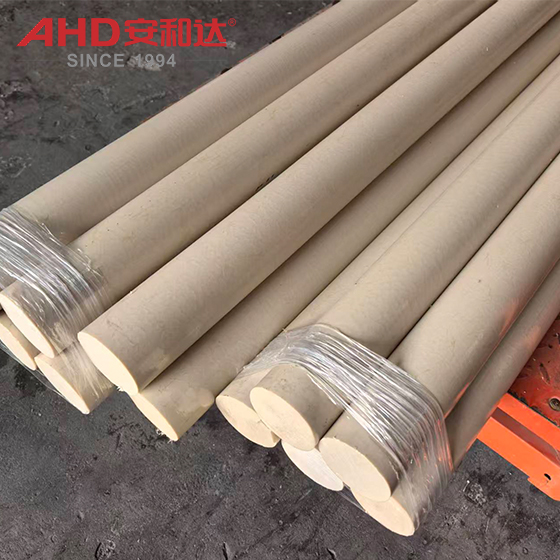
If you choose the wrong material, the component will fail prematurely; if you choose the right material, the life is doubled.
In such applications as mechanical transmission, automotive parts and industrial gears, the frictional properties of plastics have a direct impact on the service life and operating cost of the parts.
Today, we systematically describe the selection logic of modified plastics considering their friction properties and show you how to avoid common pitfalls.
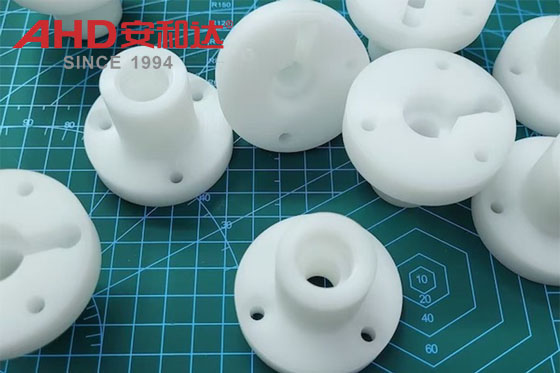
When selecting a material for its tribological performance, consider these five points:
The tribological properties of a material are not a single number. Before choosing a material, it must pass five tests:
1. Hardness: The material’s “armor” against abrasive wear. Higher hardness keeps hard particles from penetrating the surface.
2. Thermal Conductivity: Measure of heat dissipation efficiency. At high speed and heavy load the heat cannot be dissipated quickly and may cause softening or even degradation of the surface.
3. Chemical Resistance: The “ resilience” of the material against oils, solvents and acid/ alkali media. It is to be compared separately on the basis of the contact medium.
4. Thermal stability: Two temperature indices Tq and Tm are used to describe the thermal stability. The working temperature should be far away from these two critical points, which is a strict threshold for high temperature operation.
5. Surface Roughness: Not always better to be smoother. In fact, lubricated conditions could be more likely to induce the formation of a lubricating oil film with moderate roughness.
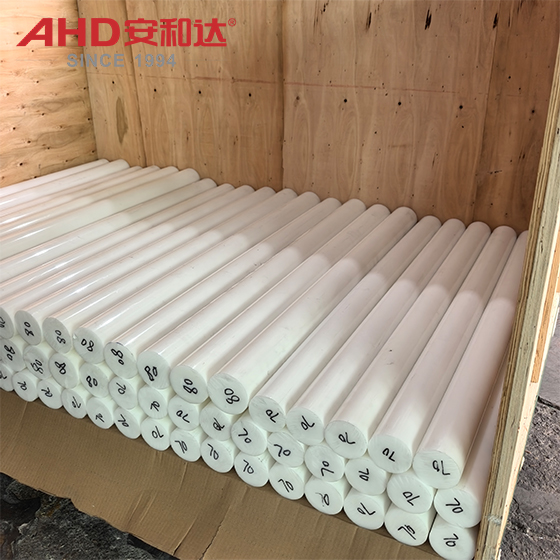
AHD POM Rod (Polyoxymethylene Rod)
PV Value: Operating Conditions are the “Captain”
Many engineers use just material handbooks as a routine and problems can arise quite easily.
The PV value (pressure Px velocity V) is a key parameter describing the limit beyond which a material will not fail thermally.
Core Principle The same POM ( polyoxymethylene ) material can last for years under oil lubrication but fail within hours under dry friction . It is of only academic interest to discuss materials independent of the operating conditions.
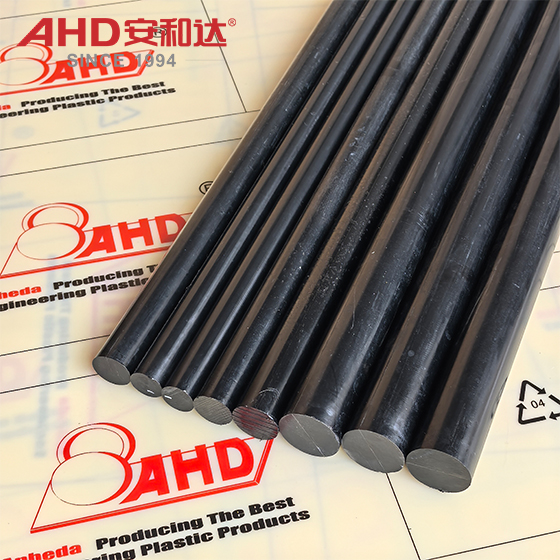
AHD PA66 Nylon Rod
Wear Resistant Plastics: 7 Types to Help You Choose the Right One
1.General Transmission Preferred Material: Nylon (PA66/PA6)
Advantages: Widest application, dry friction wear resistance is about 4 times of POM, extremely high cost-effectiveness.
Disadvantages: Sensitive to moisture. Moisture absorption reduces hardness and stiffness. Use with care in precision sized parts.
Advanced: In the case of high humidity and temperature, PPA (semi-aromatic nylon) can be considered.
2. Precision Transmission Specialist – Polyoxymethylene (POM)
Core Selling Proposition: Small difference between coefficients of dynamic and static friction. It is ideal for precision gears and valves, offering low starting torque and smooth operation without any "stick-slip" feeling.
3. UHMW-PE: Extreme Cold/Impact Resistance Standard
Advantages: King of unfilled resins in terms of wear resistance, very high impact toughness and unmatched in ultra low temperature conditions.
4. Friction Coefficient of Pressure Reducer: PTFE
Positioning: It’s the best supporting actor, not the main actor The lowest coefficient of friction for PTFE is but the pure material has very poor wear resistance. The value of composite modification is its: the introduction of 20% reduces the wear rate of the substrate almost 4 times.
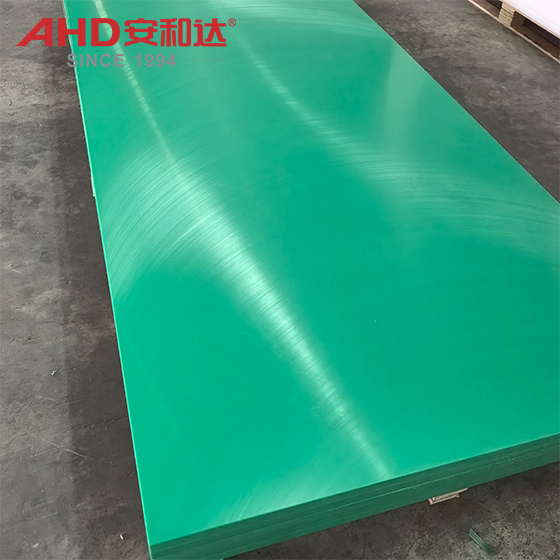
AHD UHMWPE Sheet
5. Rising Star in High Humidity Conditions: Polyketone (POK)
Performance: Its wear resistance is more than 4 times that of POM, and its moisture absorption is extremely low and has excellent hydrolysis stability, which is a viable upgrade solution for POM.
6. All-round high temperature corrosion resistance PPS + 30% GF
Advantages: Good dimensional stability with reinforcement of glass fiber. Long term working temperature up to 260°C, a weight saving solution for high temperature chemical corrosive environment.
7. Extreme Conditions: PEEK the Best Solution
Positioning: All the plusses except the high price. Melting point 335°C with optimal mechanical properties and chemical resistance. Ideal for extreme scenarios where PA or PPS cannot withstand the conditions.
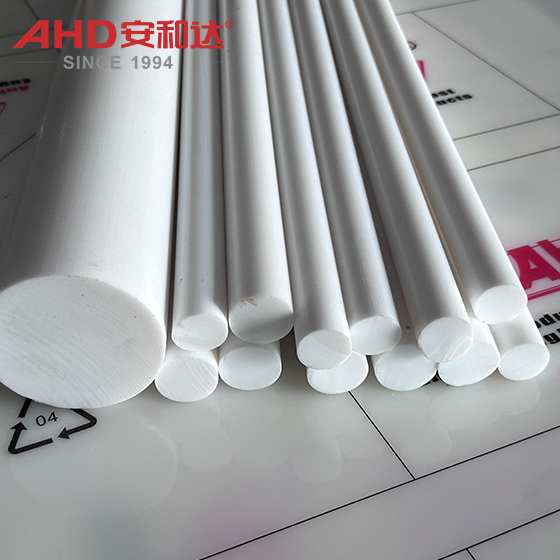
AHD PTFE Rod
Recommended Quick Reference Table
| Your Needs | Recommended Materials |
| General Transmission, Cost-Focused | PA66/PA6 |
| Precision Transmission, Low Starting Torque | POM |
| High Humidity and High Temperature Environments | POK or PPA |
| Metal Alternative, High Temperature Corrosion Resistance | PPS+GF |
| Extreme High Temperature, Ultimate Solution | PEEK |
| Wear Resistance in Extreme Cold Environments | UHMW-PE |
| Reduced Friction Coefficient of Composite Materials | PTFE (as additive) |
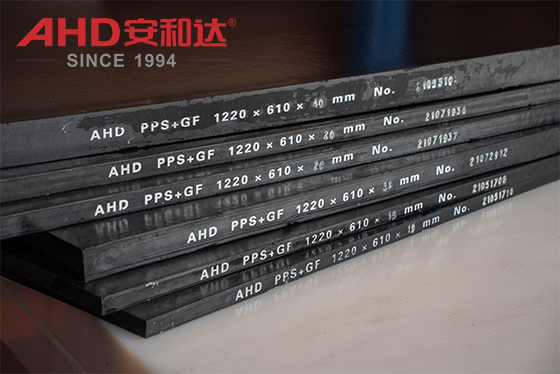
AHD Glassfiber PPS Sheet
5 Steps to Material Selection
1. Requirements Definition – Temperature, Lubrication, PV Value, Chemical Media, Accuracy Requirements
2. Initial screening of 3-5 candidate materials – compare to basic parameters in the technical manual.
3. Develop a Comparison Matrix – Score each item against critical needs.
4. Actual Working Condition Wear Test Test the friction coefficient, wear amount and temperature rise of the sample (This step is indispensable!).
5. Detailed review and sign-off – Evaluate performance, cost, delivery time and processability.
The best data available in the technical manual is no substitute for verification under actual working conditions. Friction and wear are very condition dependent . Testing is the last hurdle in material selection .
There is no “one-size-fits-all” material, only “optimal match”. The right wear-resistant material can be selected only by combining working condition requirements and verification with measured data.
AHD PEEK ROD