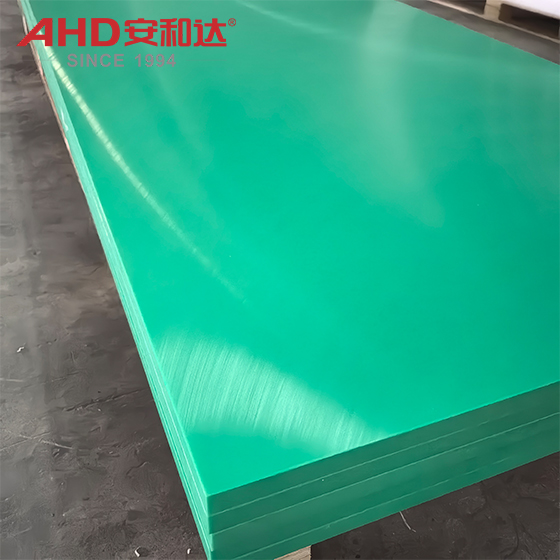
Many industrial facilities struggle with faulty chute and hopper liners day in and day out. Liners wear out rapidly, crack or detach during operation, forcing frequent shutdowns for repairs.This drives up labor costs and cuts overall production output sharply. Improper material and size choices make UPE Sheet lose its protective effect quickly, leading to repeated purchases and unnecessary waste.In harsh humid, dusty or high-impact working conditions, Ultra High Molecular Weight Polyethylene also suffers performance drops. Many buyers feel confused when telling apart different sheet types and quality levels for liner projects.
If you manage a mining operation, a port bulk handler, or a food processing line, you already know that liner failure equals downtime. Choosing UHMWPE (Ultra-High-Molecular-Weight Polyethylene) is the first step. But deciding whether to use 10mm or 20mm thickness is where most projects go wrong. This guide cuts through the supplier jargon. As a factory-direct manufacturer, we’ll show you exactly what matters when sourcing UHMWPE sheets.

1. Main Causes of Chute Hopper Liner Failure
Chute hopper liner failure happens for multiple practical reasons in bulk material handling lines. Most premature damage roots in incorrect material selection and mismatched structural design.
First, low-quality raw materials shorten service life obviously. Some low-cost liners use reprocessed materials, whose molecular weight fails to meet industrial standards.
Standard industry rules require qualified liner materials to reach a molecular weight above 3.1 million g/mol. Substandard products cannot resist continuous friction from ores, grains or chemical materials.
Second, unspecified thickness directly causes breakage. Thin panels bend and split under constant material impact, while overly thick sheets raise installation difficulty and extra costs.
Third, poor installation and incompatible operating environments speed up aging. Loose fixing makes UHMWPE hopper liner shift during material flow, resulting in edge wear and full detachment.
High dust and moisture erode common liners further. Even regular plastic sheets will lose wear resistance after long exposure to such complex on-site conditions.
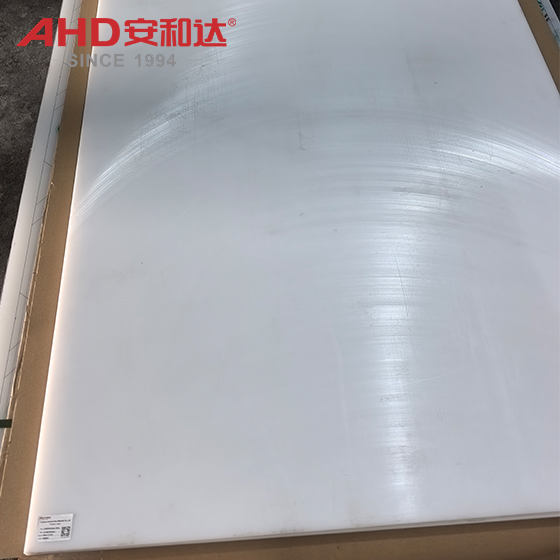
2. UHMWPE Sheet Grade: all new vs Reprocessed for Liners
Choosing the right UHMWPE sheet grade is the key to extending liner service life. Two mainstream grades serve different industrial scenarios with distinct performance gaps.
All new UHMW polyethylene sheet features stable molecular structure and uniform density. It fully complies with international industrial wear-resistant material standards.
Its abrasion resistance is 3 to 5 times higher than ordinary HDPE sheets, and it delivers excellent anti-impact performance even under extreme low temperatures.
This grade works perfectly for heavy-duty UHMWPE sheet used in high-impact chutes, mining hoppers and chemical processing silos. It stands up to long-term strong abrasion and collision.
Reprocessed UHMWPE materials come from recycled plastic scraps. Their molecular chain is broken, so wear resistance and impact resistance decrease by 20% to 35% compared with all new products.
Such materials fit temporary lines, low-load conveying equipment and indoor dry environments with light material flow. We do not suggest using them for long-term heavy production.
When you compare UHMWPE all new vs reprocessed grade for liners, always match material grade to your actual load and working environment first.
With 32 years of manufacturing experience, AHD Polymer strictly classifies all grades. Every batch of our engineering plastic sheet and rod passes full performance testing before delivery. Our product compliance rate stays above 99.8% all year round.
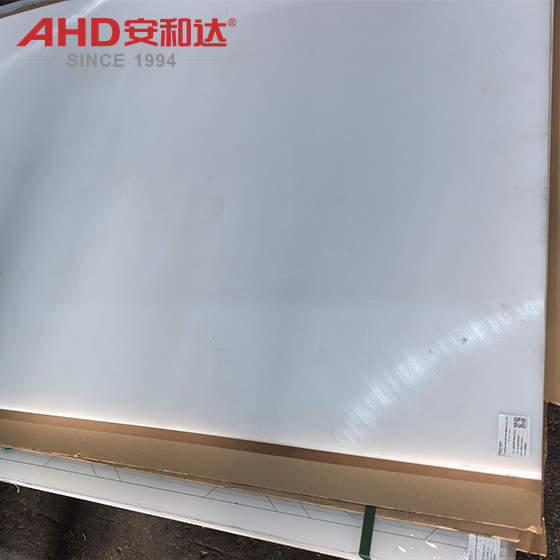
3. How to Confirm Correct UHMWPE Sheet Thickness for Bulk Material Chute
The correct UHMWPE thickness for bulk material chute decides both use effect and cost control. There is no universal standard; thickness must be adjusted based on material type, drop height and flow volume.
We sort out practical reference standards for common industries for your easy selection. For light materials like grain, flour and plastic particles, 8mm to 12mm UHMWPE panels are sufficient.
These thickness levels resist mild friction and prevent material adhesion effectively. They also keep material flow smooth and avoid sticking to the liner wall.
For medium-abrasion materials such as sand, cement and small gravel, choose sheets from 15mm to 20mm. This range balances wear resistance and installation convenience.
For heavy, sharp materials including mining ore, coal and large stones, select 25mm to 40mm thick wear-resistant UHMWPE liner. High drop height and strong impact demand thicker panels to avoid cracking.
One practical operation tip: Measure the maximum material drop height and daily conveying capacity on site first. Then combine these data to finalize the sheet thickness.
Overly thin sheets need replacement every 2 to 4 months in mining workshops. Properly selected thickness can extend the service cycle to 2 to 3 years, greatly cutting replacement frequency.
AHD Polymer keeps abundant stock of UHMWPE sheets in all standard thicknesses. Factory direct supply ensures fast delivery globally, and bulk orders enjoy favorable pricing policies.
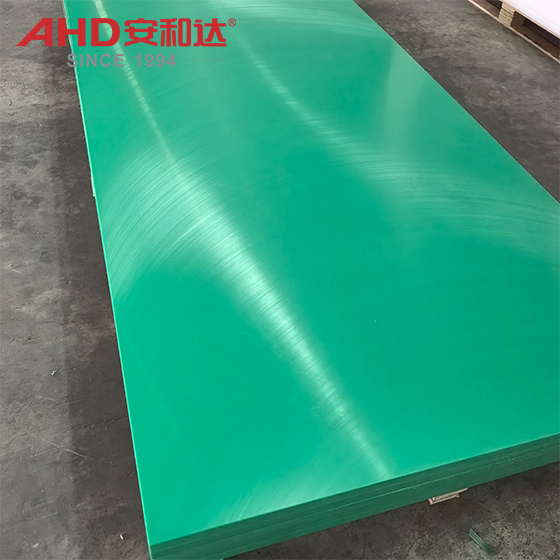
4. Industry-Specific Matching Solutions for UHMWPE Chute Liner
Different industries have differentiated demands for UHMWPE chute liner. Targeted selection can completely solve liner failure and material blockage problems.
Mining Industry
Mining hoppers and conveying chutes face dual tests of strong impact and severe abrasion. The best UHMWPE grade for mining hopper liner is pure all new grade with molecular weight over 3.5 million g/mol.
We recommend 25mm to 40mm thickness. This configuration prevents panel breakage and material jams in long-time continuous operation.
Food & Grain Processing
This field requires non-toxic and anti-stick properties. Food-grade all new UHMWPE sheets stop materials from adhering to the wall and ensure smooth conveying.
10mm to 15mm thickness is the mainstream choice. The material also resists mild moisture and dust in processing workshops.
Chemical & Building Material Industry
Corrosive raw materials and fine powder put forward higher requirements on material stability. All new UHMW polyethylene sheet resists weak acid, weak alkali and powder erosion well.
Select 12mm to 20mm thickness according to material hardness. Our customized processing service can also make special sizes to fit existing equipment structures.
As a professional manufacturer, AHD Polymer provides one-stop matching plans for various industries. We support customized size, surface treatment and special formula production to meet personalized on-site demands.
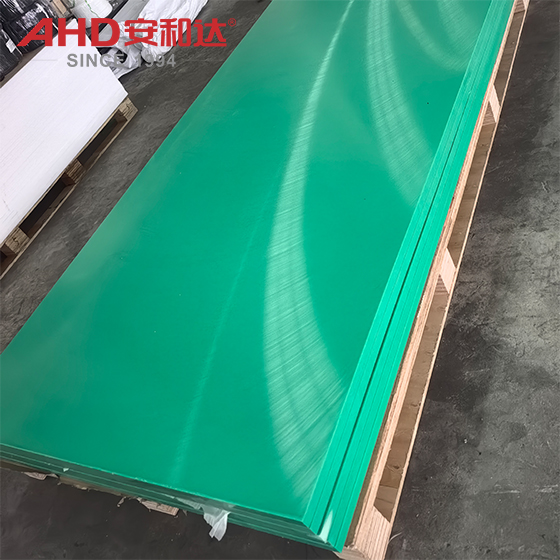
5. Practical Tips to Avoid Premature Liner Damage
Aside from grade and thickness selection, daily use and maintenance also affect service life. Simple operations can effectively avoid why UHMWPE chute liner fails prematurely.
First, follow standard installation steps. Use matched fasteners to fix panels tightly, leaving reserved expansion gaps to prevent deformation caused by temperature changes.
Second, conduct regular surface inspection. Clean accumulated sticky materials on the liner wall periodically to reduce extra friction load.
Third, replace damaged partial panels in time instead of continuing operation. Local cracks will expand rapidly under material impact and lead to overall liner falling off.
All UHMWPE sheets from AHD Polymer come with detailed installation and maintenance guides. Our technical team also offers remote guidance for global clients during installation.
Reasonable grade selection and accurate thickness setting are the fundamental ways to stop repeated chute and hopper liner failures. Suitable UHMWPE sheets can cut maintenance work, lower operational costs and raise production efficiency steadily.
Whether you need standard-size panels or customized products, AHD Polymer is your reliable supplier. We own full series of engineering plastic products, sufficient inventory and fast global shipment.
Feel free to contact our team now. You can request free samples, official performance test reports and professional one-on-one liner selection suggestions. Our experts will tailor the most cost-effective solution for your working conditions.
FAQ (3 Questions about UHMWPE Sheet)
1. What is the difference between UHMWPE Sheet and ordinary UPE Sheet for chute liners?
A: UHMWPE Sheet features ultra-high molecular weight, delivering far better abrasion resistance and impact resistance than regular UPE Sheet. It is the preferred material for heavy-load chute and hopper liners, while common UPE is only suitable for light-load working scenarios.
2. Can reprocessed UHMWPE sheet be used for mining hopper liners?
A: We do not recommend it. Reprocessed UHMWPE has weakened mechanical properties. Under strong impact and severe abrasion in mining sites, it will wear and crack quickly. All new grade UHMWPE sheet is the safe and durable choice for mining equipment.
3. How often should I replace standard UHMWPE hopper liner with proper thickness?
A: With matched grade and thickness, UHMWPE hopper liner for general industrial use can work for 2–3 years. For high-frequency heavy-impact mining lines, the service cycle is around 1.5–2 years. Regular maintenance can further extend its service life.