

PA+GF reinforced nylon is a high-strength, heat-resistant material widely used in the automotive, electronics and machinery industries. But the two problems in actual production which give engineers a lot of headache are surface fiber shedding and water absorption deformation.
Fibrous shedding makes smooth products rough. Water absorption makes precision dimensions deviate. We will today go into some depth about the causes and solutions to both of these problems.

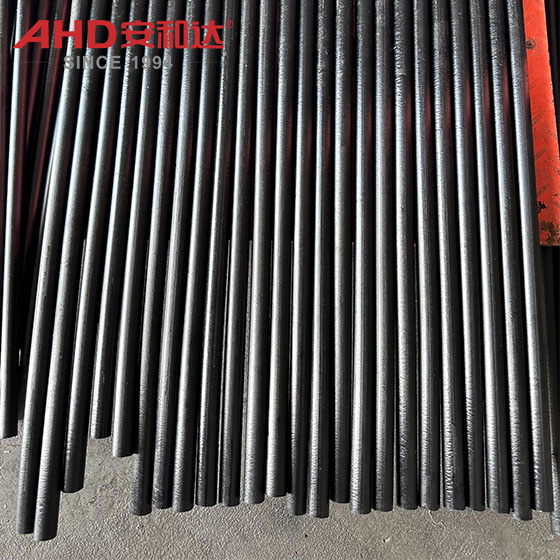
AHD PA6 GF Rod
Let's look at a table: Two major problems and their solution framework.
| Problem | Pain Points | Solution framework |
| Floating fiber | Debonding of glass fiber and resin interface, separation and exposure during flow | Interface optimization + process control + mold design |
| water absorption | Amide bonds are hydrophilic, water molecule penetration leads to dimensional changes | Physical shielding + hydrophobic blending + bulk modification |
Fiber Exposed: Why is fiberglass so hard to hide?
Exposed Fiber (or Fiber Exposed) Exposed fiber is when fiberglass fibers can be seen on a surface of a product. This creates rough white streaks. This is not only an appearance problem but it can also affect follow up processes such as coating.
How does exposed fiber form?
The main reasons for fiber floating are:
First, bad compatibility. Glass fiber is inorganic, nylon is organic, the two are incompatible by nature. If the interfacial bonding is not strong enough, they separate easily in flow.
Secondly Variation of Specific Gravity. Resin and glass fiber flowability and density are different. They tend to separate during melt flow. The lighter, more fluid component flows faster and the heavier, less fluid component tends to float on the surface.
Third, the fountain effect. When the melt is injected into the mold the front of the melt swirls outwards like a fountain and brings the glass fiber to the surface. But the mold wall temperature is low and the glass fiber is "frozen" before it is coated by the resin.
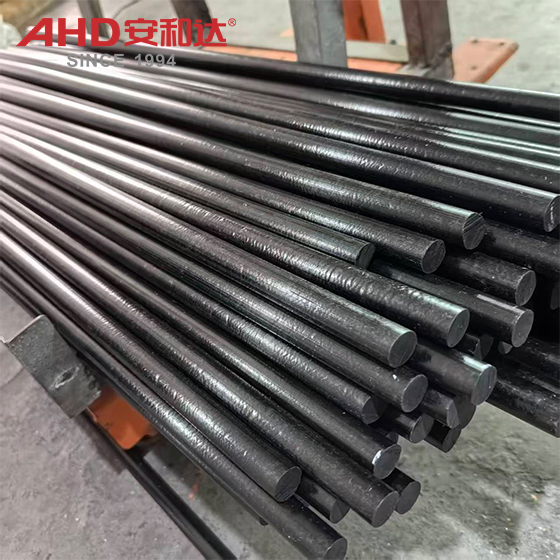
AHD Glassfiber Filled PA6 Rod
How to resolve the problem of floating fiber?
1. Make them "closer".
Go with the interface first. Treatment with coupling agent: Treat the glass fiber surface with silane coupling agent (such as KH-550, KH-560) to build a "bridge" between the fiber and the resin.
Add compatibilizers. Add grafts of maleic anhydride (e.g. POE-g-MAH, PP-g-MAH) for improved interfacial bonding.
2. By focusing on the manufacturing process, we can make them impossible to hide.
| Parameters | Recommended Range | Function |
| Barrel Temperature | 270-290°C | Ensures complete melting, but avoids excessive heat leading to degradation |
| Injection Speed | Low to Medium Speed, Segmented Control | Prevents fiber orientation confusion caused by high-speed mold filling |
| Mold Temperature | 80-120°C | Delays surface cooling, allowing for better fiber coverage |
| Holding Pressure Time | Appropriate Extension | Compensates for shrinkage, reducing internal stress |
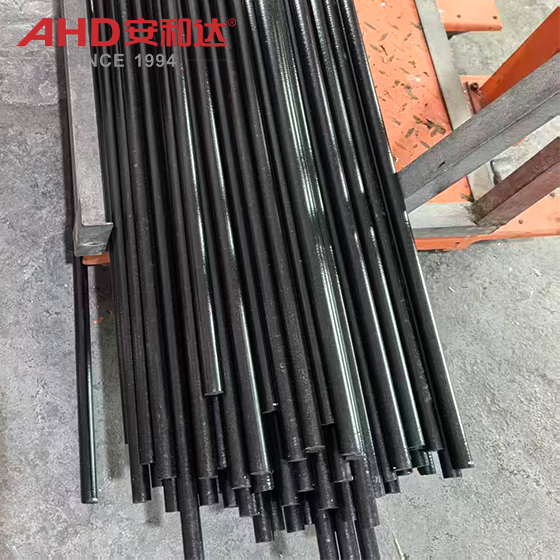
AHD GF PA6 Nylon Rod
Make the system smoother. Starting from the formulation.
Lubricants: Internal lubricants (e.g. zinc stearate) reduce the internal friction in the melt, external lubricants (e.g. silicone masterbatch) reduce the adhesion of the melt to the mold.
Fiber control: Content should be controlled as low as possible below 30%. Length should be ≤3mm to avoid agglomeration.
And it all starts with the mold, so make sure there is no place for these imperfections to hide.
Gate design Multi-point or fan-shaped gates should be used to ensure uniform flow.
Ventilation channels: Add ventilation channels of depth 0.02-0.04mm to prevent trapping of air.
Cavity polishing: Polishing to mirror finish (Ra<=0.2um) to reduce flow resistance.
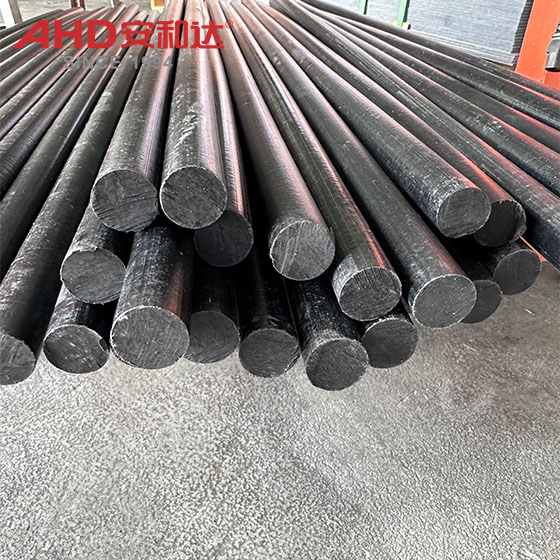
Water Absorption: Why “Nylon Never Gets Enough Water”?
The amide bonds that make up nylon molecules are very polar and can therefore easily absorb water molecules. This is the inherent hydrophilicity of nylon. The saturated water absorption rate of PA6 is as high as more than 2.5%, and the dimensional change rate is 0.6%-1.0%. This is a disaster with precision products, they fit perfectly today, tomorrow they absorb water and swell and get stuck.
How to reduce water absorption in nylon?
Physical shielding: Preventing water from getting through
Adding layered silicate fillers (such as montmorillonite and attapulgite) is a good method. These fillers stack like "tiles," forcing water molecules to take a long detour, greatly extending the diffusion path.
Glass fiber has a similar effect—30% glass fiber can reduce the water absorption rate of PA6 by 50%-70%, with continuous fibers showing even better results.
Hydrophobic blending: Preventing water from entering
Blending nylon with water-sensitive materials like polypropylene (PP) and polyethylene (PE) is like adding hydrophobic "outsiders" to hydrophilic nylon. However, they don't mix well (their solubility parameters differ significantly), requiring maleic anhydride grafts to act as a mediator.
Source Material Selection Method: Change to nylon with “water-reducing” effect
The water absorption rate of PA12 is only about 1.5%, and the water absorption rate of PA610 and PA46 is also relatively low. If the price is acceptable, sort the problem out at the source of the material and save yourself a lot of bother afterwards.
Method After Treatment: First Let it “Drink”
Sometimes the inverse will work - pre-treat the product in a water bath at 80°C for some time, allowing it to absorb water and swell beforehand, stabilizing its dimensions before use. This is called “conditioning,” and it sounds weird, but it really works.
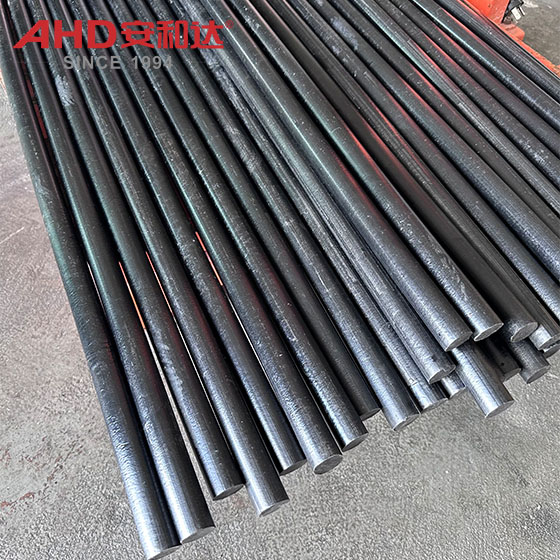
The water absorption problem isn't something that can be solved simply by making changes.
| Process | Key Control Points | Consequences If not controlled |
| Raw Material Drying | Drying at 80-90°C for 4-6 hours until moisture content <0.1% | Product blistering, strength reduction of 30-50% |
| Molding Process | Higher mold temperature (80-120°C) promotes perfect crystallization | High internal stress, prone to deformation after water absorption |
| Post-processing | Annealing at 120-150°C to relieve stress | Instable dimensions, difficult assembly |
| Storage and Packaging | Environment with RH <50%, sealed in aluminum foil bags | Moisture absorption, rework, or even scrapping |
Drying raw materials is very important , do n't underestimate it . Some people will want to save time and not dry them properly , which will result in air bubbles in the final product , 50 % reduction in strength and the entire batch being scrapped .
One approach, two problems
Floating fiber and water absorption, one is "surface", the other is "internal work", but the solution is similar: material formulation is the foundation, molding process is the key, mold design is the guarantee.
| Problem | Preferred Solution | Alternative Solution |
| Floating Fiber | Add compatibilizer + high-temperature mold (>100°C) | Mold texturing, spray coating masking |
| Water Absorption | Glass fiber reinforcement (30% GF) + fully dried raw materials | Selection of low water absorption grade (PA12), moisture conditioning treatment |
In practice, it often takes several approaches to achieve the desired results. Some people tried more than a dozen additives but to no avail, but found that the only way to solve the problem of fiber floating was to reduce the mold temperature by 20 °C. Others changed the formula but the water absorption rate was still high, and found that the raw materials were not dried properly. That's the way the business is. It's the details that make or break you.